A pivotal election: Armenia is holding parliamentary elections today
7 June 10:11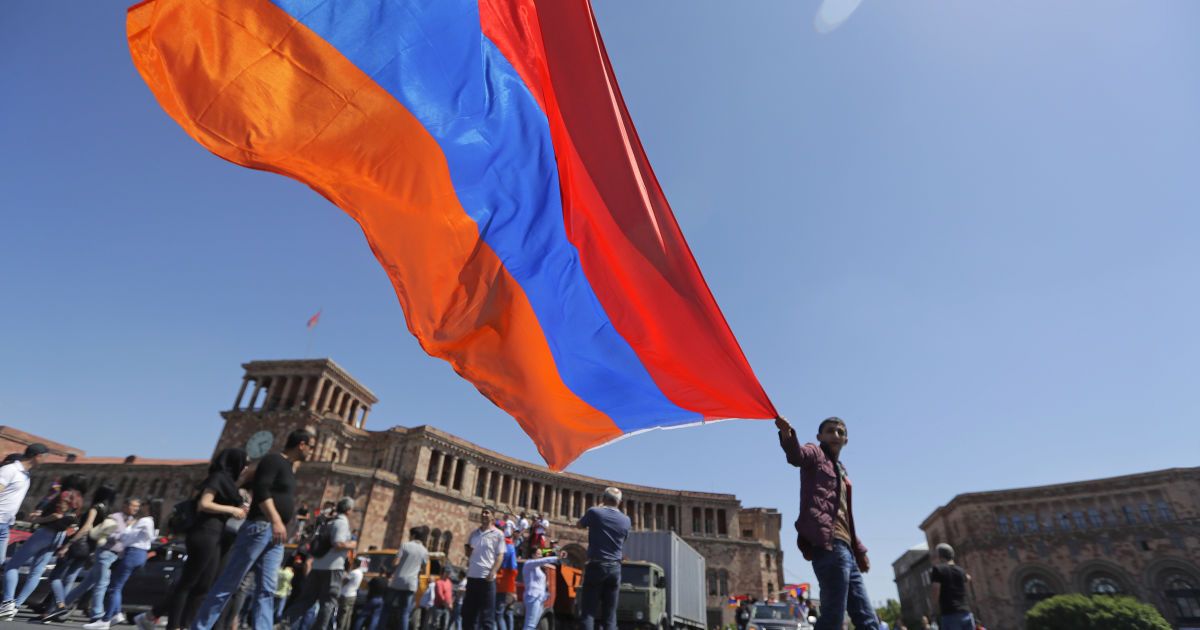
Parliamentary elections are being held in Armenia on Sunday, June 7, which will determine the country’s future course—whether it will be pro-Western or pro-Russian. Prime Minister Nikol Pashinyan, who has ruled Armenia since 2018, is counting on a victory for his “Civic Contract” party and a new five-year term in office. This is reported by "Komersant Ukrainian" with reference to DW.
Pashinyan’s main rival is pro-Russian billionaire Samvel Karapetyan —a Russian businessman of Armenian descent and head of the “Tashir” group of companies —running with the opposition alliance “Strong Armenia.” According to Armenia’s Central Election Commission, nearly 2.5 million voters are eligible to vote, and 2,005 polling stations are open across the country from 8:00 a.m. to 8:00 p.m.
Eighteen political parties are participating in the election; voting is conducted under a proportional representation system, and the law does not set a minimum voter turnout threshold. These are the first regular parliamentary elections in nine years—the two previous campaigns in 2018 and 2021 were special elections.
The pivotal nature of the elections
The elections are seen as a referendum on Pashinyan’s pro-Western course: in 2025, he enshrined a policy of rapprochement with the European Union in law, setting Yerevan on a path of confrontation with Moscow. The prime minister himself, however, emphasizes that he does not seek a break with Russia.
Karapetyan, in turn, criticizes Pashinyan’s course as a “reckless rush” toward the West.
Russia has expressed dissatisfaction with Pashinyan’s course toward rapprochement with the EU. Russian dictator Vladimir Putin has stated that the situation in Armenia resembles the one that led to the war against Ukraine. He demanded that Yerevan hold a referendum on Armenia’s accession to the European Union as soon as possible and decide whether his country stands with the EU or the Eurasian Economic Union. Russia has also imposed a ban on imports of Armenian alcohol, food, and flowers.
Other key issues in the current Armenian elections include future relations with longtime adversary Azerbaijan and its ally Turkey, as well as Armenia’s stance on the standoff between Russia and the West. In 2023, Yerevan suffered a defeat in the dispute over Nagorno-Karabakh: after the territory came under Azerbaijani control, more than 100,000 Armenians were forced to flee, and the opposition accused Pashinyan of betraying national interests.
Pashinyan secured the support of the U.S. administration: U.S. Secretary of State Marco Rubio made a special trip to Yerevan to sign a bilateral cooperation agreement.
Political Landscape
The electoral threshold is 4% for parties, 8% for blocs of two to three parties, and 10% for broad coalitions of four or more parties. According to a poll by the Armenian branch of the Gallup International Association, Pashinyan’s “Civic Contract” party leads with 32.4 percent.
Next are Karapetyan’s “Strong Armenia” at 16.4%, former President Robert Kocharyan’s “Armenia” bloc at 15.2%, businessman Hagik Tsarukyan’s “Prosperous Armenia” at 8.8%, and Arman Tatoyan’s “Wings of Unity” party. Thus, the four main opposition forces together could garner 46.6% of the vote—more than the ruling party.