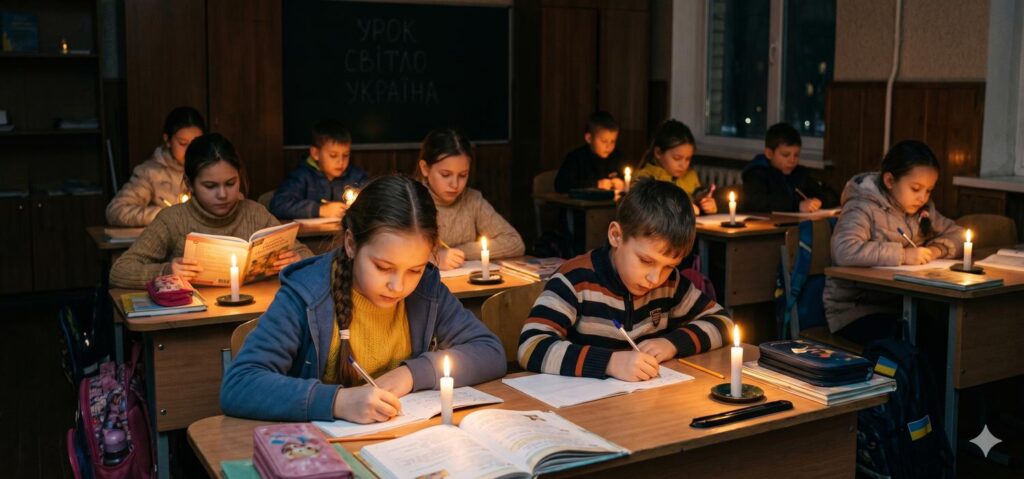
Two-shift classes and lessons during blackouts: The Ministry of Education and Science explains how schools will operate starting in September
24 June 19:16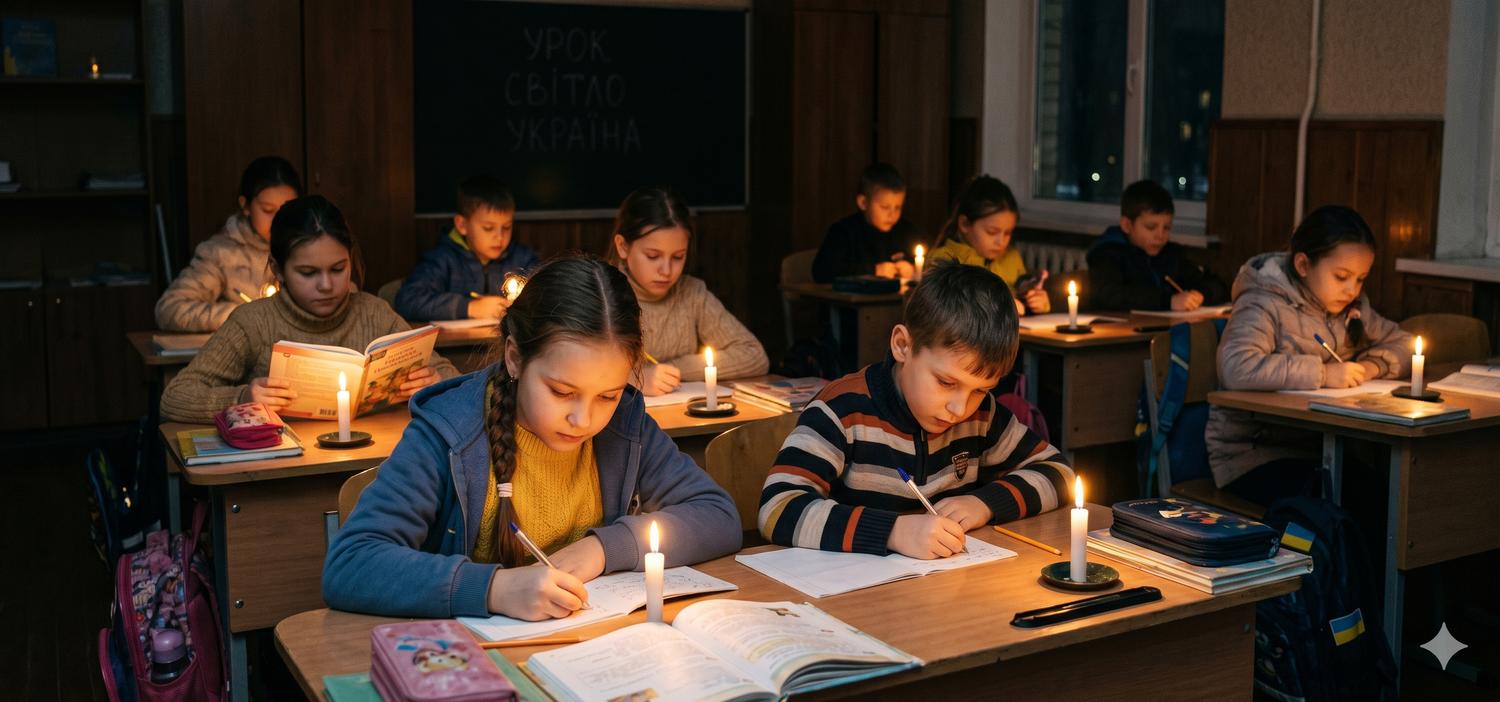 ANALYSIS
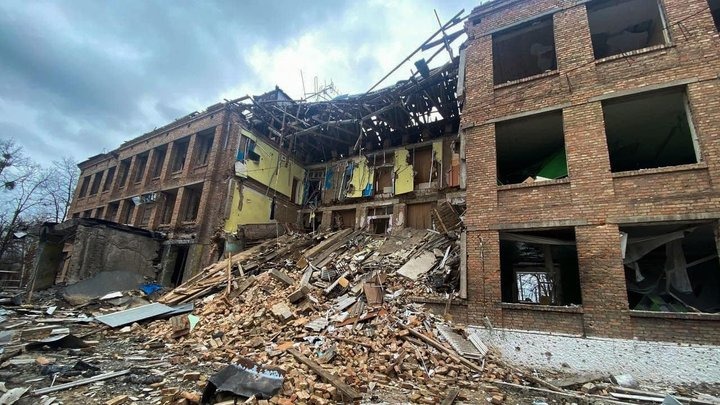
Since 2022, nearly 300 educational institutions in the capital have been damaged by Russian shelling. However, as soon as classrooms and lecture halls closed for summer break, the most intense phase of preparations for September 1 began.
For example, there are currently more than 670 schools operating in Kyiv, with over 298,000 students enrolled. In fact, one in every twelve schoolchildren in Ukraine attends school in the capital.
The editorial staff of "Komersant Ukrainian" sent a series of inquiries to the Ministry of Education and Science of Ukraine and the Kyiv City State Administration to understand what security challenges Kyiv and educational institutions across Ukraine will face in the new school year.
In response to a direct question about which general secondary schools in the capital, as of June 2026, lack even the most basic or radiation shelters, the Kyiv City State Administration’s Department of Education and Science issued an official refusal, classifying this information as confidential.
Watch us on YouTube: important topics – without censorship
As explained by the department’s deputy director, Ilya Pasko, statistics regarding the absence of bomb shelters in schools currently fall under the category of restricted-access information, specifically classified as official information. This decision is based on clear security precautions issued by the special services.
“According to a letter from the Main Directorate of the Security Service of Ukraine in Kyiv and the Kyiv Region […], in order to prevent educational institutions from being used as potential targets for shelling, the dissemination of information regarding the operation of educational institutions, shelters on the premises of educational institutions, and so on is restricted,” said Ilya Pasko.
The Kyiv City State Administration emphasizes that the disclosure of such lists poses a direct threat, as the enemy could quickly adjust its strikes against locations where large numbers of children are present. The scale of the danger is confirmed by an official figure released by the agency: since 2022, Russian shelling has already damaged 297 educational institutions in Kyiv.
5 billion for shelters: how funds are allocated for the capital and the region
In 2026, the Cabinet of Ministers of Ukraine allocated a subsidy of 5 billion hryvnias for the implementation of public investment projects aimed at creating safe conditions in educational institutions.
The Ministry of Education and Science of Ukraine noted in its response that these funds are distributed through a system of approved orders issued by the Ministry. The funding covers not only standard public schools but also specialized institutions. State subsidy funds are being used to build and modernize shelters in:
- general secondary education institutions;
- preschool education institutions (as part of general secondary education);
- military, naval, and military-sports lyceums, as well as lyceums with enhanced military and physical training.
What to Do If the Shelter Is Too Small: Official Clarifications from the Ministry of Education and Science
A particular challenge remains in situations where a school has a shelter, but its area is physically incapable of accommodating 100% of the students and teaching staff during an air raid alert. Alona Horupakha, Acting Head of the Main Department of General Secondary Education at the Ministry of Education and Science, explained the legal and practical mechanisms for resolving this crisis in response to an inquiry.
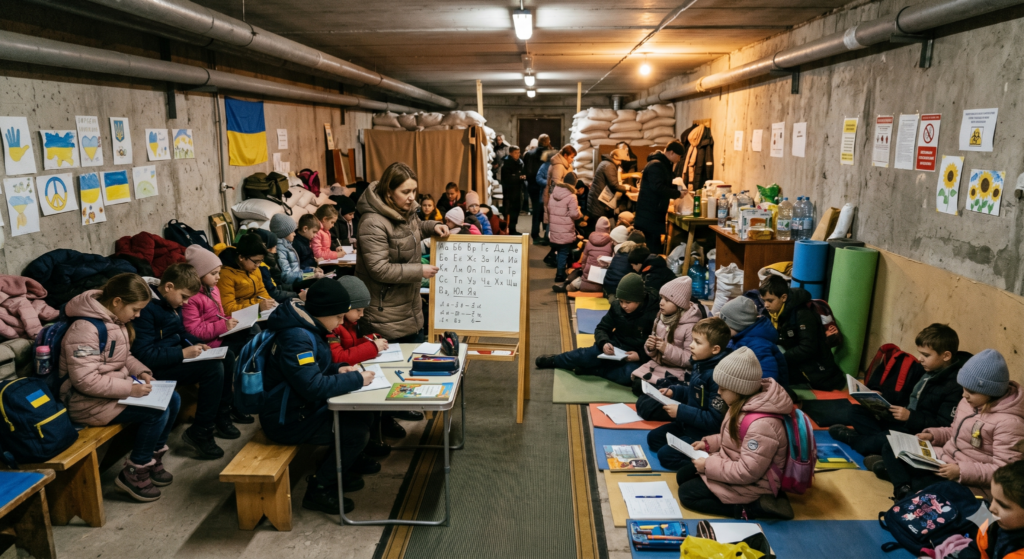
First, the ministry emphasizes the full academic, organizational, and financial autonomy of educational institutions. This means that the state delegates the right to make decisions directly to school administrators and teaching councils.
“The structure and duration of the school year, the school week, the school day, classes, breaks between them, and the forms of organizing the educational process are determined by the educational institution’s teachers’ council…,” says Horupakha.
Second, to address the shortage of shelter spaces, the Ministry of Education and Science officially recommends adopting a flexible approach. The ministry fully legitimizes and approves:
- the use of a blended learning format;
- organizing the educational process in multiple shifts (specifically, two shifts);
- condensing curricula and adapting lessons to the length of daylight hours.
How will air raid alerts affect grading and “learning loss”?
The Ministry of Education has established guidelines for force majeure situations in which, during prolonged air raid alerts, children are forced to remain in shelters where there is no technical capability to connect to the internet or conduct full-fledged lessons.
In such cases, teachers are required to provide for students to work through the material independently at any time convenient for them.
“If, during an alert, participants in the educational process lack the technical means to continue learning (while in a shelter without internet access), teachers should provide for the possibility of asynchronous task completion (independent study of materials at a convenient time),” says Horupakha.
To mitigate the catastrophic “learning losses” caused by constant disruptions to classes, pedagogical councils have been granted the right to independently reallocate instructional hours approved by the State Standard. Schools may, at their discretion, reduce hours for non-core subjects and allocate them to required subjects, or officially designate this time for individual consultations and special group sessions to help students catch up.
Read us on Telegram: important topics – without censorship