He promised to revitalize the party: Orbán remains leader of Fidesz
14 June 06:43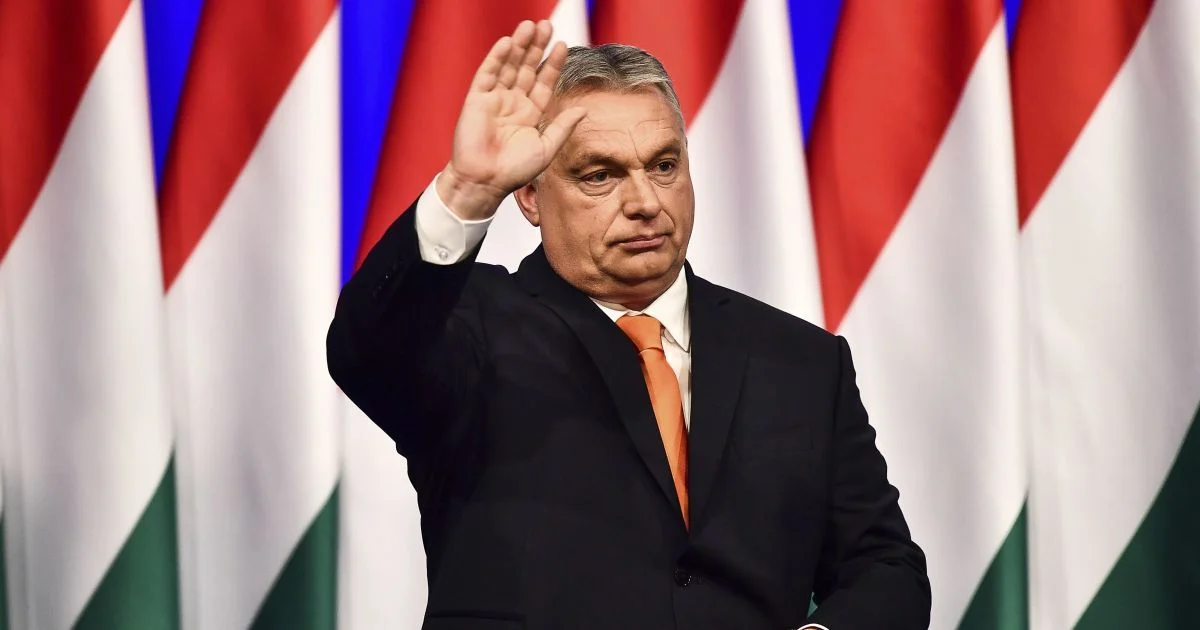
Former Hungarian Prime Minister Viktor Orbán remains the leader of the right-wing conservative Fidesz party, which, under his leadership, lost the country’s parliamentary elections. The extension of Orbán’s term for one year was supported by a majority of party members at the convention held in Budapest on Saturday, June 13, reports "Komersant Ukrainian" citing DW.
Of the 737 Fidesz delegates at the convention, 729 voted to re-elect Orbán. There were no votes against, and eight people abstained. Orbán was the only candidate nominated for the position of Fidesz chairman.
After his re-election, Orbán stated that he intends to reorganize Fidesz by the fall to ensure the party’s effective operation in opposition. “I never back down,” the politician emphasized.
Watch us on YouTube: important topics – without censorship
Orbán acknowledged his mistakes and promised to bring young people into Fidesz leadership
The 63-year-old former Hungarian prime minister stated at the Fidesz convention that he bears responsibility for the party’s defeat in the April parliamentary elections. Orbán cited ten reasons that, in his view, contributed to this outcome.
Among these reasons was that Fidesz failed to respond to accusations of corruption and inciting hatred in society, which were raised by Péter Magyar’s Tisa party—then still in the opposition—which ultimately won the election. Also, according to Orbán, Tisa conducted a better campaign by relying on social media, while Fidesz erred in its predictions regarding voter turnout.
Orbán also stated that Fidesz’s defeat was partly due to the fact that the party did not make unrealistic economic promises. He indirectly blamed Brussels for his party’s failures, saying that EU sanctions against Russia over the war in Ukraine had hindered Hungary’s economic growth in recent years. And algorithms on foreign social media platforms gave priority to posts promoting the idea of a change in power in Hungary, the politician said.
At the same time, according to Orbán, the time has come for leadership to pass to the “younger generation.” Against this backdrop, the party elected four new deputy chairpersons. Earlier, Orbán resigned his seat in the country’s parliament—the politician explained his decision by stating that following Fidesz’s defeat in the elections, he would focus on “reorganizing the national movement.”
“Tisa” marked the end of Orbán’s 16-year reign in Hungary
Since the mid-1990s, Viktor Orbán has transformed his party, Fidesz (formerly known as the “Alliance of Young Democrats,” and now the “Hungarian Civic Alliance”) into a tightly organized, leader-centric party where nothing happens against his will. After Fidesz came to power in 2010, a similar development took place in the system of public administration.
Since then, the system of checks and balances in Hungary has been weakened. Most print and audiovisual media have been brought under state control—either directly or indirectly through companies and foundations linked to Fidesz. University autonomy was abolished, and a significant portion of state and public assets were transferred to the control of foundations close to Orbán. Experts describe Hungary under Orbán as a “hybrid system” between democracy and dictatorship.
After Péter Magyar replaced Orbán as prime minister, the Hungarian parliament repealed some of the controversial decisions made by Orbán, including the country’s withdrawal from the International Criminal Court. The politician also promised to prosecute corrupt officials who had been hiding in Hungary under Orbán, but some of them subsequently fled to the United States.
Read us on Telegram: important topics – without censorship