EU ambassadors approve extension of preferential trade for Ukraine
22 February 2024 08:30
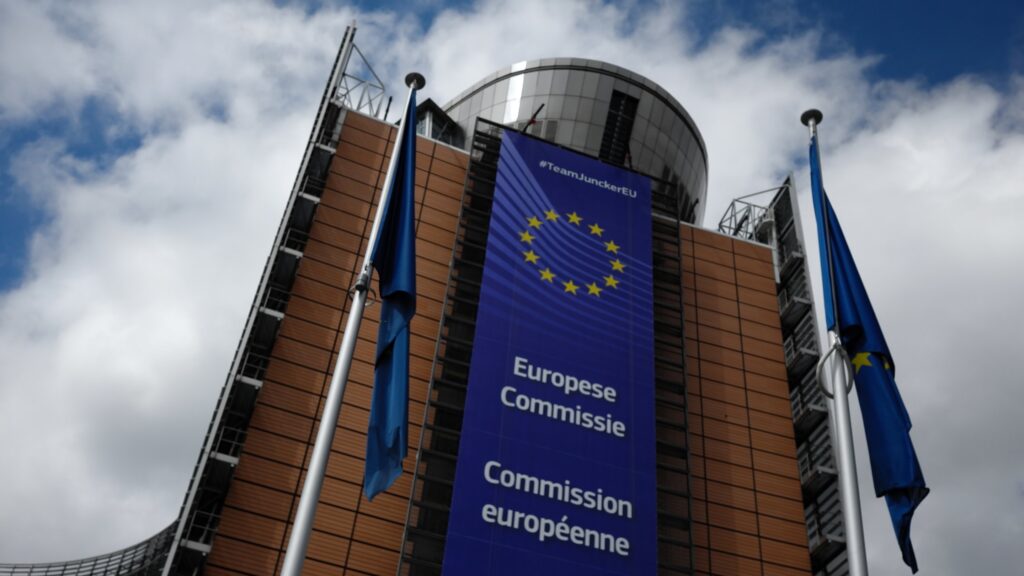
The ambassadors of the EU member states have agreed on the mandate of the EU Council to negotiate a proposal to extend the abolition of import duties and quotas on Ukrainian exports to the European Union for another year. This was reported by the press service of the EU Council, reports 
The proposal is scheduled to be voted on in the European Parliament in April.
The proposal provides for the extension of the duty-free trade period until 5 June 2025 and includes new measures to strengthen the protection of agricultural products.
An extension of duty-free trade with Moldova until 24 July 2025 has also been agreed, which also takes into account measures to protect agricultural products.
Minister of Foreign Affairs, European Affairs and Foreign Trade of Belgium Hajia Lahbib stressed the negative impact of Russia’s unprovoked and unjustified aggression against Ukraine and Moldova. She stressed that the extension of the measures is a manifestation of support for these countries and protection of the domestic market from excessive growth of imports of sensitive agricultural products.
A proposal to liberalise import duties and quotas on Ukrainian and Moldovan exports to the EU for another year was submitted by the European Commission in January 2024. The Committee of Permanent Representatives approved the text of the European Commission’s proposal without changes.
The European Parliament’s Committee on International Trade (INTA) will vote on this issue on 7 March, and the European Parliament may consider the issue in the first reading at one of its plenary sessions in April 2024. After that, the document will be adopted by the Council and signed by representatives of the Council and the European Parliament.
Border blockade
on 9 February 2024, Polish farmers launched a new nationwide strike and blockade of the border with Ukraine, which will last until 10 March. It was initiated by the independent farmers’ trade union Solidarity. Starting from 12 February, they plan to block all checkpoints. The main demand of the protesters is to cancel the preferential trade regime with Ukraine and return the permit system for importing goods into Poland.
Problems at the border began on 6 November 2023, when Polish transport companies began blocking truck traffic at three major checkpoints on the Ukrainian border: “Korczowa-Krakowiec, Hrebenne-Rava-Ruska, and Dorohusk-Yagodyn. One of the requirements was to reinstate the permits for Ukrainian carriers that had been cancelled under the agreement with the EU by 30 June 2024.
On6 January, truck traffic to the Medyka-Shehyni border crossingin Poland resumed. Three other border crossing points were opened on 17 January, namely Dorohusk – Yagodyn, Hrebenne – Rava-Ruska, and Korczowa – Krakivets.
In Romania, on 13 and 14 January, local farmers blocked the movement of Ukrainian trucks through the Siret checkpoint, and on 15 January, they began blocking the Vicovu de Sus checkpoint. on 18 January, Romanian farmers began blocking the Dyakove-Halmeu checkpoint. However, as of 20 January, these checkpoints were reopened.
The preferential trade regime and its opponents
Many EU members did not like the quota-free imports of Ukrainian products to the EU, which was in effect in 2022-2023. In particular, a number of Eastern European countries demanded that the EU impose import duties on Ukrainian goods, citing unfair competition. The ministers of agriculture of Bulgaria, Poland, Hungary, Romania and Slovakia sent a letter to the European Commission asking for action, stating that cheaper agricultural products from Ukraine were eating into their export markets.
The Ukrainian side tried to reach an agreement with the ‘problematic’ countries.” In particular, on 26 January, the Cabinet of Ministers adopted a resolution that improves the rules for exporting certain types of agricultural products. According to the resolution, a company may be excluded from the list of verified agricultural entities if it violates these rules.
At the end of January 2024, the European Commission effectively reintroduced quotas for some Ukrainian goods. It extended the special preferential regime with Ukraine for a year, but set special conditions and safeguards for some goods.
In particular, in order to “stabilise imports at the level of average volumes in 2022-2023”, the EU has come up with an “emergency braking” mechanism for three products: poultry, eggs and sugar.
In practice, this means setting a quota at the level of the average export volume in 2022-2023, exceeding which will automatically result in an import tariff being applied to the products.
This decision must then be approved by the European Parliament and the Council of the EU.
Thus, the EC’s decision virtually reintroduces quotas for some Ukrainian products, even if at the average level of Ukrainian exports. However, even this compromise solution does not suit the Polish farmers’ union.
Read also: European farmers demand to change the European Commission’s decision on Ukrainian exports.