Waste Management from Demolition: Ukraine and Japan Prepare for a New Phase of Cooperation
22 April 14:38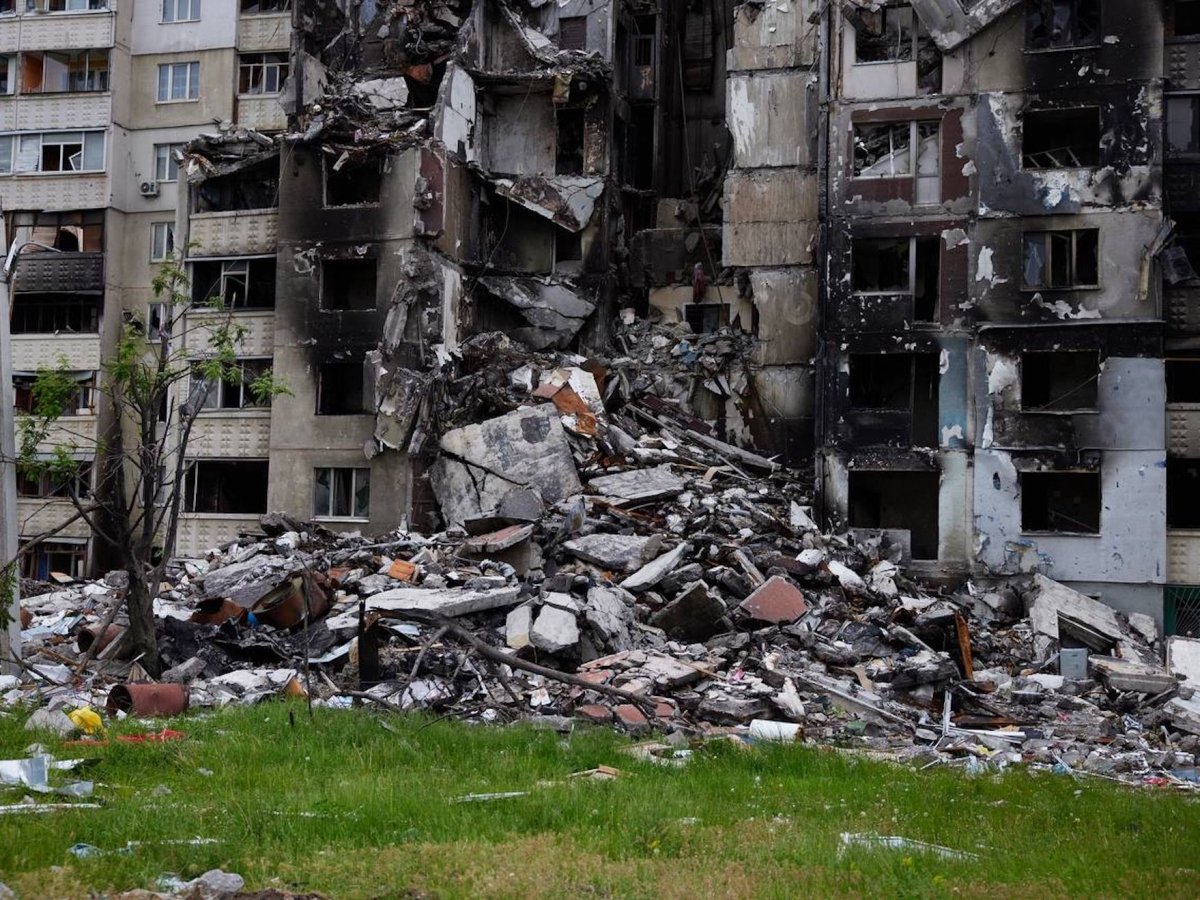
Ukraine needs to scale up the use of demolition waste in industry and create economic incentives for the reuse of such waste. This was reported by the Ministry of Community and Territorial Development, according to "Komersant Ukrainian".
Ukrainian officials met with representatives of the Japan International Cooperation Agency (JICA) to review the results of a pilot project on the management of debris and are preparing for the next phase of cooperation for 2027–2029.
According to Natalia Kozlovska, Deputy Minister of Community and Territorial Development of Ukraine, a significant amount of such waste is already being tracked in at least six regions.
“In fact, every community is working on this; there is not a single region without damage. Therefore, solutions must be scalable to the entire country,” she noted.
The pilot project, which has been underway since 2024, is being implemented in the Kyiv region and five cities (Odesa, Dnipro, Kharkiv, Mykolaiv, and Kherson), and has allowed not only for the development of approaches but also for the implementation of concrete solutions on the ground.
Ukraine has received the necessary equipment for waste management, training has been conducted for specialists, the development of material recycling has begun, and systematic monitoring and analysis have been implemented.
Manufacturers must integrate recycled materials into production, the ministry notes. At the same time, the main condition is the quality and safety of the final product, which must meet established standards.
“Ukraine has implemented EU legislation regarding the quality of construction products. Regardless of the raw materials, the final product must meet established standards,” emphasized Natalia Kozlovska.
The use of demolition waste in construction is possible only if quality standards are met. That is why Ukraine is interested in studying international experience, particularly Japan’s, regarding the creation of such standards.
The Japanese side supported the need to develop clear technical requirements for products made from recycled materials. This could serve as a foundation for market development and attracting businesses, particularly in road construction.
Separately, the meeting participants focused on the issue of handling asbestos-containing materials. Today, Ukraine uses various protocols developed by international organizations, but there is no unified approach.
“There is no such thing as safe use of asbestos. Therefore, we need to develop uniform rules—from detection to disposal,” the deputy minister emphasized.
In addition, Ukraine lacks laboratories for rapid analysis of hazardous materials. Some of the testing still has to be done abroad.
JICA will provide the necessary equipment to enable on-site analysis and plans to expand training programs for specialists—this will help partially resolve the issue.
The Ministry of Development has identified key areas for further work: improving the legislative framework, developing recycling and reuse, creating economic incentives for reuse, and conducting large-scale training for communities and businesses on waste management.
At the same time, Ukraine is already collaborating with the World Bank on the management of waste from destruction, and today it is important to combine these efforts with JICA’s support within a single project.
The current JICA project will run until September 2026, but the parties are already preparing the next phase.
“It is important for us to ensure the continuity of this work and to continue our activities without interruption,” noted Kazunao Shibata.
Following the meeting, the agreements will be formalized in a joint protocol that will outline both the immediate steps and the long-term goals of the cooperation.
According to RDNA5, in the housing sector alone, approximately 14% of the housing stock has been damaged or destroyed, and total losses are estimated at $61.1 billion. As of April, over 6 million tons of debris from the destruction have already been recorded in Ukraine—and this includes only what has been moved to temporary storage sites. The actual volumes are significantly higher.