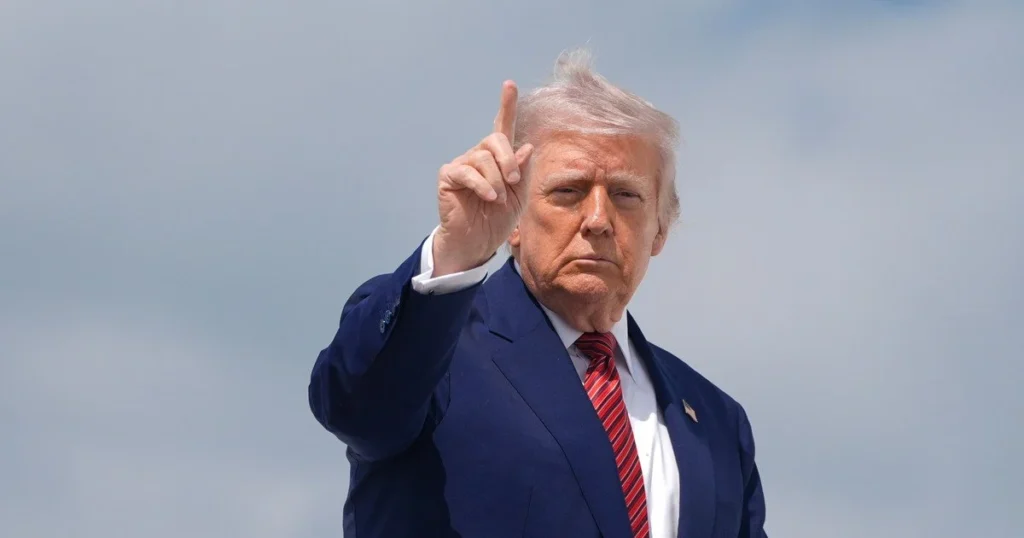
The U.S. is preparing a new mechanism to pressure buyers of Russian energy resources: Congress may grant Trump the authority to impose tariffs of up to 100%
15 July 20:46 ANALYSIS
The U.S. Congress may begin considering a bill this week that would grant President Donald Trump new powers to exert economic pressure on countries that continue to purchase Russian oil and gas. The bill provides for the imposition of tariffs of up to 100% on countries, companies, and individuals that facilitate the export of Russian energy resources.
This was reported by The Wall Street Journal, according to "Komersant Ukrainian".
This primarily concerns the largest importers of Russian raw materials, including China and India. According to the publication, the final decision on imposing tariffs will be made exclusively by the U.S. president.
The bill is reportedly a compromise between Congress and the White House following lengthy discussions on the form of additional sanctions pressure on Russia. Earlier versions of the bill called for much tougher measures, including the imposition of 500 percent tariffs on imports from countries that purchase Russian oil, gas, uranium, and other raw materials. However, the U.S. administration insisted on a more flexible mechanism that leaves it up to the president to determine whether restrictions are necessary.
Watch us on YouTube: important topics – without censorship
In addition to tariffs, the bill contains provisions for sanctions against companies in Russia’s defense, financial, and energy sectors, as well as against the so-called “shadow fleet,” which is used to circumvent existing international sanctions. As the American publication notes, if passed, the bill would mark the first time the U.S. Congress has explicitly authorized the use of import tariffs as a foreign policy tool. The bill also effectively eliminates legal risks for the president following a U.S. Supreme Court ruling that had previously cast doubt on the possibility of unilaterally imposing tariffs.
What Might Be the Consequences for the Russian Economy
According to Oleg Sarkits, an expert on geoeconomics and international trade, if the new mechanism is effectively implemented, Russia risks losing a significant portion of its foreign exchange earnings from energy exports.
“Energy exports to China and India alone are estimated at approximately $250 billion per year. If this mechanism forces key buyers to cut back on imports of Russian raw materials, Moscow could lose a significant portion of this revenue. This would be a major blow to the Russian Federation’s budget, as the public finance deficit already exceeds the government’s initial forecasts,” Sarkits said in an exclusive comment to "Komersant Ukrainian".
The expert also noted that the Russian authorities are already forced to offset the budget deficit by raising taxes, drawing on the National Welfare Fund, and increasing domestic borrowing.
Economist Taras Zagorodniy, speaking with journalists
“If the U.S. administration begins to actively use the new mechanism, it will lead to an increase in the discount at which Russian oil is sold. It is impossible to predict exactly how much it will increase at this point, as this will depend on the situation on the global oil market and the willingness of individual countries to comply with the new U.S. requirements,” the economist said.
According to him, Russia’s financial situation is already deteriorating significantly even without new restrictions. After all, the Russian economy is facing a growing budget deficit, falling export revenues, and problems in the oil and gas sector. Additional trade restrictions can only accelerate these processes. However, the ultimate scale of the losses will depend on how actively the U.S. administration uses this new tool, says Zagorodniy.
According to The Wall Street Journal, the bill has already received the support of an overwhelming majority of senators. After consideration in the Senate, the bill must be approved by the House of Representatives, after which it will be sent to the U.S. president for his signature.
Donald Trump himself, when asked by reporters about the bill, stated only that his administration continues to discuss it.
At the same time, U.S. experts quoted by The Wall Street Journal point out that even after the law takes effect, the final decision on imposing tariffs will remain a political one. This means that the U.S. president will be able to exercise these new powers depending on how the international situation develops and the progress of negotiations regarding Russia’s war against Ukraine.
Read us on Telegram: important topics – without censorship