In Search of Answers: How to Restore Ukrainian Black Soils Damaged by Hostilities
17 April 15:29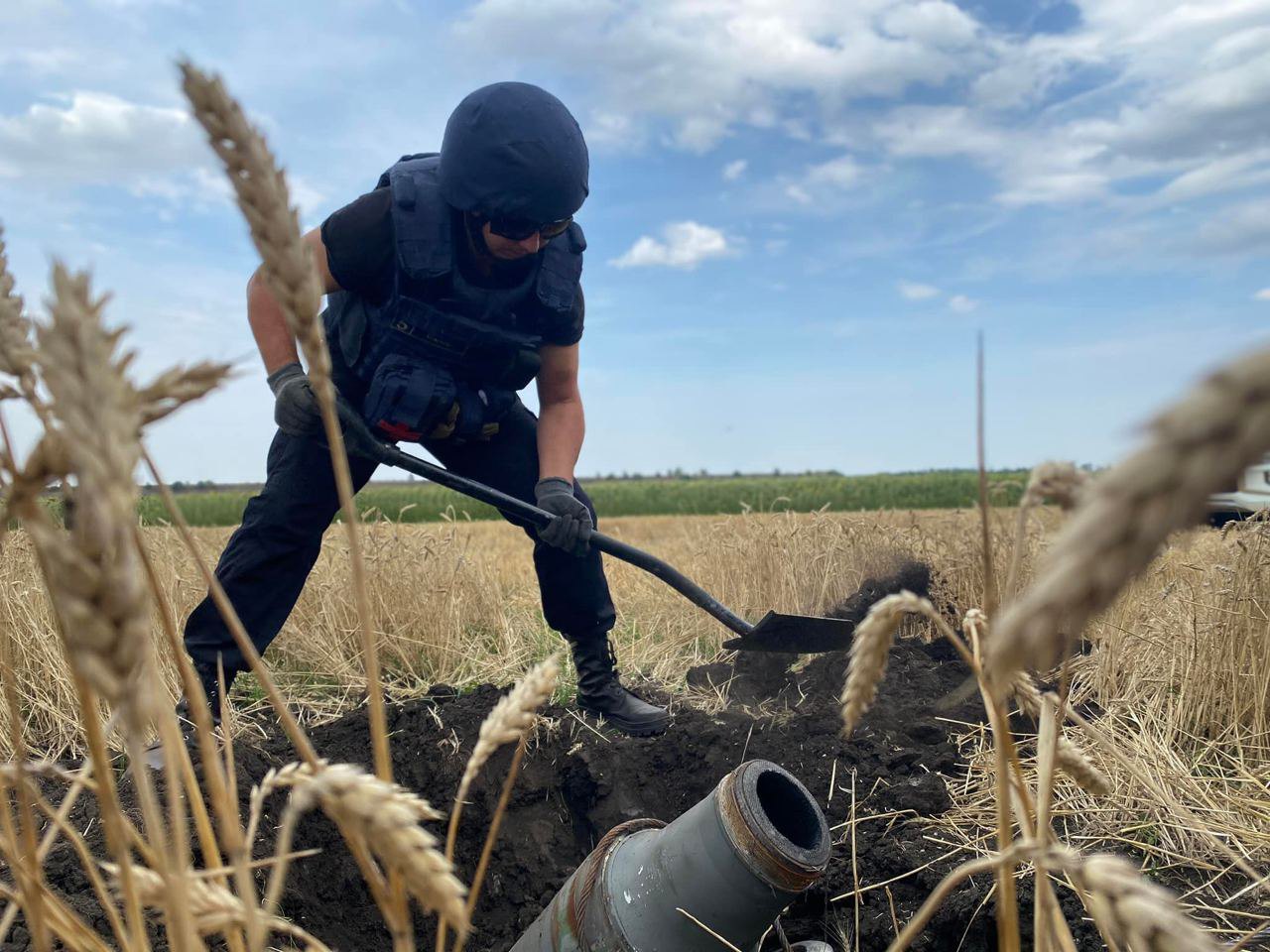 ANALYSIS FROM
Every day of the war adds to the grim tally atand increases the scale of the damage inflicted on Ukraine. UN experts, working alongside Ukrainian scientists, are assessing the damage to Ukrainian soil. "Komersant Ukrainian" investigated how efforts to restore war-damaged land are being organized.
765,130 hectares—that is the amount of potentially contaminated Ukrainian agricultural land already identified in a study conducted under the auspices of the Food and Agriculture Organization of the United Nations (FAO). And these are not the only figures indicating the scale of the problem.
The Extent of the Damage
In early April, the results of a study were presented that examined the condition of land damaged by hostilities in the Kyiv, Zhytomyr, Chernihiv, and Sumy regions during 2025 and the first quarter of 2026. The Ukrainian Society of Researchers has been a partner of the Food and Agriculture Organization of the United Nations in this study for three years. They analyzed soil losses resulting from military operations across seven regions using a methodology developed jointly with the FAO.
“Over these three years, we have thoroughly analyzed every square meter of the surveyed territory across nearly 5 million hectares of occupied Ukrainian territory that has suffered from the Russian Federation’s armed aggression against Ukraine. Within the Kyiv, Zhytomyr, Chernihiv, Sumy, Kharkiv, Mykolaiv, and Kherson regions, the territory of 124 territorial communities was analyzed, and a separate analytical report containing detailed cartographic materials was prepared for each,” the Society of Researchers of Ukraine reports.
The report also notes that 1,095,314 craters, pits, and shell holes from shells and other explosive objects have been identified in these territories, and 765,130 hectares of potentially contaminated agricultural land have been identified. And one more figure: as of April 1, 2026, more than 54,000 square kilometers of war-affected territories in four regions have been mapped.
Clearing or Contamination
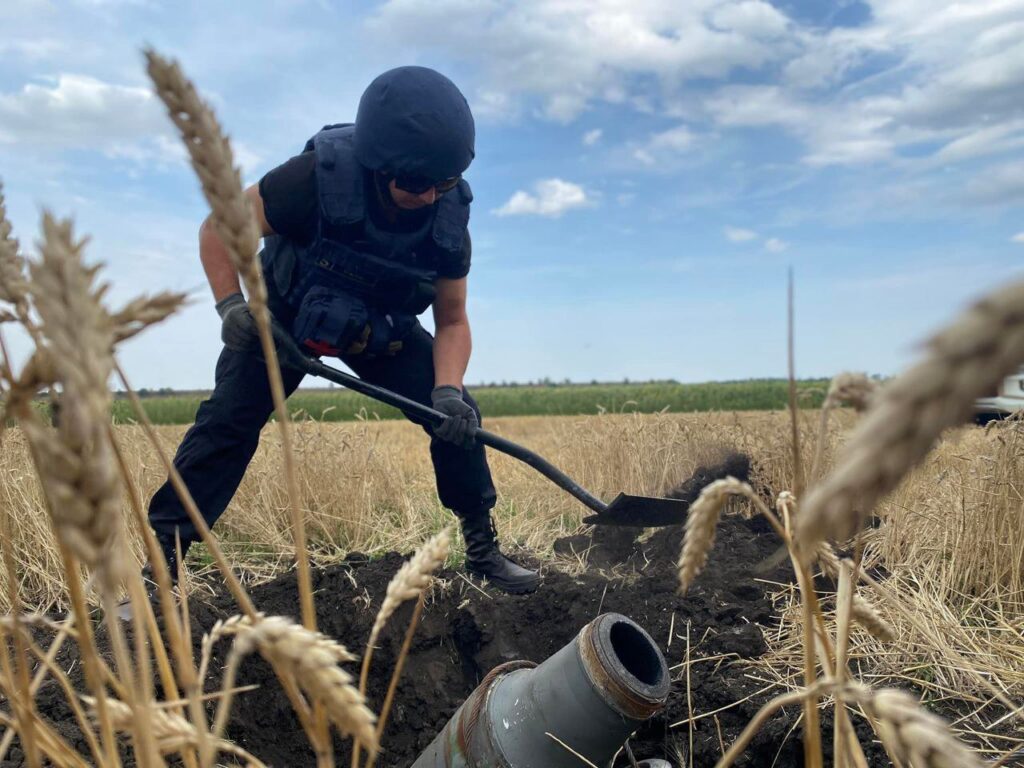
While the damage inflicted on Ukrainian lands is being documented, efforts are underway to clear the territories of explosive hazards. The Center for Humanitarian Demining is responsible for organizing this process in Ukraine. It is this budgetary institution that coordinates the demining process among the involved government agencies, mine action operators, and producers—primarily farmers whose lands are contaminated with explosive ordnance.
This year’s “Humanitarian Demining” budget program launched on April 9. It provides for 100% coverage of costs for demining agricultural land and 80% coverage for land already cleared from February 24, 2022, through April 15, 2024, inclusive. This year, the state budget has allocated 2 billion UAH for the humanitarian demining of agricultural land. Farmers can apply to participate in the program through the State Agrarian Register.
Currently, approximately 132,000 km² of land in Ukraine remains contaminated with explosive ordnance. Nearly 42,000 km² has already been returned to productive use. This was reported byVolodymyr Baida, director of the Center for Humanitarian Demining. He also mentioned the World Bank’s projections, according to which it would take about 10 years to fully clear Ukraine of mines, and expressed the view that this work could be completed more quickly:
“These figures (announced by the World Bank—ed.) were cited before the humanitarian demining process began. Together with the Ministry of Defense, the Ministry of Economy, and the State Emergency Service, we see that the pace set by Ukrainian operators, their achievements, and scientific and technical progress allow us to be quite optimistic. I hope that within three years, 80% of the most difficult areas can be cleared.”
At the same time, it is worth noting that representatives of environmental organizations have questions regarding how land demining is carried out in Ukraine.Oleksiy Vasylyuk,head of the NGO “Ukrainian EnvironmentalGroup,” continues.
“There are currently a great many humanitarian demining operators. It has become a business. Communities and farmers commission demining work using their own funds or donor funds. There are various options. For example, people go out and search for explosive objects. But this is genuinely dangerous. Or a vehicle simply drives through and detonates everything. The second option, of course, is much cheaper and faster. But can we say that this land has been returned to use? Of course not. Humanitarian demining organizations use the term ‘clearing.’ But, in reality, if it’s machine demining and all explosive ordnance is detonated not at a special testing ground, then this isn’t clearance, but contamination. Because as a result of the detonation, if it was carried out directly in the field, chemical contamination occurs,” the expert notes.
Oleksiy Vasylyuk also explains why it is important to remember this.
“The current situation worries me a bit because, objectively speaking, we don’t know how things will develop from here. If we join the European Union, we’ll have to follow European standards. And they’ll tell us, for example: these fields where things were detonated—none of that can be used because it’s contaminated. And produce from there cannot be used either for export to other EU countries or for consumption within Ukraine itself. You can grow, say, energy willow on them or install solar panels, but you cannot grow crops from which food products will be made,” the expert emphasizes.
Not Just Demining
At the Food and Agriculture Organization of the United Nations (FAO), whose experts are helping Ukraine identify and document land plots damaged by the war, they explain that it is precisely on the basis of this data that further surveys, land restoration, and the safe return of these territories to use can and must be planned.
In other words, demining fields is a necessary but not the only step that needs to be taken. In particular, given the devastating and multifaceted impact the land is experiencing. According to Oleg Nivievsky, founder of the Center for Food and Land Use Research at the Kyiv School of Economics, one of the main factors affecting the soil is its destruction due to explosions.
“Explosions mix up the soil layers. The top half-meter of soil is the most fertile, but it is precisely this layer that suffers the most from explosions. As a result of the mixing of layers, the microflora is destroyed, the structure changes, and fertility decreases. Added to this are: soil compaction by heavy military equipment, chemical contamination with heavy metals (cadmium, copper, zinc), fuel residues, and the destruction of forest belts—natural protection against erosion and wind,” the expert notes.
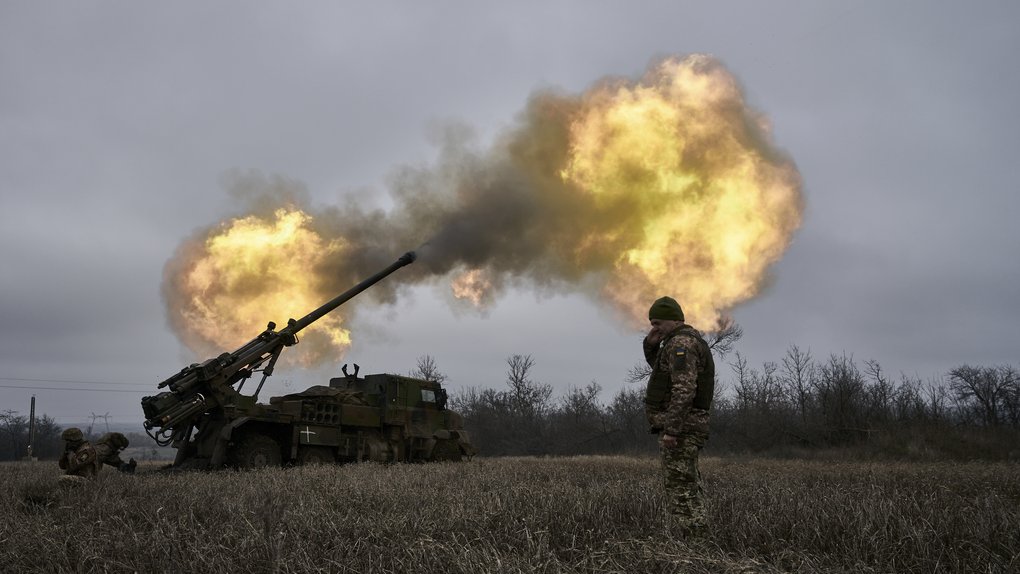
In fact, Ukrainian experts have already prepared several studies in which they analyzed in detail the mechanical, physical, and chemical effects of combat operations on the soil. Just one example: when a single 115 mm high-explosive fragmentation round, loaded with hexogen, explodes, it produces about 4,000 liters of gas containing the combustion products of this explosive. Up to 30% of the gases disperse into the air, while the majority—heavy fractions and heavy metals—settle onto the soil. It is important to note that each type of munition has a completely different chemical composition, which further complicates the assessment of contamination. From this, we can conclude that every area affected by combat operations must be studied, and a specific restoration program must be implemented for each area. This was emphasized in one of her interviews by researcher Anastasia Splotidit, who studies the impact of war on Ukrainian soils.
“The most practical and simplest approach is to remove these areas from agricultural use or other economic activities and transfer them to the nature reserve fund. We can also look for ways to restore the soil cover. Although removing heavy metals from the soil is a rather labor-intensive and costly task. A promising approach for this purpose involves phytoremediation measures, which use plants that accumulate pollutants as trace elements in their tissues. Other soil detoxification measures include the application of fertilizers, the use of natural and artificial sorbents, and so on. Each of these methods has its advantages and specific effects on the soil,” says the expert.
Experience exists
In general, decisions regarding the restoration of a particular area should be approached on a case-by-case basis and, above all, depending on the extent to which the area can physically be used in the future, as well as the resources required for its restoration. This is the view of Oleksiy Vasylyuk, head of the NGO “Ukrainian Nature Conservation Group.” He also cites the examples of France and Germany, where there are areas that have been left unused since World War I.
“In France, there is the so-called Red Zone—it covers 1,200 square kilometers, which is a considerable area—and people aren’t even allowed in there. Based on the experience of these European countries, such territories are not used in any way, are monitored, and very often receive protected status,” the expert notes.
Researcher Anastasia Splotidit provides several more examples of post-war use of land damaged by military operations.
“In Vietnam, for example, they utilized the craters left behind after American bombings. The Vietnamese creatively used them as fish hatcheries. Or the abandoned territory between North and South Korea, known to everyone as the demilitarized zone. It is now an important biodiversity reserve, home to thousands of species,” says the expert.
In any case, according to Oleksiy Vasylyuk, head of the “Ukrainian Nature Conservation Group,” Ukrainians must be prepared to, in a sense, redraw the map of Ukraine and leave those land plots that would indeed be dangerous to use to natural restoration. Or build solar power plants there or plant forests. In other words, find a new and useful purpose for these areas.
Author: Serhiy Vasylevych