A Russian textbook includes Kherson, Zaporizhzhia, and the entire Donbas region as part of the Russian Federation: what is known
20 May 17:02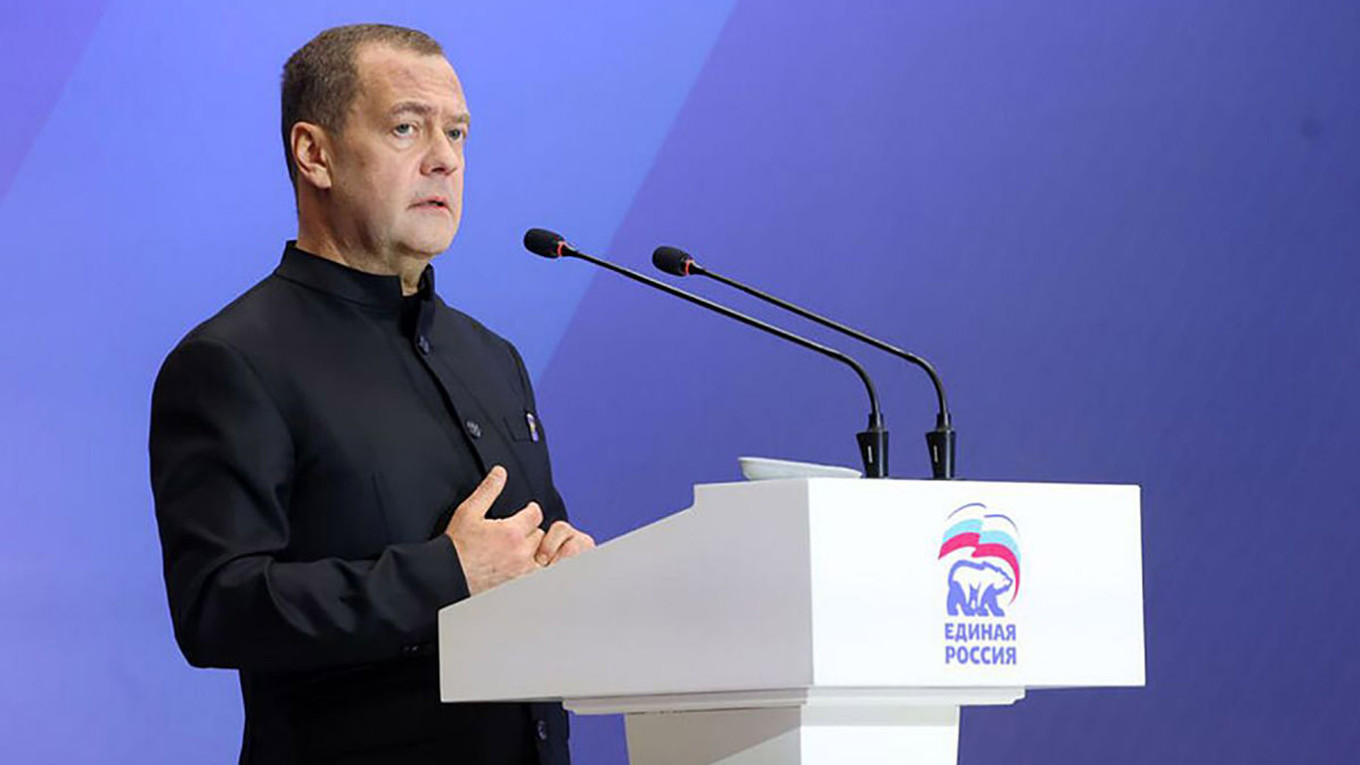
A new social studies textbook for 9th grade, edited by Dmitry Medvedev, deputy chairman of the Russian Federation Security Council, includes a map of Russia showing the annexed territories of Ukraine, according to "Komersant Ukrainian", citing Russian propaganda media.
The map places the city of Kherson—which the Russian army surrendered in the fall of 2022—within Russia’s borders, as well as the entire Donetsk and Zaporizhzhia regions, where fighting continues to this day. Meanwhile, the center of the Zaporizhzhia region—the city of Zaporizhzhia, with a population of about 700,000—is not marked on the map.
In the section dedicated to the emergence of the state, the authors quoted Russian dictator Vladimir Putin’s statement that “Russia’s borders do not end anywhere.” The president delivered this remark at the Russian Geographical Society’s awards ceremony in 2016.
The textbook devotes significant attention to Russia’s role in a “multipolar world” and its confrontation with the West. At the same time, the war in Ukraine and its consequences are barely mentioned. The text mentions the abbreviation “SVO” only three times, refers to the “confrontation with neo-Nazis in Ukraine” without further clarification, and also mentions the “aggressive-nationalist regime in Ukraine.”
“Russia has taken on the mission of leading the new world order,” states the chapter “Russia on the Path to the Future.” The textbook’s authors claim that the West, meanwhile, is imposing its views—“same-sex marriages, and the desire to instill in people’s minds the idea that human biological nature can be changed.”
At the same time, the textbook identifies demographics as one of Russia’s most pressing problems. This section is illustrated with a photograph of a family with four children and the caption: “A large family is three children or more. The more, the better.”
In the section on the information space, students are presented with definitions of three terms: fake news, disinformation, and information warfare. Websites of government agencies, encyclopedias, dictionaries, and “official media” are described as the safest sources.
At the same time, the authors of the textbook warn students that victory in the information war can ensure the defeat of the enemy without an army. As examples, they cite the “color revolutions” in Ukraine, Kyrgyzstan, and Georgia, as well as “other social unrest that occurred through the use of social media and messaging apps.”
The unified social studies textbooks for 9th and 10th grades, edited by Medvedev, will be distributed to Russian schools starting next school year.