Oil prices have hit a six-week high: what’s happening in the Middle East
23 July 07:51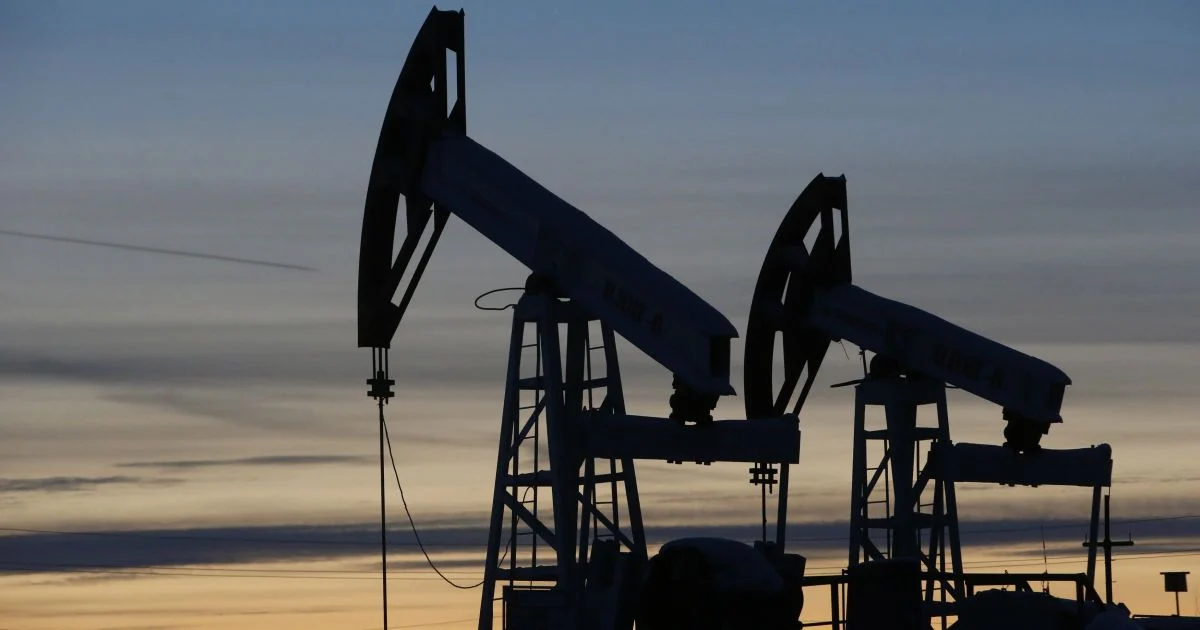
Global oil prices rose on Thursday, July 23, to their highest level in more than six weeks. The reason for the latest surge in prices was the escalation of the conflict between the United States and Iran, as well as attacks by Yemeni Houthis on oil tankers in the Red Sea. This was reported by "Komersant Ukrainian", citing Reuters.
Brent crude futures rose by $1.93, or about 2%, to $96 per barrel. This is the highest level since June 8. U.S. West Texas Intermediate (WTI) crude rose by $1.44, or 1.7%, to $88.27 per barrel.
Oil prices hit a six-week high
The day before, Brent had risen by more than $3 and closed at $94.07 per barrel. On Thursday, prices continued to climb, reaching $96.
The main factor driving the price increase remains the risk of disruptions to oil supplies from the Middle East. Investors fear that simultaneous tensions in the Strait of Hormuz and the Red Sea could severely restrict tanker traffic and reduce the volume of crude oil available on the global market.
The U.S. carried out its twelfth consecutive night of strikes against Iran
The U.S. military reported conducting its twelfth consecutive night of strikes on Iranian territory.
The new round of strikes came after U.S. President Donald Trump threatened to destroy Iranian bridges or power plants in response to every attack on ships in the Strait of Hormuz.
Such statements have heightened fears of a further escalation of the war and a possible halt to maritime energy shipments from the region.
Iran announced the complete closure of the Strait of Hormuz
The Islamic Revolutionary Guard Corps stated that the Strait of Hormuz is under Iran’s control and is “completely closed” as long as the United States continues military operations in the region.
Iran warned that no tanker would be allowed to enter or leave the strait without Tehran’s approval.
Prior to this, the Iranian military reported an explosion and fire on an oil tanker that was attempting to navigate a route south of the strait. According to their account, this sea lane had been mined. Two other tankers turned back following the incident.
Prior to the current escalation, approximately 20% of global oil supplies passed through the Strait of Hormuz. Therefore, even a partial restriction on vessel traffic in this area quickly affects global oil prices.
Houthis Attacked Oil Tankers in the Red Sea
The actions of the Iran-backed Yemeni Houthis have further contributed to rising prices.
The group announced a naval blockade of Saudi Arabia and threatened to attack ships carrying Saudi oil through the Bab el-Mandeb Strait.
The Houthis announced an operation against two Saudi oil tankers. According to maritime security services, the tanker Encelia, flying the Saudi Arabian flag, was struck in the Red Sea.
The group also claims that, following its warnings, it forced about ten ships to turn back and abandon their course toward Saudi ports.
Why the threat to the two straits is dangerous for the global market
The Strait of Hormuz and the Bab el-Mandeb Strait are among the most critical maritime routes for global oil trade.
The Strait of Hormuz provides access for tankers leaving the Persian Gulf, while the Bab el-Mandeb Strait connects the Red Sea to the Gulf of Aden and, further on, to the Indian Ocean.
Simultaneous restrictions on shipping along these routes could complicate the rerouting of tankers and lead to:
- a reduction in the available supply of oil;
- higher shipping costs;
- an increase in the cost of ship insurance;
- higher fuel prices;
- new inflationary pressure on the global economy.
Analysts believe that if tensions persist, Brent could approach the $100-per-barrel mark. Currently, the market is primarily factoring in logistical risks rather than a long-term physical loss of significant supply volumes.
U.S. oil inventories rose unexpectedly
The price increase occurred despite a rise in commercial oil inventories in the United States.
According to the U.S. Energy Information Administration, crude oil inventories rose by 2 million barrels over the previous week.
Analysts surveyed by Reuters, on the other hand, had expected a decline of approximately 1.1 million barrels. The increase was attributed to lower utilization rates at U.S. refineries, a drop in exports, and a rise in imports.
How Rising Oil Prices Could Affect Ukraine
Rising global oil prices do not mean an immediate and proportional increase in fuel prices in Ukraine. At the same time, if Brent remains near $95–100 per barrel for an extended period, it could gradually put upward pressure on wholesale prices for gasoline and diesel fuel.
Fuel prices in Ukraine are also influenced by the exchange rate, taxes, logistics costs, operators’ inventories, and competition among gas station chains.
The greatest risk to the market will arise if shipping disruptions persist for several weeks or lead to an actual reduction in oil supplies from the Middle East.