“Drone Apocalypse” in Russia: Expert Reveals the Main Secret Behind the Failure of Moscow’s Air Defense System
18 June 18:56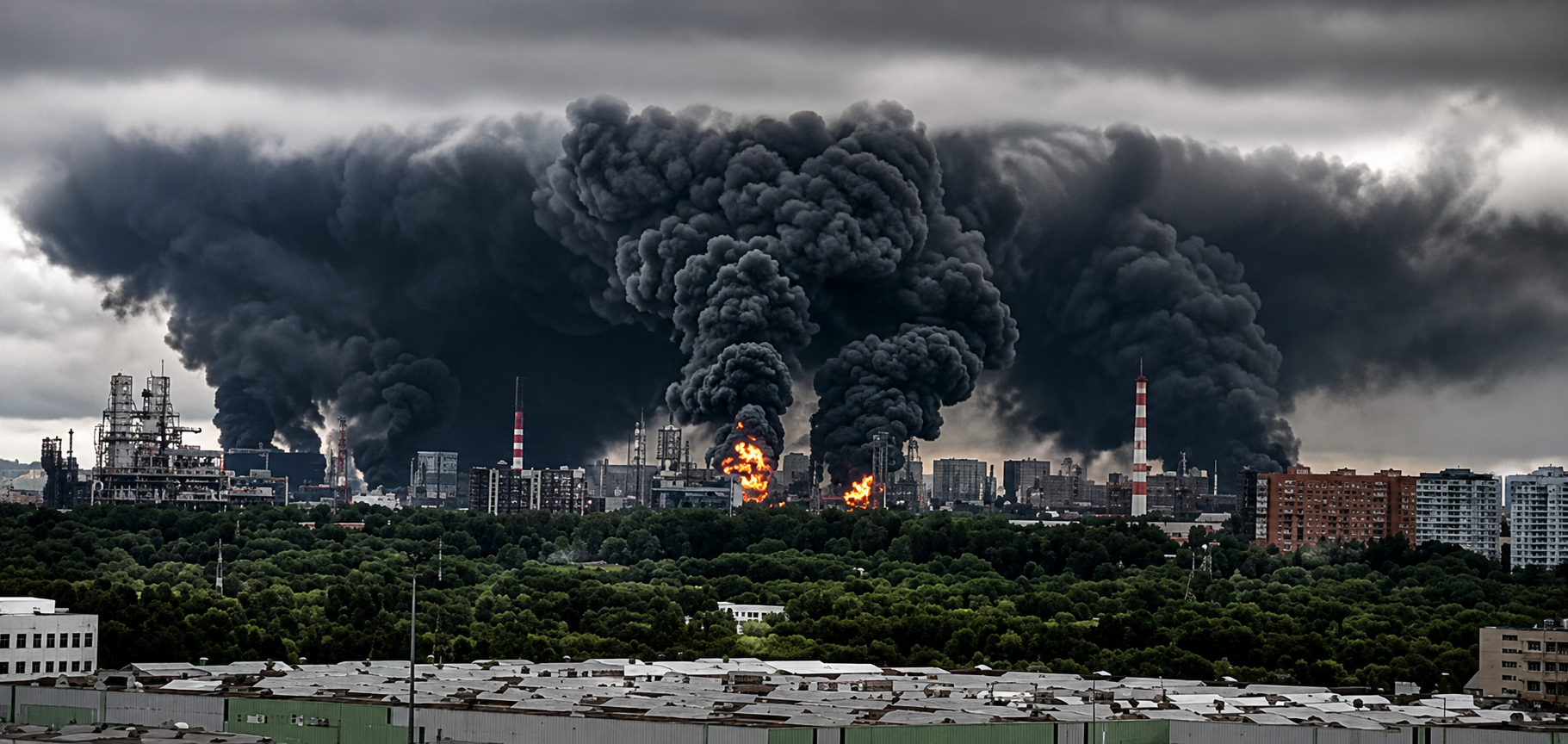 ANALYSIS
The Russian capital and its surrounding areas have endured one of the largest and most destructive drone attacks in the past two years. According to the Russian Ministry of Defense, on the night of June 18, 17 regions of the country came under a massive attack, including the annexed Crimea and the waters of the Sea of Azov. Overall, the reports cite an astronomical figure—allegedly 555 drones were “intercepted and destroyed.” Ukrainian President Volodymyr Zelenskyy has already called this attack a “fully justified response” to Russia’s regular strikes on Ukrainian cities and the civilian population. What are the real consequences of the strikes on Russia? Where is Putin hiding his air defense systems, and why is Valdai better protected than cities with millions of residents? How is fuel from burning factories directly linked to Tu-95 and Tu-160 sorties? And what can Ukraine expect in response? "Komersant Ukrainian" investigated.
Why isn’t Russian air defense working?
While Russian propaganda reports “successful shootdowns,” military expert Roman Svitan analyzed the real state of affairs regarding the protection of Russia’s strategic facilities in a commentary for “Kommersant Ukrainian.” According to him, the technical specifications of Ukrainian long-range drones allow them to easily deliver a warhead weighing nearly 100 kilograms practically all the way to the Urals.
“Ukrainian drones are primarily powered by internal combustion engines (ICEs). They fly effectively in the denser layers of the atmosphere—at altitudes ranging from zero to four or five kilometers. Above five kilometers, the engines start to choke due to a lack of oxygen, and installing additional compressors adds dozens of kilograms of ‘metal’ that take away from the payload of fuel or explosives. “That’s why no one flies any higher,” explains Svitan.
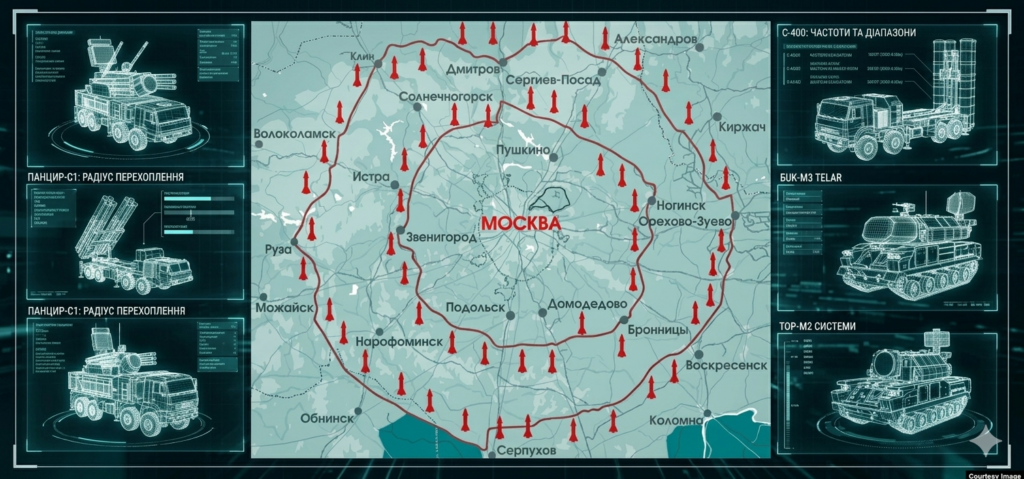
Knowing this, the Russian command is attempting to artificially close off the airspace within the European part of the Russian Federation to a depth of up to 2,000 km and an altitude of up to 5,100 meters. This is where about 70% of the population and two-thirds of Russia’s military-industrial complex are concentrated. To facilitate the work of their air defense forces, the Russians are even imposing strict restrictions on civilian aviation, leaving only narrow 10-kilometer corridors. Any other object in this zone is automatically treated as hostile. However, the Kremlin’s logic is undermined by the sheer scale of its own territory.
The “Residual Principle” of Defense
Russia physically does not have—and will never have—enough anti-aircraft missile systems to cover 17 million square kilometers of territory, 1,120 cities, dozens of large oil refineries, and thousands of kilometers of pipelines with linear production control stations (LPCS).
“Even if you gathered all the SAM systems from around the world, there wouldn’t be enough to create a dense defense. That’s why Moscow took the simplest approach: they provide dense coverage for only four key locations—Moscow, Valdai (Putin’s residence), part of St. Petersburg, and the Kerch Bridge. Everything else is funded and defended on a residual basis. If there’s any ‘spare’ system, it’ll be sent to Ryazan or Saratov. Ukrainian radio intelligence detects these systems instantly, because any radar in the radio frequency band glows like a Christmas tree,” notes Svitan.
That is precisely why strategic giants such as the Syzran Oil Refinery (which supplies jet fuel to the military airfield in Engels, where Tu-95 and Tu-160 bombers are based) or the Ryazan Oil Refinery are regularly left helpless against Ukrainian drones. The systematic destruction of oil refineries and oil blending plants, where export-grade crude (such as Urals) is blended, is step by step undermining the financial backbone of the Russian war machine.
Watch us on YouTube: important topics – without censorship
Panic in the Moscow Region and Kapotnya Ablaze: What Happened?
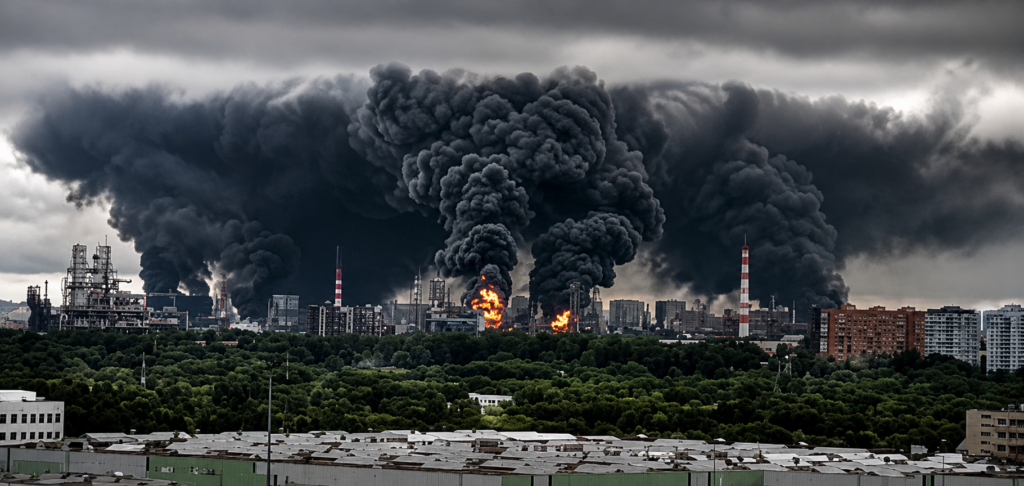
The real consequences of the Ukrainian drone attacks on Russia, documented by eyewitnesses and local authorities, paint a clear picture: the Russian air defense system is overwhelmed by the sheer volume of attacks. The Moscow region became the epicenter of the nighttime chaos. Moscow Mayor Sergei Sobyanin reported that approximately 194 drones were shot down over the capital. However, the “effectiveness” of interception is traditionally measured by the scale of damage caused by debris and direct hits.
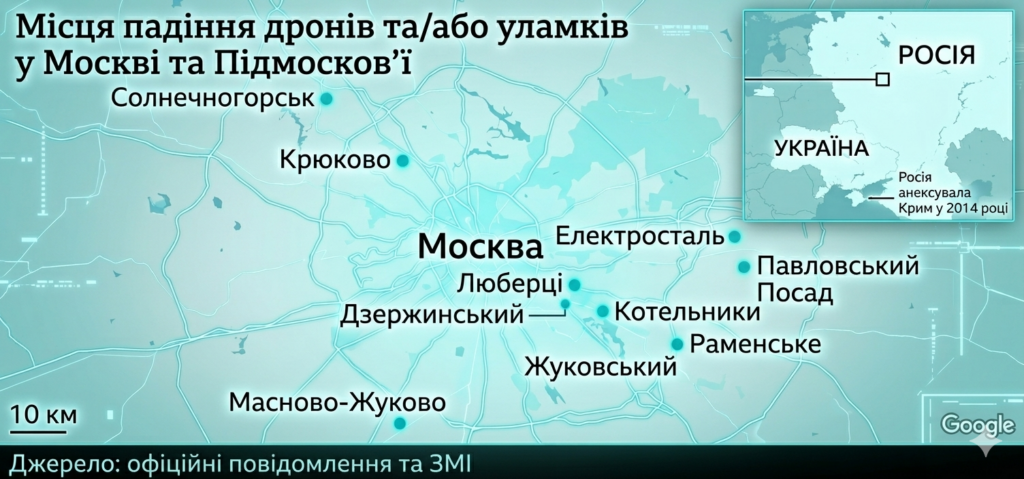
- The Moscow oil refinery in Kapotnya: This strategic oil refinery was attacked for the second time in a week. The previous time, on June 16, according to Reuters, the facility completely halted operations due to serious damage to its primary oil refining unit. The new strike triggered another large-scale fire, which took until midday to extinguish. Due to the threat and security measures, law enforcement authorities completely closed the Moscow Ring Road (MKAD) and a number of adjacent streets.
- Retail Giants: Debris and direct hits caused fires at the well-known “Sadovod” and “Mega Belaya Dacha” shopping centers. The latter has completely ceased operations.
- Aviation Collapse: Moscow’s airports (particularly Sheremetyevo) were completely paralyzed. Passengers were urgently evacuated to shelters directly from the aircraft. Aeroflot and Rossiya Airlines canceled more than 170 flights, and over a hundred more planes were grounded.
In the Moscow region, the number of casualties rose rapidly to 17 people, including two children. In the city of Zhukovsky, a drone crashed into a high-rise building on Gagarin Street, damaging the structure between the 23rd and 24th floors. In addition, the Rostov region was also hit: local authorities confirmed one fatality and two civilians injured, while monitoring groups reported yet another oil depot on fire.
What’s next: How will Russia respond?
Against the backdrop of massive setbacks on its own home front, Moscow is, as usual, ramping up its aggressive rhetoric. The Russian Foreign Ministry is once again threatening “systemic” strikes against Kyiv and Ukrainian defense industry facilities, citing the recent use of the “Oreshnik” ballistic missile.
According to analysts’ estimates, Russia has stockpiled over a hundred missiles of each type, including untapped reserves. However, the capabilities of the Russian military-industrial complex have their limits. Under normal operational conditions, the enemy is capable of launching massive attacks approximately once a week (usually closer to the weekend) with an intensity of about 40 missiles and 400 drones. From Monday through Friday, routine flight crew training and engineering services’ work on reloading launchers continue. Massive strikes that deplete strategic reserves are possible no more frequently than once every six months.
Military experts urge Ukrainians not to panic: the Kremlin’s latest statements are a classic information and psychological special operation (IPSO) involving top Russian officials. The enemy will continue to target energy and civilian infrastructure in an attempt to compensate for its own inability to protect even the skies above the oil refineries in Kapotna or the military facilities near Moscow. However, this is not the first time that the defense forces and the civilian population have faced this scenario.
Read us on Telegram: important topics – without censorship