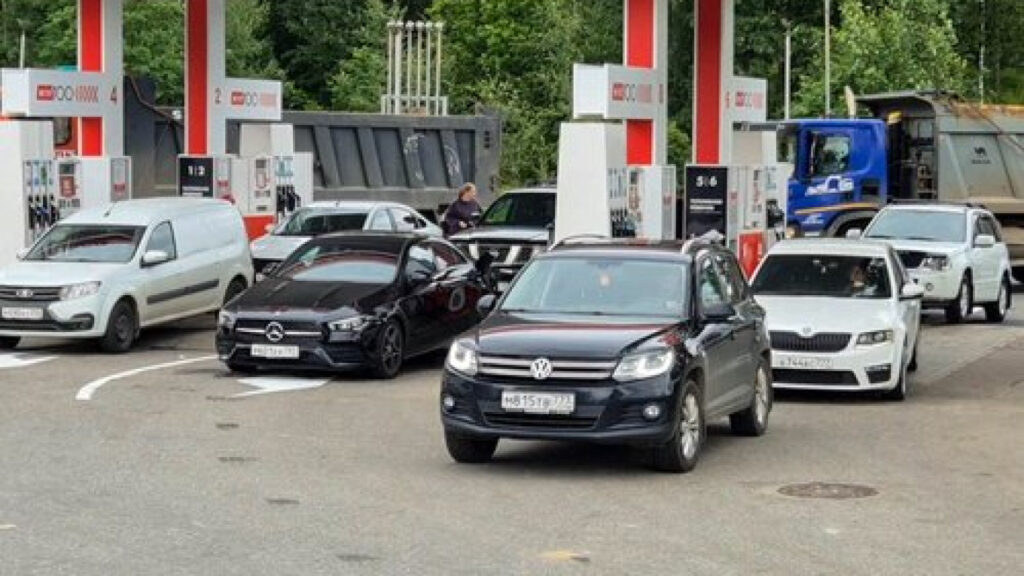
Ukrainian “sanctions” in action: Gasoline prices in Moscow and the Moscow region have risen significantly
20 June 09:15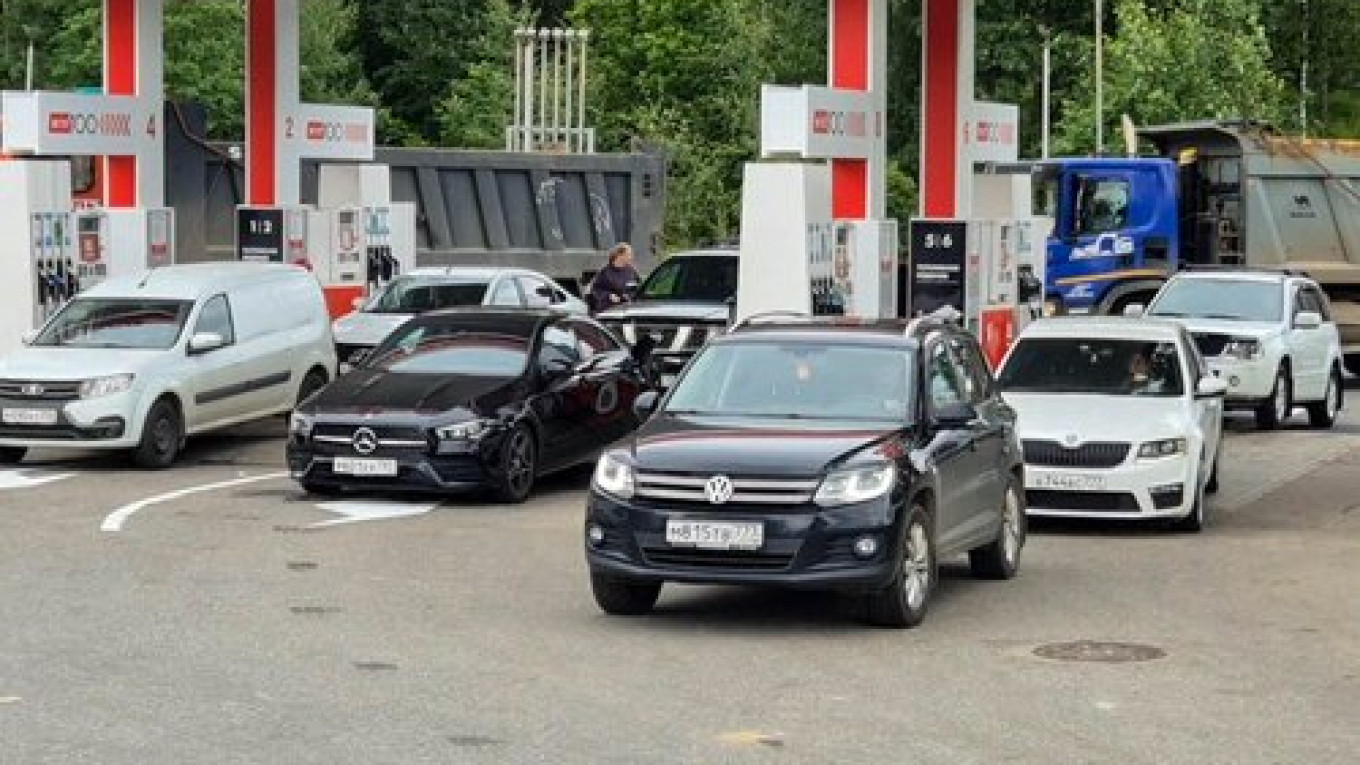
In the Moscow region, the average price of gasoline rose sharply between June 15 and 19, according to "Komersant Ukrainian", citing Russian propaganda media.
As noted by the media, the rate of increase accelerated several times over compared to previous weeks. While from March through June 15, the price of AI-95 in Moscow rose by 0.05–0.5 rubles per liter per week, this week the price jumped by 1.76 rubles, reaching 75.33 rubles per liter. AI-92 in the capital rose by 2.07 rubles to 67.95 rubles per liter—an increase of 0.1–0.5 rubles.
Watch us on YouTube: important topics – without censorship
In the Moscow Region, the situation is even more pronounced: the average price of AI-95 rose by 3.44 rubles to 76.49 rubles, while AI-92 rose by 3.87 rubles to 69.71 rubles. On average across the four categories (AI-92 and AI-95 in Moscow and the Moscow Region), the price rose by nearly 3 rubles (~2.79) per liter. Diesel fuel in Moscow rose by 1.73 rubles (to 81.7 rubles per liter), and in the Moscow region—by 3.33 rubles (to 82.85 rubles). Analysts note that this marks the sharpest increase since March.
The reason for the price spike is a fuel shortage caused by Ukrainian drone strikes on oil refineries. Independent retail chains are facing shortages and are forced to purchase fuel at inflated prices. As an industry source explained, exchange transactions involving Belarusian petroleum products are currently taking place at prices exceeding 111,000 rubles per metric ton for AI-92, over 124,000 rubles per metric ton for AI-95, and 135,000–140,000 rubles per metric ton for diesel fuel. Russian petroleum products are 37–50% cheaper, but they are extremely difficult to procure: shipping times can exceed two months.
Sergey Frolov, managing partner at NEFT Research, attributed the situation to “unscheduled refinery maintenance,” increased seasonal demand, and panic buying.
The Federal Antimonopoly Service has already taken an interest in the pricing. On June 19, the FAS demanded that the “EuroTrans” (57 “Trassa” gas stations) and “NaftaMagistral” (over 100 gas stations) chains justify the price increases.
Strikes at oil refineries, which have reduced oil refining in Russia to a two-decade low, have triggered a surge in fuel inflation—the highest in several years. According to Rosstat data, during the week of June 9–15, gasoline prices at Russian gas stations rose by an average of 0.95%, and by 1.93% over two weeks—twice as much as in all of May (0.85%). Gasoline inflation has been accelerating for the fifth consecutive week: from June 2 to 8, the increase was 0.92%, from May 26 to June 1—0.45%, and two weeks earlier—0.34% and 0.11%, respectively, according to the statistics.
Read us on Telegram: important topics – without censorship