Tax ID and card number on “Ukrposhta” receipts: What the National Bank and lawyers have to say
7 August 17:15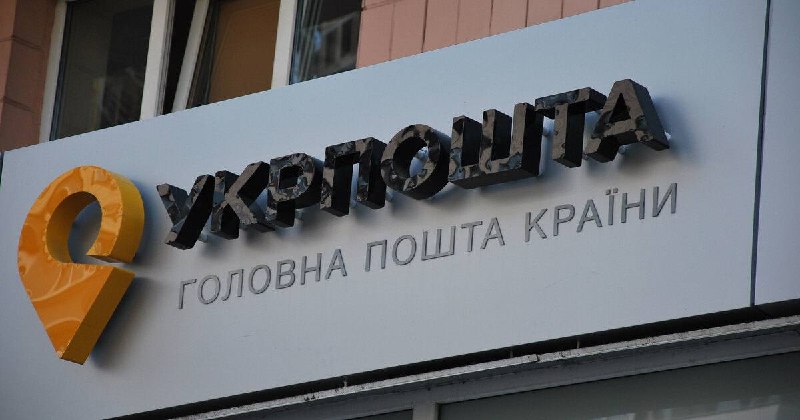
Following statements by “Ukrposhta” regarding the printing of personal data on paper receipts and the mandatory inclusion of tax identification numbers, a wave of questions arose among Ukrainians. The situation became more complicated after the National Bank of Ukraine stated that some of the information circulating did not comply with current regulations. "Komersant Ukrainian" reports on this, citing RBC-Ukraine.
How It All Began
On Monday, August 3, “Ukrposhta” announced that, starting August 1, it would begin printing payers’ personal data on paper receipts for utility and other payments.
The company stated that, in accordance with NBU requirements, the following must be indicated on the receipts:
- the payer’s full name;
- the taxpayer’s registration number (RNOKPP);
- the full bank card number when paying by card.
At the same time, “Ukrposhta” stated that it does not support these requirements, considers them to be in violation of international standards for personal data protection, and has appealed to the NBU, the government, the Verkhovna Rada, and the ombudsman with a proposal to revise the relevant regulations.
Watch us on YouTube: important topics – without censorship
The company also explained that customers who have previously provided their tax ID number when receiving other services do not need to do so again.
The National Bank’s Response
The day after Ukrposhta’s statement, the National Bank of Ukraine issued an official clarification.
The regulator stated that it had not established any new requirements regarding the mandatory printing of an individual tax number (ITN) or a full bank card number on receipts, and that the information disseminated by the company does not comply with current legislation.
The NBU emphasized that:
- during non-cash payments, the full name and taxpayer identification number (TIN) are not mandatory details at all;
- the bank card number may only be indicated in a masked form;
- regulatory documents do not contain any specific requirements applicable solely to “Ukrposhta.”
The regulator also announced that it will review Ukrposhta’s practices regarding the preparation of payment documents following the company’s public statements.
The National Bank emphasized that the discussion regarding regulation should be based on the exact wording of regulatory documents.
Artem Narodenko, head of the business support practice at Juscutum, believes that the problem lies not so much in the regulatory framework itself as in the relationship between its individual provisions and the practice of their application.
“If the regulator considers a certain requirement to be mandatory in all cases without exception, such a requirement must be explicitly and unambiguously enshrined in the regulatory act. If the text allows for multiple interpretations or does not contain an explicit indication of a universal obligation, there is a risk that market participants will interpret the requirements differently,” he explained in a comment.
According to the lawyer, any doubts regarding the scope of obligations for payment market participants should preferably be resolved at the level of the regulatory act itself, rather than through separate clarifications.
Cash on Delivery for Packages: What Has Changed Now
On Thursday, August 6, Ukrposhta CEO Ihor Smiliansky explained another change that no longer concerns utility payments but rather cash-on-delivery payments for postal items.
According to him, when processing cash-on-delivery payments, the tax ID number must now be provided regardless of the transaction amount.
However, the rules vary depending on the payment amount:
- if the amount does not exceed 5,000 hryvnias, the operator records the taxpayer identification number (TIN) based on the customer’s verbal statement without requiring supporting documents;
- if the amount exceeds 5,000 hryvnias, the customer will need to present a document confirming their tax identification number.
Smiliansky emphasized that these requirements apply not only to “Ukrposhta” but to all operators providing relevant financial services.
At the same time, he suggested that during inspections, the National Bank may require operators to additionally verify the accuracy of the tax identification number if it is provided only verbally.
Narodenko notes that it is precisely the discrepancy between the text of regulatory acts, official clarifications, and inspection practices that can create problems for businesses.
“One of the fundamental principles of the rule of law is the principle of legal certainty. If a regulatory act, official clarifications, and inspection practices effectively establish different standards of conduct, this creates significant risks for businesses. Market participants may act in good faith, guided by the regulator’s official public positions, but encounter a different approach during an inspection,” he noted.
According to the lawyer, this situation increases compliance costs for businesses and makes it more difficult to meet regulatory requirements.
Why the confusion arose and how to resolve it
In fact, two different situations were being discussed simultaneously in the media.
The first concerned the issuance of paper receipts for payments, regarding which the NBU stated that it had not introduced any new requirements.
The second concerned customer identification during financial transactions, specifically the processing of cash-on-delivery payments for packages. It was precisely regarding such transactions that “Ukrposhta” clarified the procedure for indicating the tax identification number.
According to Artem Narodenko, if the National Bank truly intends to establish a universal requirement to indicate the RNO-KPP in relevant cases, this should be explicitly stipulated in Resolution No. 103 itself. According to Smiliansky, it is precisely this document that can be interpreted in two ways.
“Clarifications can help establish a uniform practice for application, but they cannot alter the substance of regulatory requirements or impose new obligations not explicitly provided for in the resolution itself. Amending the resolution itself is the most effective way to ensure legal certainty,” the lawyer emphasized.
He also does not rule out the possibility that, in the event of ambiguous interpretations of the regulations, legal disputes may arise between businesses and the regulator.
“If enforcement measures are applied, a market participant has the right to challenge the relevant decision, in particular by citing the ambiguity of the regulatory framework, the principle of legal certainty, and the impossibility of foreseeing the specific method of compliance that subsequently formed the basis of the regulator’s decision,” Narodenko noted.
At the same time, he noted that the prospects for such disputes will depend on the specific circumstances of the case, the content of the regulatory provisions, the NBU’s official clarifications, and the practice of their application.
Read us on Telegram: important topics – without censorship