Crimea Without Electricity, Water, and Fuel: The Main Intelligence Directorate Reports on the Deepening Crisis on the Occupied Peninsula
3 August 21:53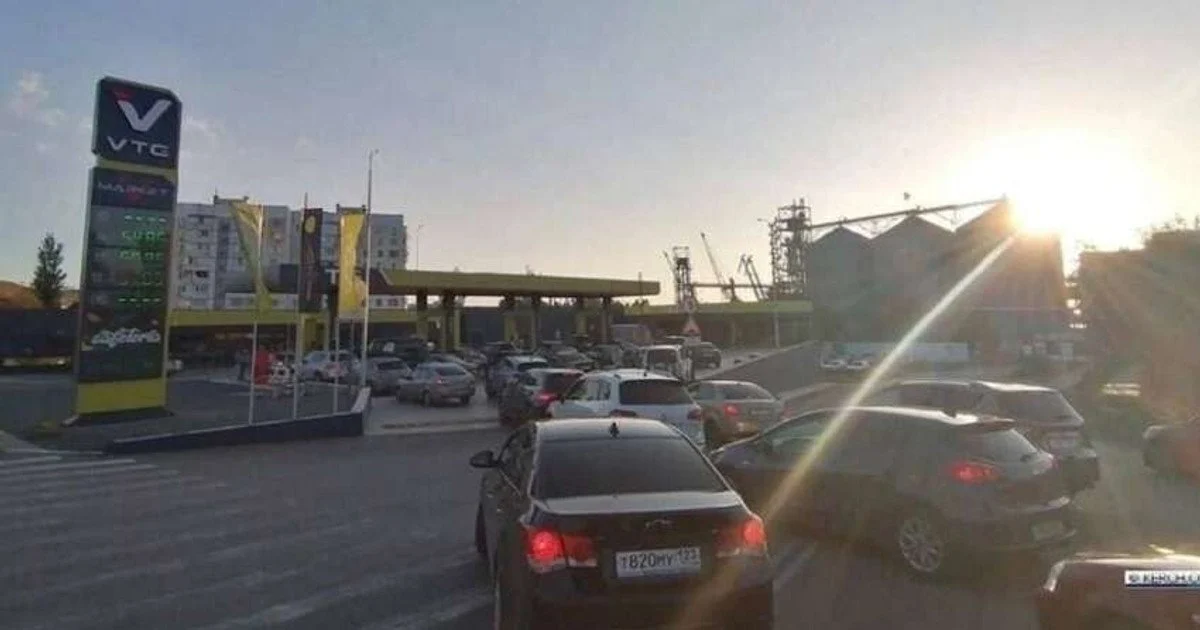
In the temporarily occupied Crimea, which Russian invaders have turned into a military base since 2014, problems with fuel, electricity, and water supply are worsening. Food prices have skyrocketed. The so-called tourist season has been a complete failure. People brought to the peninsula are increasingly returning to Russia, reports "Komersant Ukrainian", citing the Main Intelligence Directorate of the Ukrainian Ministry of Defense.
Blackout in Crimea — Scale and Duration of Outages
According to the Main Intelligence Directorate, July 2026 was marked by a prolonged blackout across the entire peninsula for the occupiers in Crimea. For example, during the week of July 14–20, approximately 1.4 million customers on the peninsula were simultaneously left without power.
Watch us on YouTube: important topics – without censorship
In Dzhankoy, Yany Kapu, and Armiansk, power outages were recorded on at least eight out of ten days after the blackout began; in Sevastopol, they lasted seven days. During the same period, water was cut off for seven days in Alushta, six days in Simferopol, and five days in Yevpatoria. In some settlements, there was no electricity for more than ten days; in Yevpatoria, starting July 2, electricity was practically not supplied during the day, with service restored at night for only four to five hours.
Sergey Aksyonov , the head of the Russian occupation administration in Crimea, publicly acknowledged that there would be no precise schedules for restoring services.
The Price of the “Russian World”: How Fuel and Food Are Getting More Expensive in Crimea
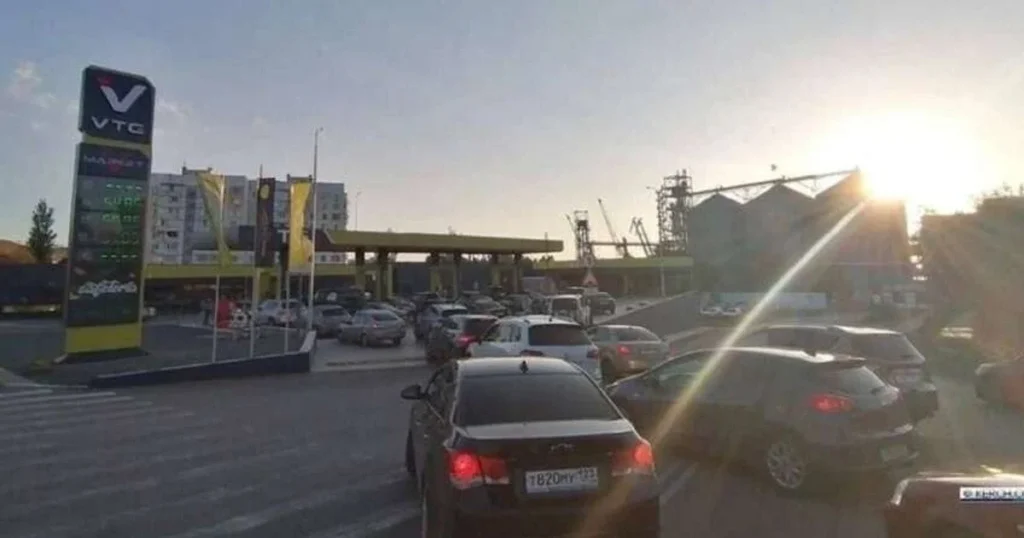
In July 2026, gasoline at gas stations in most areas of the temporarily occupied Crimea was available only once every two or three days, with lines stretching over a kilometer, and the price per liter of AI-95 gasoline reached 269 rubles at gas stations and up to 300 rubles from resellers.
According to data from the aggressor state’s statistical agencies, fuel prices in the temporarily occupied Crimea and Sevastopol rose by 18% and 25%, respectively, compared to the average price in Russia.
At the same time, food prices have risen on the peninsula. Certain goods in occupied Crimea cost significantly more than, for example, in Russia’s Krasnodar Krai: kefir—167% more, eggs—149% more, and white bread—131% more. Just a year ago, in July 2025, the situation was the opposite—bread, eggs, buckwheat, and rice were cheaper on the peninsula than in Russia.
Business and Real Estate—Establishments Are Closing, Rents Are Falling
In the first half of 2026, 398 restaurants and cafes closed in the temporarily occupied Crimea—42.1% more than last year. Sales for some producers fell by 70%, forcing them to seek outlets on marketplaces and through retail chains outside the peninsula.
Real estate rents in occupied Crimea have plummeted due to a lack of demand. For example, daily rental rates on the peninsula’s southern coast have dropped by 30–50%, long-term rentals in Simferopol have become about 13% cheaper, and apartments that used to be rented out within a few days now sit vacant for weeks.
Due to the large number of Russian military facilities on the peninsula, which are periodically subjected to fire from the Ukrainian Security and Defense Forces, as well as shortages of fuel, electricity, water, and internet, tourists are not traveling to Crimea, and many temporary tenants are returning to Russia.
The occupying administration is responding, tellingly, with subsidies, preferential loans, payment deferrals, and a reduction in rent for state-owned property by as much as 75%.
However, a true return to normal life and overcoming the crisis in Crimea are possible only after the complete de-occupation of the peninsula.
The Crisis as a Tool of Pressure: Financial Compensation in Exchange for Military Registration
The Main Intelligence Directorate (GUR) stated that Moscow is not actually concerned about the negative consequences for the local population in Crimea resulting from the waging of a criminal war against Ukraine. The priority for the Russian occupation administration on the peninsula amid the crisis remains ensuring that the Russian military contingent is supplied with material and human resources.
A telling example is the situation in the Dzhankoy District, where, in order to receive a one-time compensation payment of 15,000 rubles for the lack of electricity and water for more than 48 hours, the occupiers began requiring men to provide proof of military registration. This requirement also applies to women with medical training, even though such a registration is not listed among the “documents” required to receive the payment from the occupying administration.
Thus, so-called humanitarian aid is being used by the aggressor state—Russia—as a lever to exert additional pressure on the local population of Crimea.
Read us on Telegram: important topics – without censorship