Three thousand metric tons of watermelons have already been harvested in the Kherson region: what kind of harvest are they expecting next?
3 August 18:11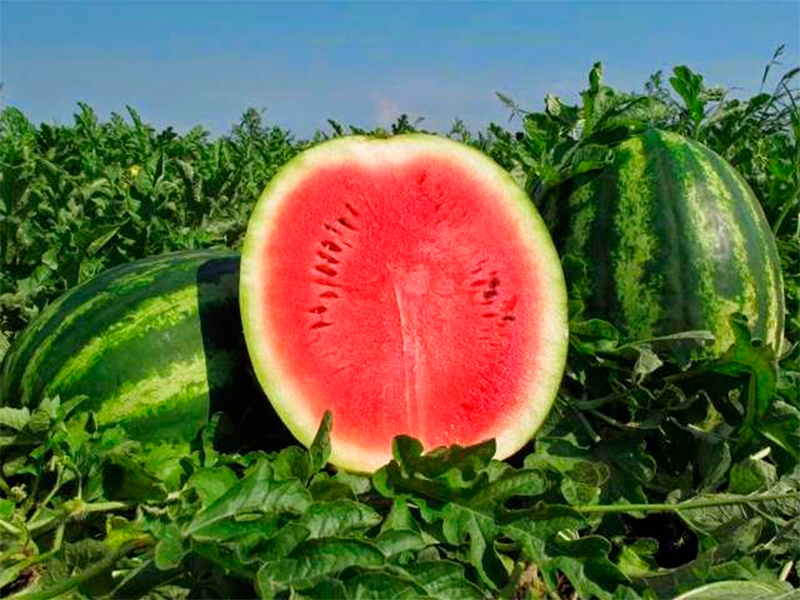
Farmers in the Kherson region have already harvested 3,000 metric tons of watermelons, and this year they plan to harvest 25,000 metric tons of melons and cucurbits. This was reported on Telegram by Alexander Prokudin, head of the Kherson Regional State Administration, according to "Komersant Ukrainian".
“Work is in full swing in the fields of the Kherson region right now—the watermelon harvest is underway. We’ve already harvested 3,000 metric tons, which people will be able to enjoy in various parts of Ukraine. There’s even more to come. This year, we plan to reach 25,000 metric tons of melon and watermelon crops,” Prokudin said.
He noted that watermelons are grown on a total of 1,000 hectares of fields across the region, with the largest areas located in the Velykooleksandrivka, Novovorontsov, Muzykovka, Belozerka, and Kherson communities.
“International Watermelon Day is a good occasion to say once again: thank you to everyone who makes this fruit a symbol of the Kherson region. For your hard work and for that taste that cannot be replicated—the taste of a real Kherson watermelon,” emphasized the head of the Regional State Administration.
Earlier, Prokudin reported that farmers in the Kherson region had planted about 1,000 hectares of watermelons and 400 hectares of cantaloupes. Due to the cool, rainy spring, the first watermelon harvest was not expected for at least another month. Over the past year, the area planted with melon crops has increased severalfold.
“Kherson watermelons are coming! Despite the war, constant risks, and challenging weather conditions, farmers will not leave us without this delicious fruit this year either. They are currently planting melon crops,” the statement said.
As noted, about 1,000 hectares of watermelons and more than 400 hectares of melons have already been planted in the region. Since this spring was quite cool and rainy, the growth of watermelons has been somewhat delayed—the growing season is about two weeks behind schedule.
Watch us on YouTube: important topics – without censorship
Where Watermelons Are Being Grown on the Right Bank of the Kherson Region in 2026
Melon farming is being revived on the de-occupied right bank, specifically in the Velyko-Oleksandrivka, Novovorontsovka, Kochubeivka, Muzykovka, Bilozerka, and Kherson communities. A total of about 1,000 hectares have been set aside for watermelons, with another 400 hectares dedicated to melons.
The scale is still far from pre-war levels. In 2021, melon crops covered 22,500 hectares in the region; consequently, the current area planted with watermelons is more than 20 times smaller. Nearly 90% of the suitable land remains on the occupied left bank.
How Farmers Resumed Watermelon Cultivation in the Kherson Region
The centralized irrigation system is only partially operational, so farms are using open sections of the Ingulets system, artesian wells, and drip irrigation. A cool, rainy spring delayed ripening by about a month. At the same time, the sugar content of some fruits reaches 12%, which is on par with that of sweet, ripe varieties.
Producers in the Kherson region have to work near the combat zone, check fields for explosive ordnance, and factor more complex logistics into their costs.
How much do Kherson watermelons cost?
The wholesale price directly from the field is about 10 UAH/kg. In the Kherson region, the early harvest sells for approximately 15–30 UAH/kg, while at wholesale markets in Kyiv and Lviv, the price hovers around 25 UAH/kg. A 5-kilogram watermelon costs 50 UAH from the producer and about 125 UAH after delivery to a major city.
The difference is due to transportation, sorting, shipping losses, and the seller’s markup. In 2022, retailers replaced most of the watermelons from the Kherson region with imports and crops from other regions.
The recovery of the Kherson harvest is reviving the regional brand, but has not yet restored its pre-war influence on prices. Mass harvesting will increase supply in August. The final price will depend on yield, transportation safety, and how much produce can be shipped to other regions.
Read us on Telegram: important topics – without censorship