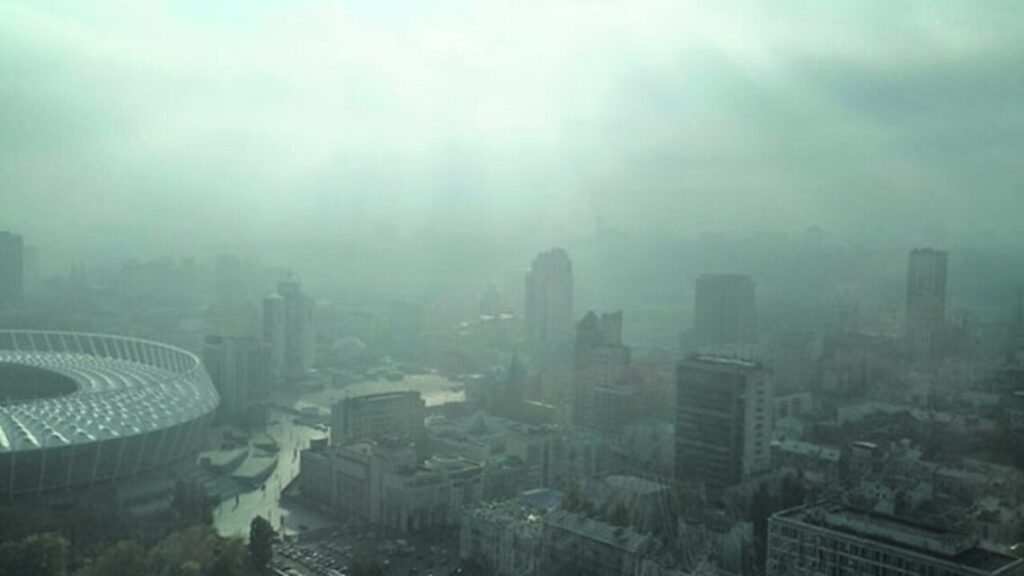
Kyiv is shrouded in acrid smog and the smell of burning: air quality has deteriorated sharply
3 July 09:52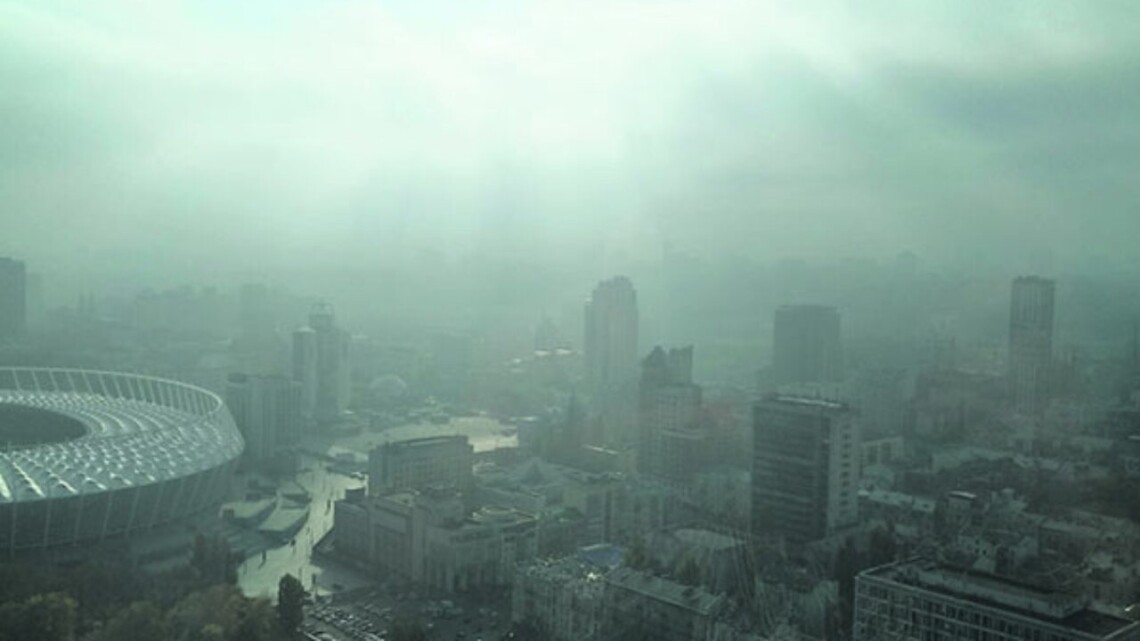
On Friday, July 3, 2026, residents of Kyiv began complaining of thick haze, reduced visibility, and a distinct smell of smoke. Data from automatic monitoring stations confirmed an increase in the concentration of fine particulate matter in the air.
As of 9:00 a.m., the overall PM2.5 Air Quality Index ( AQI) in Kyiv stood at 103. This level is classified as harmful to sensitive population groups. This was reported by "Komersant Ukrainian", citing the SaveEcoBot air quality map.
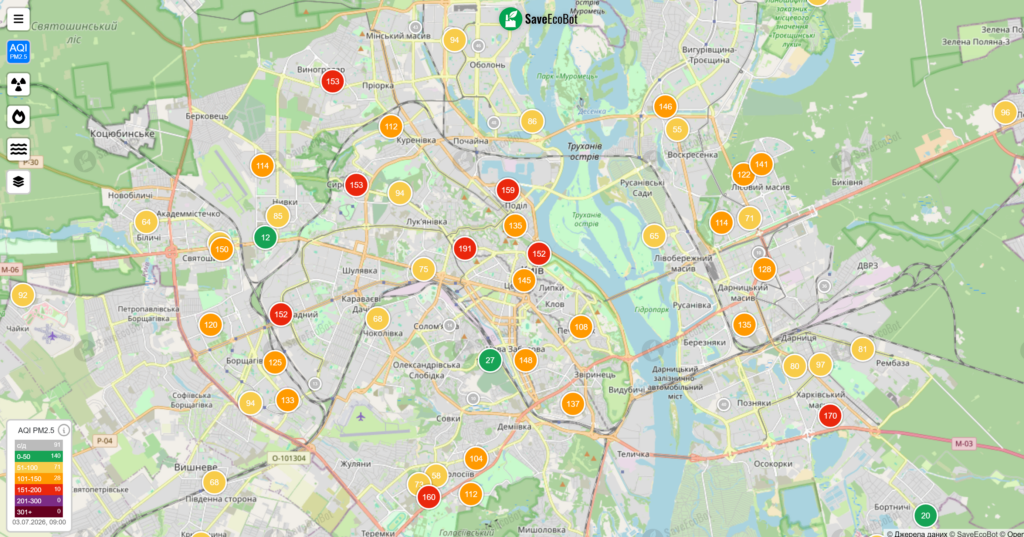
The highest readings were recorded in the Pecherskyi and Solomianskyi districts.
What level of pollution was recorded in Kyiv?
According to SaveEcoBot, air quality in the capital gradually deteriorated throughout the morning of July 3.
At 5:00 a.m., the citywide AQI PM2.5 index stood at 43, which corresponded to a “good” level. By 9:00 a.m., it had risen to 106.
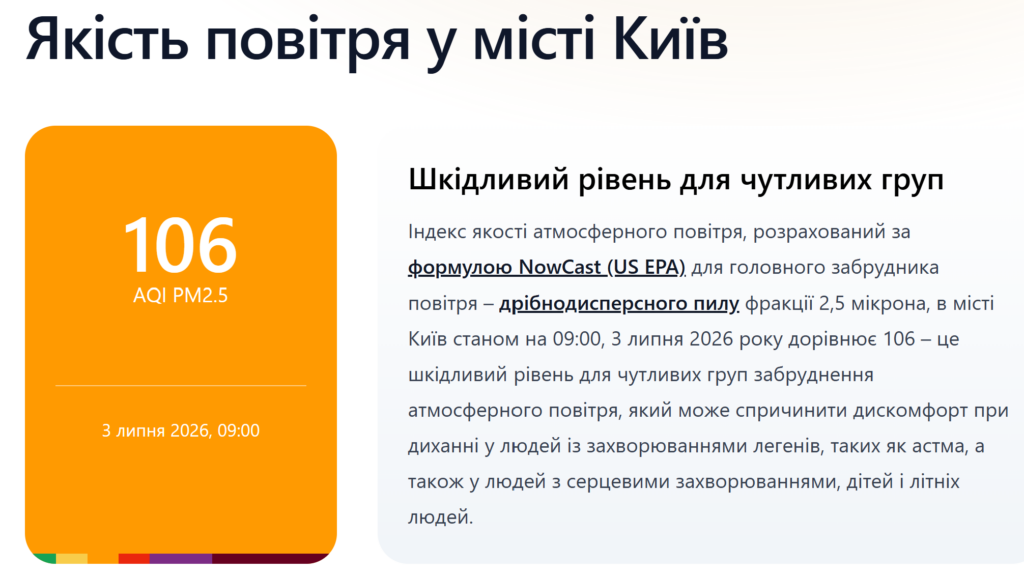
This means that within a few hours, the concentration of fine particulate matter had increased significantly.
The situation varied by district:
| Kyiv District | AQI PM2.5 | Rating |
|---|---|---|
| Pecherskyi | 126 | Harmful to sensitive groups |
| Solomyansky | 113 | Harmful to vulnerable groups |
| Dniprovskyi | 93 | Moderate |
| Svyatoshyn | 93 | Moderate |
| Obolonskyi | 87 | Moderate |
| Darnitsky | 72 | Moderate |
Readings may change rapidly depending on wind direction, precipitation, fire intensity, and the operation of specific monitoring stations.
Why Smog and the Smell of Burning Appeared in Kyiv
As of the time of publication, there was no official statement from the Kyiv City State Administration regarding the exact cause of the air quality deterioration specifically on the morning of July 3.
It is likely that several factors could have contributed to the situation simultaneously.
Watch us on YouTube: important topics – without censorship
Consequences of a large-scale attack on Kyiv
On the night of July 2, Russian troops launched a massive combined attack on the capital. Fires broke out in various districts at residential, warehouse, industrial, and other facilities.
When buildings, vehicles, fuel, plastic, warehouse goods, and construction materials burn, smoke, soot, and fine particulate matter are released into the atmosphere.
Even after the open flames have been extinguished, isolated hot spots may continue to smolder, and combustion products may be carried throughout the city by air currents.
Fires in ecosystems around the capital
As early as June 30, the Kyiv City State Administration reported a temporary deterioration in air quality due to elevated concentrations of ground-level ozone and particulate matter.
According to the Ukrainian Hydrometeorological Center, a northwesterly wind contributed to the influx of air masses into the capital from areas affected by forest fires, particularly from the Chernobyl Exclusion Zone.
A corresponding warning was published on Kyiv’s official website.
There is currently no official confirmation that these fires were the sole cause of the smog on July 3. However, the smoke from them may have further affected air quality.
Accumulation of fine particulate matter
The main pollutant in the morning readings was PM2.5—particles with a diameter of up to 2.5 micrometers.
These particles can be generated by:
- fires and smoldering;
- vehicle exhaust;
- operations at industrial and power facilities;
- building demolition;
- construction dust;
- burning of wood, plastic, and fuel.
Because of their small size, these particles can penetrate deep into the respiratory tract.
Who Is Most at Risk from Air Pollution
Elevated levels of fine particulate matter can primarily affect:
- children;
- older adults;
- pregnant women;
- people with bronchial asthma;
- people with chronic lung diseases;
- people with cardiovascular diseases;
- those who work or exercise outdoors.
When the index exceeds 100, members of vulnerable groups should limit prolonged and intense physical activity outdoors.
Recommendations for Kyiv Residents
Until air quality improves, you should:
- Close windows, especially if you can smell smoke indoors.
- Limit long walks and outdoor workouts.
- Drink plenty of water.
- Turn on an air purifier, if you have one.
- Do not burn candles, incense sticks, or other substances that produce additional smoke.
- Wet clean your home.
- Monitor the readings from nearby monitoring stations.
- Ventilate the room once pollution levels have dropped.
These recommendations were previously published by the Kyiv City State Administration.
Read us on Telegram: important topics – without censorship