Businesses Have Been Granted an Audit Break Following the Russian Federation’s Attacks: Who Is Affected?
3 July 08:42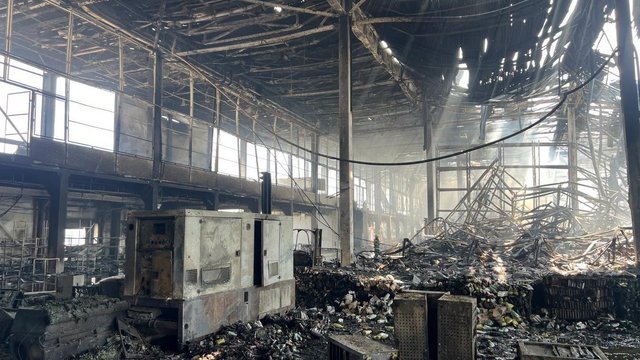
The Cabinet of Ministers of Ukraine has exempted real estate owned by businesses that was destroyed or damaged as a result of Russian shelling and hostilities from inspections. The decision is intended to reduce bureaucratic procedures and allow businesses to begin emergency and restoration work more quickly. This was announced by Ukrainian Prime Minister Yulia Svyrydenko, according to "Komersant Ukrainian"
According to her, this applies to tens of thousands of properties across the country.
At the same time, state oversight will remain in place in cases related to public safety, environmental protection, and Ukraine’s fulfillment of its international obligations.
What business assets will not be subject to inspection
The new procedure applies to real estate that:
- has been destroyed or damaged as a result of hostilities;
- is located in areas of active hostilities;
- is located in areas of potential hostilities;
- is located in temporarily occupied territories;
- is located on land deemed risky for agriculture;
- located in areas contaminated or likely contaminated with explosive ordnance.
Thus, the decision applies not only to businesses whose buildings were directly hit by a rocket or drone. It also covers businesses in areas where conducting inspections is dangerous due to hostilities, occupation, or landmines.
Have all business inspections been canceled?
The government has not announced a complete suspension of state oversight for all businesses.
The restriction applies to inspections of specific properties that have been damaged by the war or are located in hazardous areas.
Inspections will continue if they are necessary to:
- protecting human life and health;
- preventing man-made accidents;
- protecting the environment;
- comply with Ukraine’s international obligations;
- monitoring critically important safety requirements.
This means that a company does not automatically receive an exemption from all tax, labor, health, environmental, or fire safety requirements. In each case, the type of inspection and the status of the specific property are relevant.
Why Did the Government Change the Rules?
After a business has been shelled, it is necessary to do the following as soon as possible:
- inspect the damaged buildings;
- remove hazardous structures;
- restore electricity and utilities;
- purchase equipment;
- resume production;
- bring employees back;
- resume deliveries to customers.
Going through standard inspection procedures can slow down this process, especially if the building is partially destroyed, located near the front lines, or situated in a mined area.
The government expects that waiving certain inspections will allow businesses to direct their resources directly toward reconstruction.
How a business can document property damage
Following a Russian attack on a business, it is important to officially document all damage.
To do this, you typically need to:
- Notify the State Emergency Service and the police.
- Obtain permission to access the site.
- Take photos and videos of the damage.
- Prepare an inspection report on the damaged property.
- Conduct an inventory of equipment and goods.
- Order a damage assessment.
- Retain documents proving ownership.
- Enter the information into the relevant government registries.
Owners of non-residential real estate may also submit a claim to the international Damage Registry via the “Diya” portal under category A3.2—damage to or destruction of non-residential real estate. Claims can be submitted on the “Diya” portal.
In addition to the suspension of inspections, several support programs are available for affected businesses.
Preferential loans for business recovery
In parallel with the restrictions on inspections, the government has launched a new phase of the “Affordable Loans 5–7–9%” program.
Starting July 1, 2026, small and medium-sized businesses can obtain financing to rebuild or restore property destroyed or damaged as a result of Russian aggression.
Key terms:
- maximum loan amount—up to 150 million UAH;
- interest rate for the first two years—0.1% per annum;
- thereafter—5%, 7%, or 9%;
- the final interest rate will depend on the size of the business and job creation.
Loans can be used to restore buildings, production facilities, equipment, and other company assets.
Applications can be submitted at madeinukraine.gov.ua/credit-recovery.
Grants of up to 16 million UAH for manufacturers
Manufacturing companies damaged by the war can receive a grant to restore their production capacity.
The maximum amount of support is 16 million UAH.
The funds may be used for:
- purchasing new equipment;
- restoring production lines;
- installing and commissioning equipment;
- creating new production capacity;
- resuming the enterprise’s operations.
The program provides for co-financing on an 80/20 basis: the government covers the majority of the costs, while the applicant must contribute 20%.
The grant recipient must create at least five jobs and remain in operation for at least three years. Applications are submitted through “Diyu” along with a business plan, an extract from the Unified State Register, and a damage assessment report. The terms and conditions are available on the “Made in Ukraine” platform .
Watch us on YouTube: important topics – without censorship
Compensation for War Risks
There are also two mechanisms in place for businesses to cover war risks.
Compensation for Damaged Property
Businesses in certain high-risk regions can receive up to 30 million UAH in compensation for property damaged or destroyed after the company joins the program.
This mechanism applies to the following regions:
- Dnipropetrovsk;
- Donetsk;
- Zaporizhzhia;
- Mykolaiv;
- Odesa;
- Poltava;
- Sumy;
- Kharkiv;
- Kherson;
- Chernihiv regions.
Occupied territories are not covered. To participate, you must submit an application in advance and pay a one-time fee equal to 0.5% of the declared potential loss.
Important: The program does not cover damage that occurred before the business joined the program.
Insurance Premium Reimbursement
Businesses from all regions can receive up to 3 million UAH per calendar year to cover a portion of the insurance premium under a property insurance policy against war risks.
The policy must be issued after January 1, 2026, and meet the requirements of the government program. The program is administered by the Export-Credit Agency.
Detailed terms and conditions are available on the war risks insurance page.
What the “Point of Support” Program Entails
Another state support mechanism is the “Tochka Opory” program.
It is designed for businesses that are temporarily unable to operate at full capacity due to damage but are committed to retaining their team.
The program provides compensation for:
- a portion of employees’ wages;
- the unified social contribution;
- the costs of maintaining employment relationships during the period of forced downtime.
The goal of the program is to prevent the layoff of specialists while the company repairs its production facilities and restores its equipment.
The Ministry of Economy emphasizes that once operations resume, a business with its existing team will be able to return to full-scale operations much more quickly.
What support can a company choose?
The available support depends on the nature of the losses and the business’s needs.
A company may consider:
| Business Need | Possible program |
|---|---|
| Building repairs and equipment purchases | Loan of up to 150 million UAH at 0.1% for the first two years |
| Restoration of production capacity | Grant of up to 16 million UAH |
| Insurance against future military risks | Compensation for insurance premiums of up to 3 million UAH |
| Coverage of potential future losses in specified regions | Compensation of up to 30 million UAH |
| Retaining employees during downtime | The “Fulcrum” Program |
| Recording of losses to non-residential real estate | Application to the International Register of Damages |
Participation in one program does not necessarily preclude participation in another; however, businesses must verify the rules regarding the compatibility of state aid.
At the same time, exemption from inspections does not eliminate the need to document losses and comply with safety requirements during reconstruction.
The Russian attack damaged a number of Ukrainian companies
A massive attack on Kyiv on the night of July 2 caused significant damage to civilian and commercial infrastructure.
In addition to the OKWINE and Wine Hunters warehouses, the strike reportedly damaged or destroyed the following facilities:
- the MOYO equipment network;
- the Denka Logistics complex;
- the BookChef publishing house;
- the IT distributor ERC;
- logistics operators;
- other companies and warehouses.
Read us on Telegram: important topics – without censorship