The myth about supporting Ukrainians: every zloty in aid returns to Poland fivefold
23 June 07:58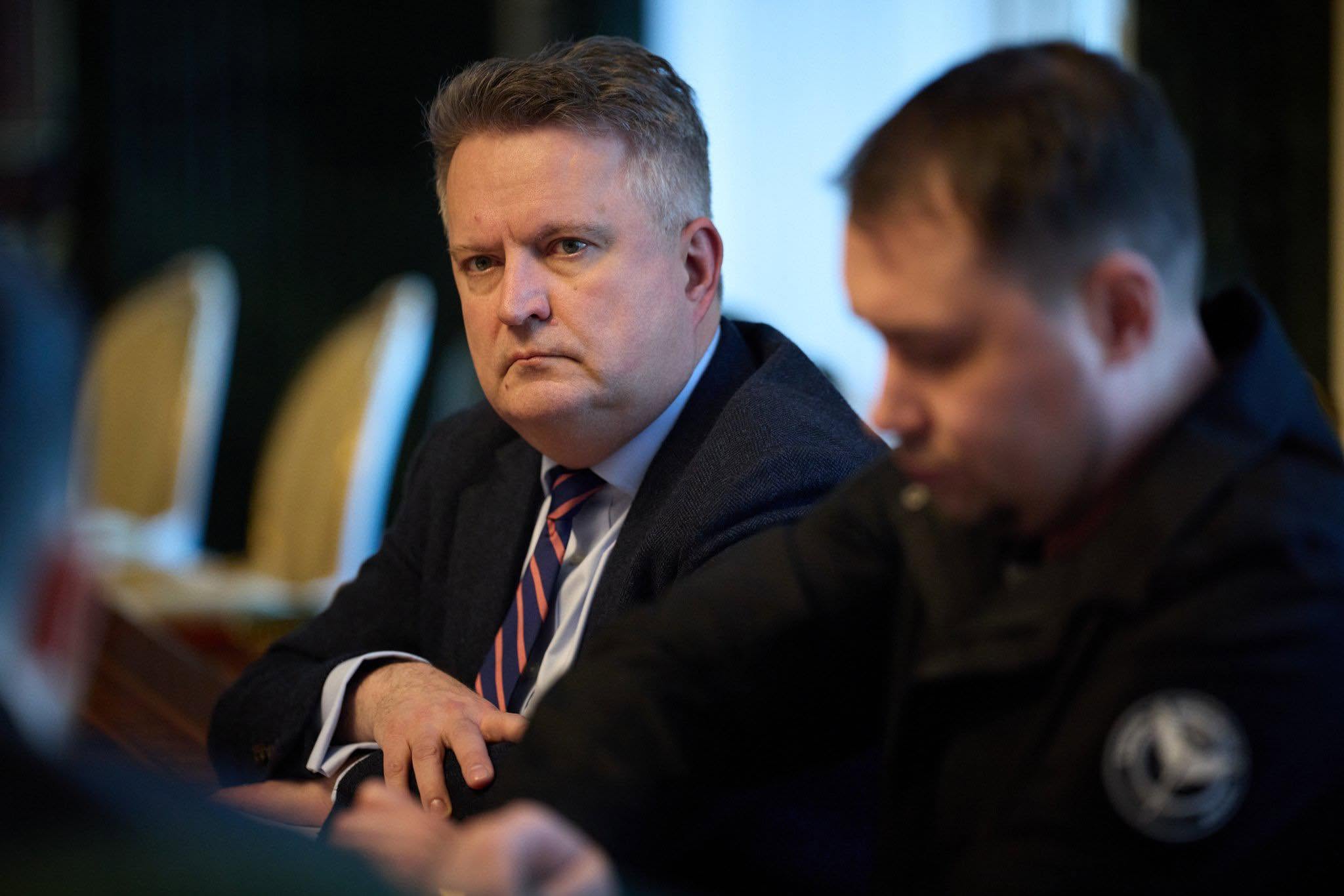
Ukrainians living and working in Poland make a significant contribution to the state budget and the country’s economy. Their tax and social security contributions far exceed the amount of direct social benefits they receive. Serhiy Kyslytsia, First Deputy Head of the Office of the President of Ukraine, highlighted this point while commenting on the volume of international aid to Ukraine and the economic role of Ukrainians in Poland, according to "Komersant Ukrainian"
According to him, Ukrainians not only benefit from social programs but also work actively, pay taxes, start businesses, and support Poland’s economic growth.
Ukrainians contribute more to the budget than they receive
Serhiy Kyslytsia cited research data showing that Ukrainians’ contribution to the Polish budget significantly exceeds the direct social benefits they receive.
“Ukrainians in Poland contribute significantly more to the state budget through taxes than they receive in the form of benefits,” Kislitsa noted.
According to estimates by the Polish state-owned bank BGK, in 2024, approximately 2.8 billion zlotys were allocated to the “Family 800” program for children with Ukrainian citizenship.
At the same time, tax and social security revenues from Ukrainian migrants were several times higher.
“For every 1 zloty that Ukrainians receive in the form of government assistance—for example, the 800 child benefit—they return approximately 5.40 zlotys back into the economy,” wrote Serhiy Kyslytsia.
This figure demonstrates that employed Ukrainians are not only recipients of benefits but also significant contributors to tax and social security revenues.
READ ALSO: “The ‘Conflict of Orders’ Continues: Polish Senate Vice Speaker Returns Ukrainian Awards”
What does the 1-to-5.4 ratio mean?
The figure of 5.40 zlotys does not mean that Ukrainians contribute 5.4 times more than all of Poland’s government spending on their stay.
It is primarily a comparison of:
- revenue from taxes and social contributions paid by Ukrainian citizens;
- payments to Ukrainian families under the “Family 800” program.
Ukrainians also use the healthcare and education systems, as well as other public services. However, studies show that the overall economic and fiscal impact of their stay in Poland remains positive or, at the very least, neutral.
Kyslytsia emphasized that estimates consistently show that budget contributions exceed direct payments.
“Ukrainians pay three to five times more in taxes than they receive in direct government social benefits,” he noted.
Most Ukrainian refugees are employed
One of the main reasons for the positive impact of Ukrainians on the Polish economy is their high employment rate.
According to international studies, about 69% of Ukrainian refugees of working age were employed as early as 2024. By broader estimates, depending on the category of migrants and the calculation methodology, the participation of adult Ukrainians in the labor market is approximately 70–80%.
“Most adult Ukrainians in Poland are employed, and the participation of refugees in the workforce ranges from 70% to 80%,” Kyslytsia stated.
The following factors contributed to rapid employment:
- open access to the Polish labor market;
- the ability to officially register a business;
- significant demand for workers;
- cultural and linguistic similarities;
- the initiative of the Ukrainians themselves.
Ukrainian workers account for approximately 5% of Poland’s total workforce and about 2.7% of the country’s GDP.
Poland has reaped economic benefits from opening its labor market
After the outbreak of full-scale war, Poland allowed Ukrainian refugees to quickly enter the labor market without lengthy bureaucratic procedures.
This decision helped many families become self-sufficient and reduced their dependence on government assistance.
Ukrainians became:
- employees;
- taxpayers;
- consumers of goods and services;
- tenants;
- entrepreneurs;
- employers.
Their spending supports trade, the real estate market, the service sector, and local budgets.
At the same time, Poland has gained an additional labor force amid an aging population and labor shortages in many sectors.
Watch us on YouTube: important topics – without censorship
Kyslytsia published data on aid to Ukraine
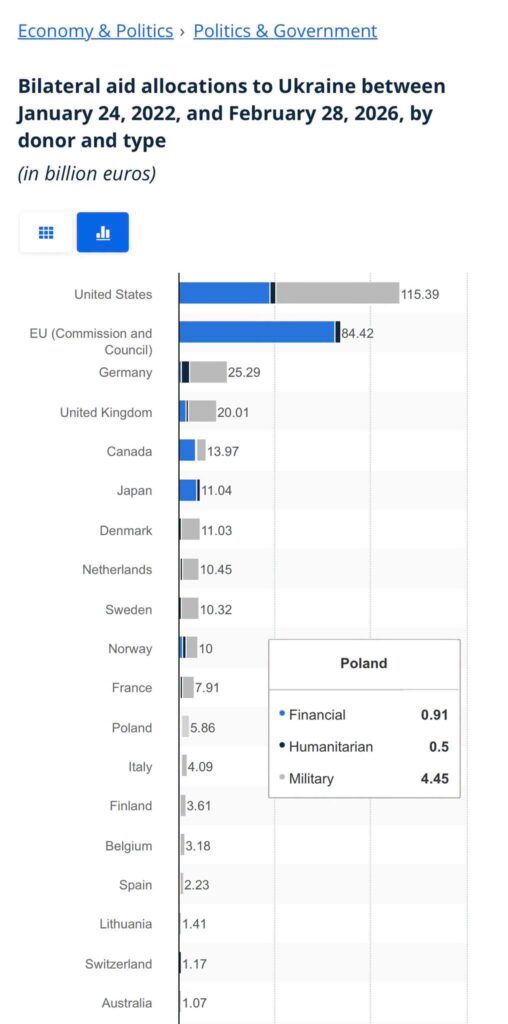
Serhiy Kyslytsia released his statement along with data on the distribution of bilateral aid to Ukraine by donor and type of support.
The statistics cover military, financial, and humanitarian aid provided to Ukraine since the beginning of 2022.
These data are collected by the Ukraine Support Tracker of the Kiel Institute for the World Economy. The project tracks government aid to Ukraine from European Union member states, G7 countries, and other partners.
The statistics include:
- military aid;
- financial support;
- humanitarian programs;
- transfers of equipment and weapons;
- government grants and loans.
However, the main ranking does not include private donations, aid from charitable organizations, or some programs run by international institutions.
Poland Demands Compensation for Transferred Weapons
Amid the debate over the scale of aid to Ukraine, Poland has stated that it expects to receive compensation from the European Peace Fund for weapons transferred to the Ukrainian army.
Warsaw is seeking approximately 2 billion zlotys, or about 450 million euros.
“Poland believes that its aid to Ukraine was not free of charge and is demanding reimbursement of about two billion zlotys from the European Peace Fund for the weapons it supplied to Ukraine,” noted Serhiy Kyslytsia.
The European Peace Fund is used, in particular, to partially compensate EU member states for the cost of military equipment and ammunition transferred to Ukraine.
A dispute has arisen within the EU over the allocation of funds
After billions of euros were released from the European Peace Fund, a debate arose among EU countries regarding their use.
Germany proposed directing the available funds directly toward new aid for Ukraine.
Poland, on the other hand, insisted that it should first receive compensation for the weapons it had already transferred.
Polish Deputy Defense Minister Cezary Tomczyk stated that Warsaw intends to seek the return of every euro owed to it.
Read us on Telegram: important topics – without censorship