Putin Is Depleting the Strategic Reserve of “Iskander” Missiles: Aviation Expert Reveals the Real Reason Behind the Bombing of Kyiv
6 July 18:46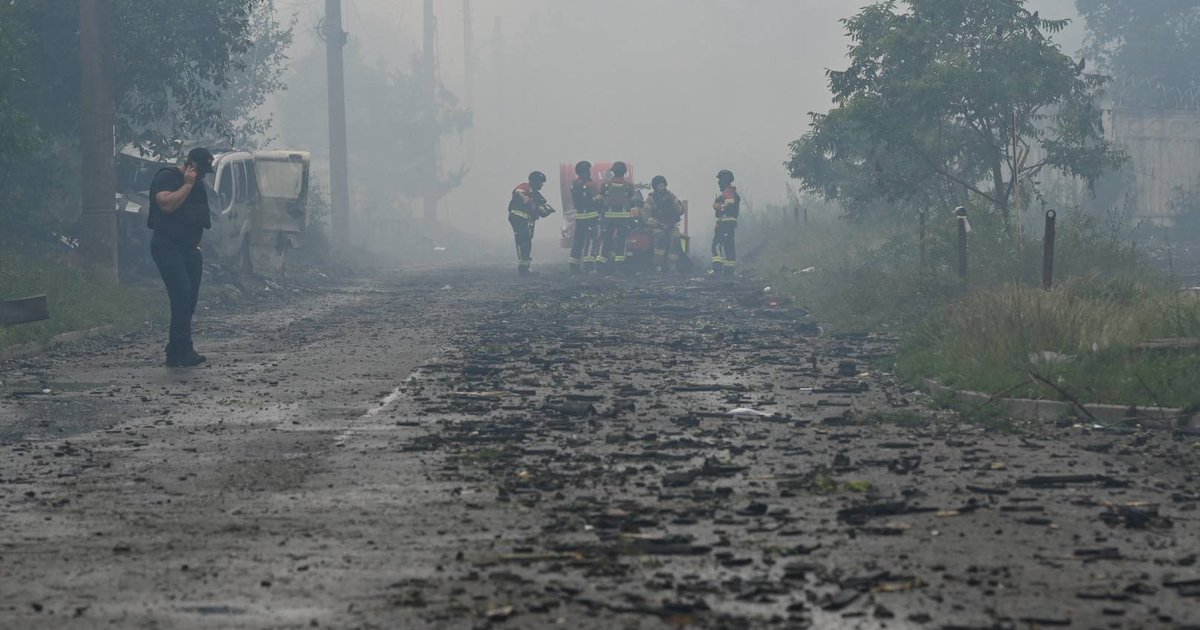 ANALYSIS
The massive attack on the Ukrainian capital on the night of July 6 was one of the most severe in recent months. The enemy employed diversified tactics, launching about 70 missiles simultaneously from the Kursk, Bryansk, and Belgorod regions. The main goal was to minimize the flight time of the missiles to Kyiv, effectively subjecting the city to a barrage that the air defense forces simply did not have enough interceptors to counter. "Komersant Ukrainian" analyzed the causes of the tragedy in Vyshneve, the empty warehouses of Western partners, and the realistic timeline for the deployment of Ukrainian-made ballistic missiles.
The Tragedy in Vyshneve: Why It Exploded and How Intelligence Works
One of the hardest-hit areas in this attack was Vyshneve. Nearly five streets were destroyed there; five people were killed, and more than 20 were injured, including a 9-month-old infant. Due to the threat of a large-scale explosion, more than 600 residents had to be evacuated.
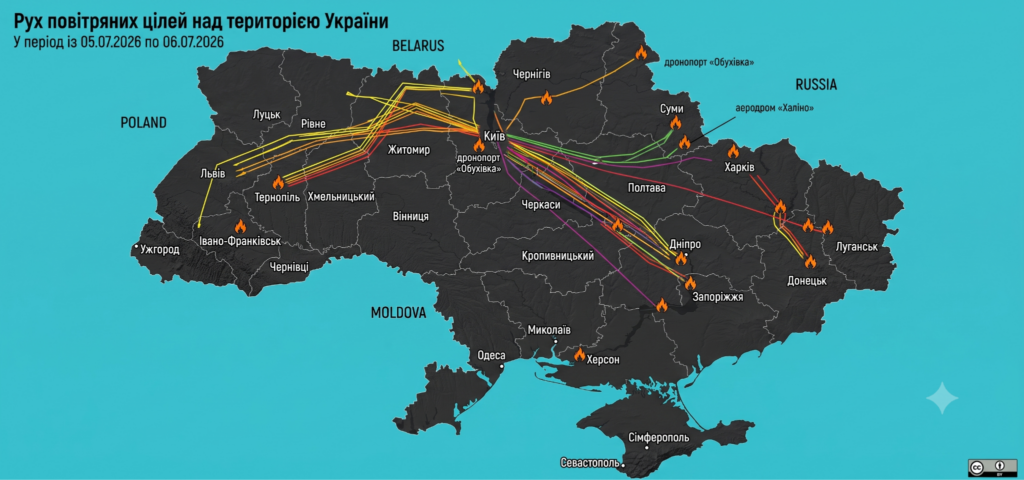
According to analyst and aviation expert Kostyantyn Kryvolap, the reason for such a prolonged danger was a strike on a logistics facility, which was impossible to conceal in today’s reality.
“Most likely, there was a warehouse containing some kind of ammunition there. Because I don’t think it was a manufacturing facility. I generally believe that the Russians know everything that’s going on here. Just as we know for certain: when they hold a closed-door Security Council meeting, our President has all the reports within 10 minutes. In today’s world, it’s quite difficult for intelligence agencies to keep information secret,” Kryvolap notes.
Kryvolap emphasized that there is no longer any point in hiding the facts from the public, but there are serious questions regarding how these processes are managed.
“It would have been better if these command posts hadn’t been kept where it was convenient—that’s foolish. Such things need to be kept somewhere far away, not where people are. I think there will be a commission to investigate why security measures could not be ensured,” Kryvolap emphasized.
“Trumps” for Trump and the Devastation of Russian Stockpiles
Despite the destruction of civilian neighborhoods, the attack had a clear political subtext. The enemy was trying to create a certain narrative ahead of important international meetings.
“They had to do something before the NATO summit in Ankara. Because they need to show Trump at least something right now. Putin was exposed for lying about the capture of Kostiantynivka. He now needs to show that he has trump cards. And those trump cards are the destruction of the civilian population, the killing of our people—it’s global terror and nothing less than the genocide of our people. Most likely, that was precisely the motive behind this attack,” Kryvolap is convinced.
To carry out this terror campaign, the Kremlin was forced to tap into its untapped reserves. Unlike previous shelling campaigns, which used newly manufactured missiles, this time Russia fired off a significant portion of its strategic reserve. Currently, they have approximately 100 to 150 “Iskanders” remaining. At the same time, the enemy is firing an average of 75 such missiles per month, while it can only produce about 20.
Watch us on YouTube: important topics – without censorship
Separately, the expert noted the use of hypersonic “Zircons” in conjunction with ballistic missiles:
“They have about 80 ‘Zircons’ left. They’re deploying them, including in the Kursk region, to strike simultaneously: an ‘Iskander’ goes first, followed by a ‘Zircon.’ The ‘Iskander’ creates a contrasting thermal target, and the ‘Zircon’ then hits it, since it has no other homing capabilities,” says Kryvolap.
Jet and Guided: How Enemy Drones Have Evolved
At the same time, Yuriy Ignat, head of the Communications Department of the Ukrainian Air Force, emphasized that during recent attacks, the enemy has been actively using black jet-powered kamikaze drones. Their appearance has radically changed the nature of Ukraine’s air defense operations, rendering traditional methods of shooting them down largely ineffective.
“A jet drone leaves a corresponding heat signature due to its properties, so both ground-based and airborne platforms can engage it. The only thing is that it’s practically impossible to take down such a drone with machine guns because of its high speed. And the same goes for interceptor drones, which typically travel at speeds of around 300 km/h—if we consider the majority of them—which is about 50% of the jet-powered ‘Shahed’s’ speed. “To intercept such a target, of course, you need a missile,” explained Yuriy Ignat.
Due to the high speed of jet-powered UAVs, the primary means of destroying them are ground-based air defense missile systems (ADMS) and air-to-air missiles launched from Ukrainian fighter jets.
The greatest danger currently comes from online control technologies, which transform a kamikaze drone from a “blind” weapon flying along pre-programmed GPS coordinates into a guided, high-precision system.
“There are many drones equipped with cameras that allow operators to control these UAVs in real time and effectively select targets on the fly. Through an existing communication channel, the operator can redirect this ‘Shahed’ to a different target—one that is a higher priority for them than the one it was originally directed toward. That’s what makes them so dangerous,” said Yuriy Ignat.
Western Shortage: Europe Has No Anti-Missile Systems for Ukraine
President Volodymyr Zelenskyy has repeatedly emphasized that Ukraine needs interceptor missiles immediately, not those sitting in partners’ warehouses. However, analysis shows that European stockpiles are virtually depleted, and Lockheed Martin’s production capacity cannot keep up with the pace of the war.
“It takes two years to assemble a single PAC-3 MSE missile. Even if they focused exclusively on Ukraine, they wouldn’t be able to supply us fast enough. Previously, they produced 500 missiles per year. Last year they made 620; this year they’re on track for about 750. By 2030, together with the Pentagon, they aim to reach 2,000, but that still won’t be enough for the whole world, because Iran and North Korea have more ballistic missiles,” explains Kryvolap.
In Europe, the situation is even more critical—most of the missiles in service are modified PAC-2s, which are effective against aircraft but powerless against ballistic missile strikes.
“There are a total of 400–800 missiles in Europe. There are far fewer PAC-3 MSE missiles—not even 100 for all of Europe. Romania transferred one Patriot system to us; they have three left. Poland has a large number, but they have no intention of transferring a single missile—they want to defend themselves if the Russians come. So even if Europe were to transfer 100 missiles to us, that would only be enough for three attacks,” the expert notes.
Ukrainian Fire Point: When to Expect Mass-Produced FP-7 and FP-9 Missiles
The only effective defense against ballistic missile attacks is the destruction of the enemy’s launchers on its own territory. The Iskander’s deployment time is just 20 minutes, so drones are powerless here—we need our own ballistic capabilities.
According to Kostyantyn Kryvolap, Ukraine’s missile program was blocked for a long time due to Hungary’s stance, which cut off access to 90 billion euros in frozen Russian assets. As soon as funding became available, Fire Point was able to demonstrate its first results: “Flamingo” (FP-5) cruise missiles and long-range drones were deployed, blocking the R280 highway to Crimea for the occupiers.
Now, a full-fledged Ukrainian ballistic missile, the FP-7, with a range of 300 km, is in the works.
“Testing of the FP-7 began in June and is scheduled to conclude this month [ed. – in July]. This will be followed by state testing, certification, and a decision on mass production. Until the state tests are conducted, all responsibility lies solely with Fire Point; thereafter, it falls to the state. If government agencies respond more quickly, we’ll receive the FP-7 in November—already in series production, not prototypes, but the actual production run,” predicts Kostyantyn Kryvolap.
As for the more powerful variant—the FP-9 missile with a range of 850–900 km, capable of reaching Moscow—its development requires more time due to the complexity of creating a solid-fuel engine.
“The FP-9 requires a significantly more powerful engine. The company is currently manufacturing the individual components that make up this engine itself. At the same time, a plant is being built to produce solid-fuel engines for Fire Point, but that won’t happen very quickly. God willing, we’ll be ready for a 900-kilometer ballistic range by the beginning of next year,” Kryvolap concluded.
Thus, the massive combined strikes on Ukrainian cities have shown that Russia has definitively shifted to a strategy of total ballistic terror, even using its untouchable weapons reserves for the sake of immediate political gains on the international stage. At the same time, the rapid technological evolution of enemy drones—the emergence of high-speed jet engines and camera-based online guidance systems—is disrupting the established standards of Ukrainian air defense operations. The only systematic solution to the critical shortage of interceptors is to shift combat operations to the enemy’s launch lines. The speed at which domestic ballistic systems such as the FP-7 from Fire Point are standardized and brought into mass production is no longer merely a matter of prestige for the Ukrainian defense industry, but a key condition for the survival of rear-area cities during the coming winter.
Read us on Telegram: important topics – without censorship