Parliament Rejects Tax on International Packages: How This Relates to the IMF
26 May 22:47
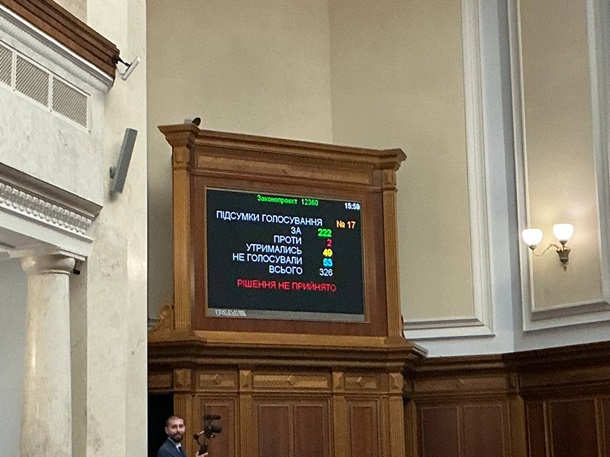
The Verkhovna Rada did not support a bill that would have introduced changes to the taxation of international parcels from abroad. The bill proposed eliminating the tax-free threshold for goods valued at up to 150 euros and imposing VAT on such shipments. This was reported by MP Yaroslav Zheleznyak, according to "Komersant Ukrainian"
The vote took place today, May 26, one day before the expected arrival of the International Monetary Fund mission.
What exactly did the Verkhovna Rada not support?
The parliament was considering amendments to Bill No. 12360, which concerned the taxation of international postal and express shipments.
The document provided for the abolition of the current exemption, under which parcels worth up to 150 euros are not subject to VAT and customs duties. Instead, it was proposed to introduce a value-added tax on imported goods purchased through electronic platforms, starting from a zero threshold.
During the vote, lawmakers failed to secure the necessary 226 votes even to send the bill for a second reading. The decision received 222 votes in favor.
Why the bill was linked to the IMF
Taxation of international parcels was part of a package of tax changes related to Ukraine’s agreements with the International Monetary Fund.
Ukraine is expecting an IMF mission to visit Kyiv on May 27. Previously, the parties agreed to maintain flexibility in implementing the structural benchmarks of the financing program amid the war.
According to reports from members of parliament, the abolition of the tax exemption for parcels valued at up to 150 euros was viewed as one of the IMF’s so-called “milestones.” The adoption of such changes was intended to demonstrate Ukraine’s readiness to broaden its tax base, combat fiscal losses, and gradually align its rules with European practices.
This is precisely why the failure of the vote became politically sensitive: it took place on the eve of the expected visit of the IMF mission to Ukraine.
The first review of the IMF program is scheduled for June 2026. If it is successful, Ukraine will receive an additional $686 million.
That is why it is now critically important for the government to propose realistic mechanisms to compensate for budget revenue shortfalls without resorting to drastic and politically sensitive decisions that could provoke resistance from the business community and parliament.
What is set to change for international parcels
Currently, international parcels valued at up to €150 are not subject to VAT or customs duties. Taxes are levied only on the portion of the value that exceeds this threshold.
The version of the changes agreed upon with the IMF provided that the preferential threshold would be abolished for commercial goods purchased through online stores and e-commerce platforms. That is, a 20% VAT was proposed to be levied on goods imported via e-commerce platforms, starting from 0 euros.
At the same time, a separate exemption was planned for non-commercial “person-to-person” shipments: such parcels valued at up to 45 euros were not to be taxed.
Watch us on YouTube: important topics – without censorship
Reaction of Members of Parliament
According to MPs Olga Vasilevska-Smaglyuk and Yaroslav Zheleznyak, following the failure of the vote, further advancement of this bill has effectively lost its meaning. In their assessment, the government will likely have to submit a new document.
One of the authors of the tax initiative, Chairman of the Verkhovna Rada’s Finance Committee Danylo Getmantsev, sharply criticized the parliament’s decision. He stated that due to the vote’s failure, the state is losing the opportunity to generate additional revenue, level the playing field for Ukrainian businesses, and curb tax-free import schemes.
According to Getmantsev, the idea behind the bill was not only to impose an additional VAT but also to create a simpler customs clearance mechanism without the direct involvement of consumers.
How much money the budget could have received
According to estimates, the reform could have generated about 10 billion hryvnias annually. These funds were planned to be directed, in particular, toward the needs of the security and defense sector.
Supporters of the bill argued that the current exemption creates unequal conditions for Ukrainian businesses. Local entrepreneurs pay taxes on the import and sale of goods, while some goods from foreign platforms enter Ukraine tax-free thanks to the €150 limit.
Critics, however, emphasized that the new rule would effectively make cheaper purchases from abroad more expensive for Ukrainians, as 20% VAT would be added to their cost.
The EU has already abolished a similar exemption
In the European Union, a similar exemption for small import shipments was abolished back in 2021. This decision was explained by fiscal losses, unequal conditions for businesses, and the need to tax goods sold through global e-commerce platforms.
Ukraine, which is moving toward European integration, was also expected to align its e-commerce taxation rules with the European model. This argument was frequently cited by proponents of the changes.
What this means for buyers
Following the failed vote, the rules for international parcels remain unchanged for now. Goods worth up to 150 euros will continue to be exempt from VAT and customs duties unless the legislation is amended by a new parliamentary decision.
For Ukrainians, this means that purchases from abroad via online stores and marketplaces will not become more expensive due to the new VAT for the time being.
However, the issue is not completely closed. Since this reform remains part of negotiations with the IMF, the government may draft a new bill or revisit this topic in a different format.
Read us on Telegram: important topics – without censorship