The Ukrainian Armed Forces may face a new shortage of ammunition: the “Czech initiative” has been cut in half
27 May 05:52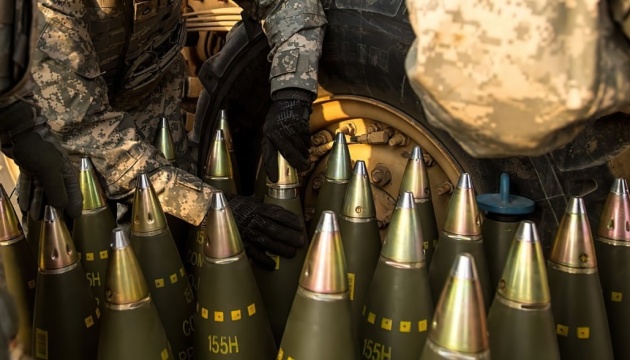
The number of countries funding the “Czech Initiative” to procure artillery ammunition for Ukraine has nearly halved. While 18 countries previously participated in the program, only about nine countries are now making financial contributions.
Czech President Petr Pavel stated this in an interview with the Financial Times, reported by "Komersant Ukrainian"
According to him, the initiative itself continues to operate, but the decrease in the number of donors creates new risks for the stable supply of ammunition to Ukraine.
He noted that currently only about nine member states are contributing to the program, down from 18 previously.
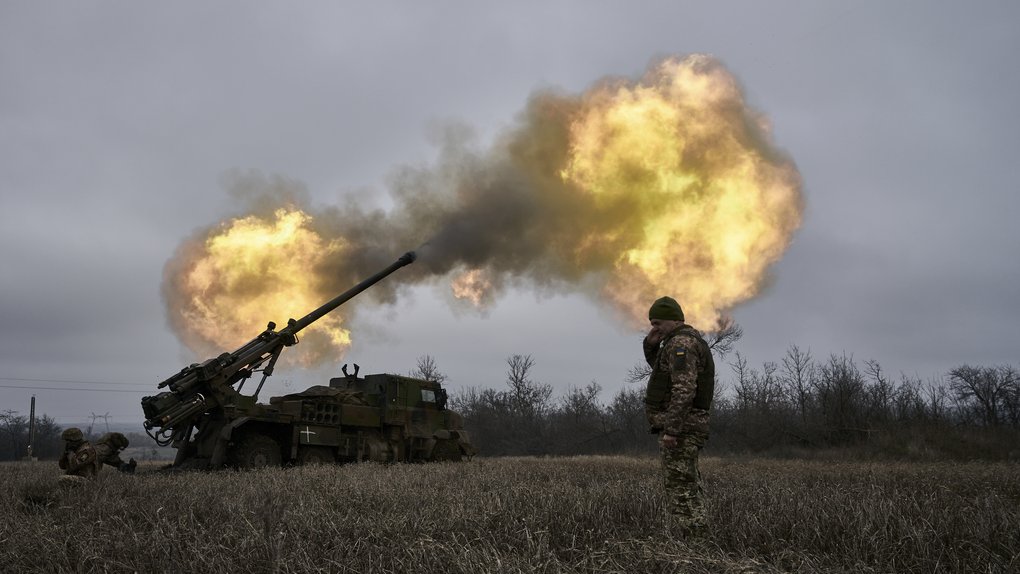
This refers to a program to purchase ammunition for Ukraine on the global market. It has become one of the key sources of artillery shells for the Ukrainian Armed Forces, particularly large-caliber ones.
According to the Financial Times, support declined after Prime Minister Andrej Babiš returned to power in the Czech Republic in December 2025. His government stated that the Czech Republic would continue to coordinate the initiative but would not fund it from the national budget.
Why donor countries began withdrawing from the program
Pavel attributes the decline in the number of donors to the political stance of the new Czech government. Some partners, he says, began to question the wisdom of funding the project if the organizing country itself was not demonstrating the same level of support as before.
In addition, discussions have arisen regarding the program’s procurement transparency and the role of certain defense companies in the supply chain.
At the same time, the Czech president stated that there is no evidence of corruption and suggested that major donors appoint their own auditors to monitor expenditures.
Why the “Czech Initiative” is important for the Ukrainian Armed Forces
The “Czech Initiative” has become critically important for Ukrainian artillery. According to Pavel, it provided up to 50% of all large-caliber ammunition received by Ukraine. That is why it will be difficult to quickly replace it with another mechanism.
For the Ukrainian Armed Forces, a stable supply of shells is of crucial importance. Artillery remains one of the main tools of defense on the front lines, and disruptions in ammunition supplies can affect the intensity of fire, the ability to hold positions, and the capacity to respond to Russian attacks.
This is precisely why the reduction in donors is raising concerns about a new “shell shortage.”
How much ammunition has Ukraine received under this program
According to Reuters, Ukraine has already received approximately 4.4 million rounds of large-caliber artillery ammunition under the “Czech Initiative” since its launch.
The program involves the procurement of shells, including 155mm caliber and other large-caliber ammunition, through Czech defense traders and manufacturers with funding from foreign donors. Among the countries that participated in the funding, Reuters named Germany, Denmark, and the Netherlands.
In 2025, according to a NATO representative, this program was expected to provide Ukraine with approximately 1.8 million artillery shells, accounting for roughly 43% of all international ammunition aid.
Which countries continue to support the program
Despite the decline in the number of donors, the “Czech Initiative” has not been halted. According to the Financial Times, Germany and the Nordic countries remain among the key financial contributors.
It is these partners who understand that a stable supply of ammunition is one of the main factors in the resilience of Ukraine’s defense.
At the same time, some of the countries that no longer fund the Czech mechanism may continue to assist Ukraine through other channels—via direct purchases, bilateral programs, or other international formats.
Does this mean an inevitable “ammunition shortage”?
A reduction in the number of donors does not in itself mean an immediate shortage of ammunition at the front. The program continues to operate, and a portion of the ammunition for 2026 has already been contracted.
However, the risks are growing. If funding is not restored or offset by other sources, Ukraine may face problems in the medium term.
The greatest danger lies in the fact that the supply volumes under this program were too large to be quickly replaced without losses for the front lines. This is precisely what Petr Pavel highlights when he speaks of the initiative’s irreplaceability.
The Political Factor in the Czech Republic
After Andrej Babiš returned to power, the Czech Republic changed its approach to the initiative. In January 2026, he stated that the program could continue, but the Czech Republic would act as a coordinator rather than a financial donor.
This approach was a compromise: the initiative was not shut down entirely, but the political signal to partners had changed. According to Pavel, this is precisely what could have undermined the trust of some donors.
Read us on Telegram: important topics – without censorship