“Radioactive Bill”: Ukrainian Woman Detained at the Polish Border with Dangerous Money
20 April 16:40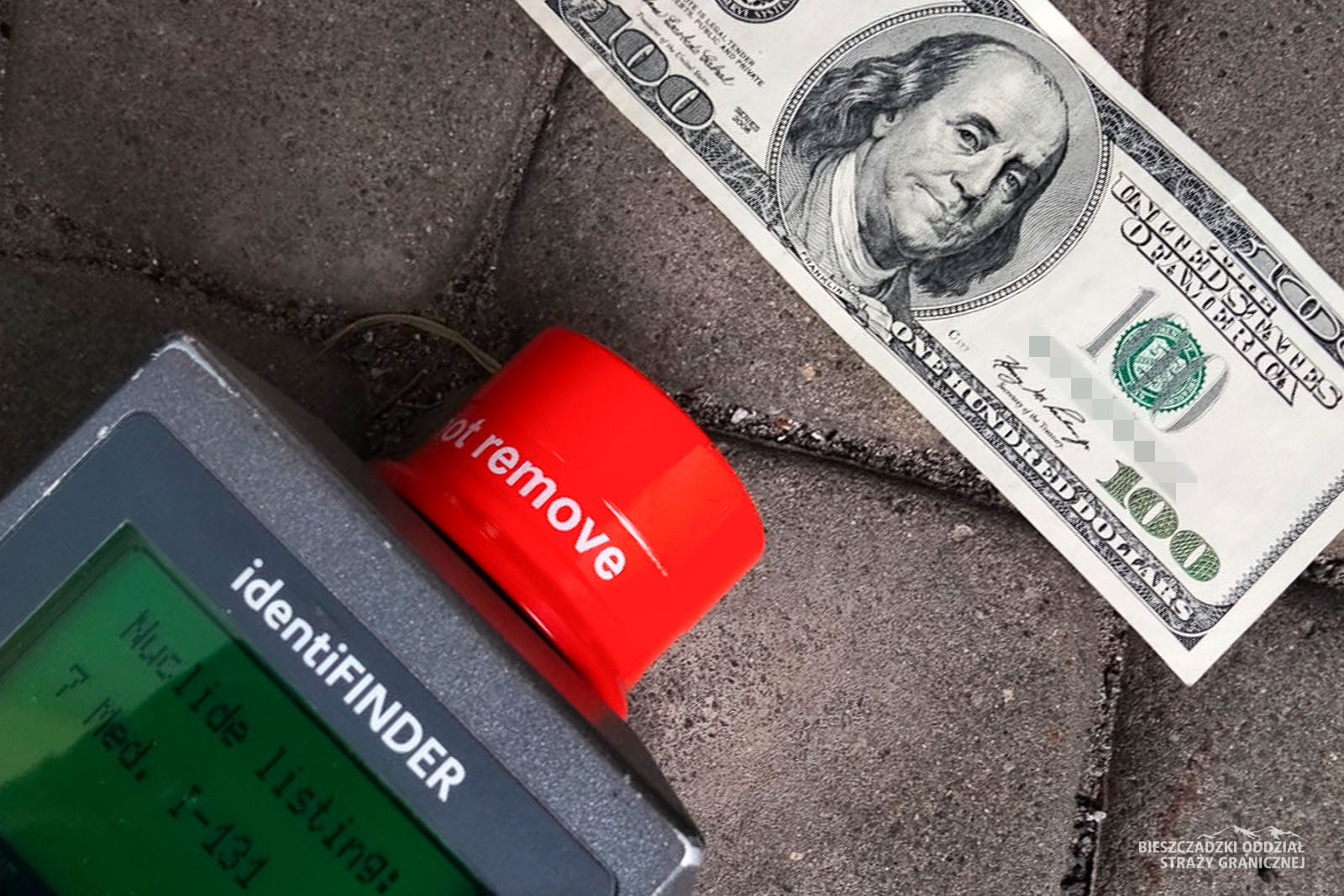
At the Polish border, at the Medyka checkpoint, border guards discovered a radioactive banknote in the luggage of a 54-year-old Ukrainian woman. This was reported by the Border Guard Service.
The incident was detected by the Polish Border Guard after a radiometric gate was triggered. The alarm also went off during a routine inspection
What exactly was found
During the inspection, the woman had $9,900 in cash, but one bill showed radiation levels 1,905 times higher than the permissible limit
Further analysis revealed the presence of a radioactive isotope. Such substances are used for medical purposes (specifically, in treatment).
What this might mean
Experts usually associate such cases with:
- exposure to medical treatments (radiotherapy)
- contamination via equipment or materials
- less commonly—with the uncontrolled circulation of radioactive substances
This does not necessarily involve the intentional transport of hazardous materials.
Authorities’ Response
After the banknote was discovered, it was isolated in a special container. The incident was reported to
the Polish National Atomic Energy Agency.
As for the woman, she was denied entry into Poland and, along with the money, was sent back to Ukraine
The woman’s account
According to her, the money was intended for the purchase of a car. She was unaware of the banknote’s dangerous origin.
How the checks work
Radiation monitoring systems are in place at EU borders:
- automatic scanners react even to minor deviations
- luggage, vehicles, and people are checked
Such systems are particularly important in regions where:
- there is active movement of cash
- there are risks associated with the transit of hazardous materials
Is there a threat?
A single incident does not imply a widespread danger, but a 1,905-fold increase is an extremely high figure. Contact with such items may be undesirable.
At the same time, rapid isolation reduces risks to those around