“Reform for Show”: How Special Schools Are Being Closed in Ukraine Under the Guise of Deinstitutionalization
9 July 14:03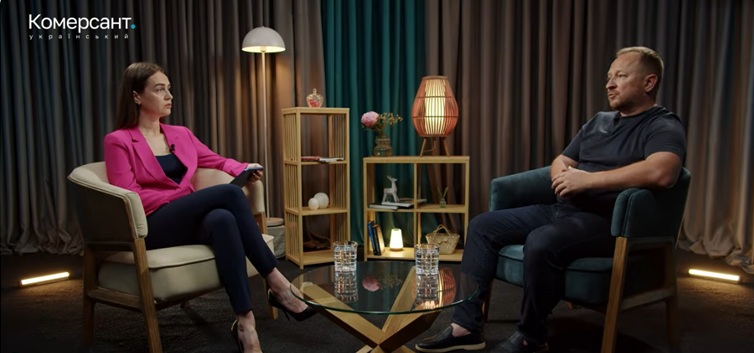 YOUTUBE
The deinstitutionalization reform in Ukraine, which was intended to protect children’s rights, has in practice yielded a completely different result. Instead of reforming the system of boarding schools for orphans, many regions have begun closing special schools for children with special needs. Pavlo Sushko, a member of parliament and chair of the Verkhovna Rada’s Temporary Investigative Commission on the Protection of Children’s Rights, made this statement in an interview with the YouTube channel "Komersant Ukrainian".
According to the MP, the mass closure of such institutions was one of the reasons for the creation of the Verkhovna Rada’s first Temporary Investigative Commission on the Protection of Children’s Rights. Now, the MP notes, a second Temporary Investigative Commission is already at work, continuing to monitor compliance with children’s rights and analyze the consequences of the reform.
“And it seems that today the focus is not on ensuring a child’s right to a family, but on numbers and checking boxes,” he says.
Sushko notes that special schools are often mistakenly referred to as boarding schools for orphans. In reality, most of their students have parents, but due to developmental differences, they require special educational programs, sessions with specialists, and, if necessary, boarding school accommodation.
According to the lawmaker, instead of genuine reform, officials have chosen the easier path.
“They simply renamed the actual boarding schools as special schools. They changed the sign—and that’s it. But it’s the special schools that they’ve started closing down. And those are the schools attended by children who have parents,” he says.
The lawmaker also pointed out that the problem isn’t just the closure of these institutions. He explained that special schools are often left without adequate support: funding for heating is not allocated, there are no school buses, difficulties arise in recruiting new students, and the institutions’ operations are frequently discredited in the public sphere.
According to Susko, as a result, the children who suffer the most are those for whom a special school was the only opportunity to receive a quality education, rehabilitation, and the necessary support.
Watch us on YouTube: important topics – without censorship