Record Harvest Affects Prices: What’s Happening in Ukraine’s Sweet Cherry Market
3 July 20:45
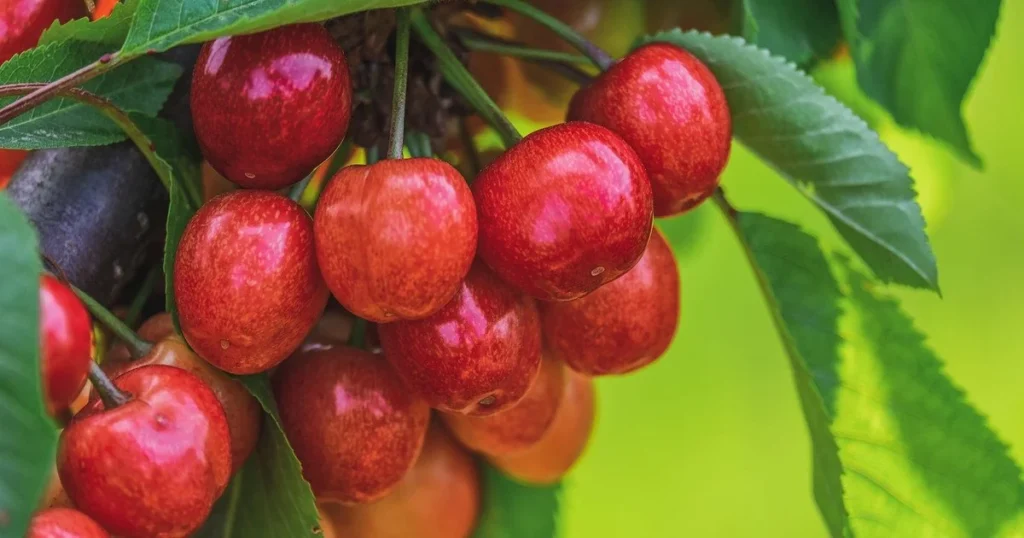
The 2026 cherry season in Ukraine turned out to be a bumper crop, but it was a disappointment for producers due to a sharp drop in purchase prices and high production costs. Despite the significant harvest volume, most farmers were unable to achieve the expected profits due to oversupply and the high cost of manual harvesting. This is reported by "Komersant Ukrainian", citing East-fruit.
The harvest exceeded spring forecasts
At the start of the season, market participants anticipated potential cherry crop losses due to spring frosts and other weather risks. In some regions, a decline in supply was even predicted.
However, at the height of the harvest, the situation turned out to be the opposite: yields exceeded expectations, and market supply increased significantly.
According to Taras Bashtannik, president of the Ukrainian Fruit and Vegetable Association, the season was “bountiful, but with low prices.”
Due to a surplus of produce in the main growing regions, the wholesale price of cherries fell to 40–60 UAH per kilogram, which is significantly lower than the previous year’s level.
“This year, the price turned out to be significantly lower than farmers had expected, although for consumers this is a positive factor—the harvest is good almost everywhere,” he noted.
A low price does not mean a low cost of production
For Ukrainian consumers, cherries are traditionally considered one of the most expensive seasonal berries. However, in 2026, they fell into roughly the same price range as strawberries and were cheaper than raspberries and blueberries.
Watch us on YouTube: important topics – without censorship
However, for producers, the price drop was not a positive factor. On the contrary, it significantly worsened the season’s economic performance.
Growing high-quality, large-fruited cherries requires significant investment in orchard protection, irrigation, pruning, fertilization, cooling, sorting, packaging, and logistics. Furthermore, cherries remain a crop that is harvested exclusively by hand.
“All over the world, premium, large, high-quality cherries are expensive. And they should be expensive, because the production costs and the complexity of growing them are very high,” emphasized Taras Bashtannik.
In his assessment, cherries theoretically remain a profitable crop; however, during the 2026 season, the combination of low purchase prices and rising production costs prevented most farmers from achieving the expected financial results.
“At this year’s prices, combined with rising production costs, sweet cherries didn’t even come close to the profit Ukrainian producers had hoped for,” he said.
Harvesting can account for a third of the selling price
Manual harvesting remains one of the largest expense items.
According to the president of the Ukrainian Fruit Growers Association (UPOA), the cost of harvesting cherries in Ukraine can reach 20 UAH per kilogram. At selling prices of 40–60 UAH per kilogram, the labor costs alone can account for about one-third of the product’s cost, and in some cases, up to half of its production cost.
On average, cherry pickers earn 1,200–1,400 UAH per day. Some farms pay not by the kilogram harvested, but by the hour—up to 200 UAH per hour.
Under these conditions, farms that lack sufficient workers, proper cooling facilities, and rapid distribution risk losing a significant portion of their profit margin even with a good harvest.
Speed is particularly important for cherries: the fruit has a short shelf life, quickly loses its marketable appearance, and requires immediate cooling right after harvest.
Chernivtsi Oblast Aims to Become a New Production Hub
Despite the challenging economic conditions of the season, new cherry orchards continue to be planted in Ukraine. However, this process is not yet widespread.
New plantings are most actively emerging in the Chernivtsi region, which is gradually establishing itself as a specialized center for sweet cherry production.
This is particularly important following the loss of access to Melitopol—the traditional center of Ukrainian sweet cherry production, which remains under Russian occupation.
“Sokyryany is now actively vying to take Melitopol’s place. The climate of the Sokyryany district in the Chernivtsi region differs from that of Melitopol, but this is not a critical issue,” says Taras Bashtannik.
In his view, over time, the region could develop its own school of cherry production, focused not only on cultivation but also on post-harvest processing.
“They’ll be able to improve their processes for cooling, grading, quality control, and export. And once Melitopol returns to Ukraine, there will be two cherry capitals,” noted the president of the Ukrainian Cherry Growers Association.
The next competition will be not over yield, but over quality
The 2026 season showed that a high yield alone does not guarantee high profitability.
When there is an abundance of produce on the market, the advantage goes to farms that can offer consistently large, uniform, chilled, and properly packaged cherries. It is precisely these characteristics that enable farmers to work with retail chains, the premium segment, and export buyers.
For the further development of Ukraine’s sweet cherry industry, producers need to invest not only in expanding their acreage but also in large-caliber varieties, protecting orchards from rain and hail, rapid pre-cooling, sorting, and packaging.
Without these measures, even a good harvest can turn from an advantage into a factor that puts downward pressure on prices. The 2026 season served as a prime example: Ukraine had a bountiful cherry harvest, and consumers enjoyed more affordable prices, but for a significant portion of producers, the financial outcome turned out to be much weaker than they had expected.
Read us on Telegram: important topics – without censorship