Where Do METRO’s Millions Go: How Much Does the German Retailer Spend to Retain a Single Employee in Ukraine?
3 July 19:17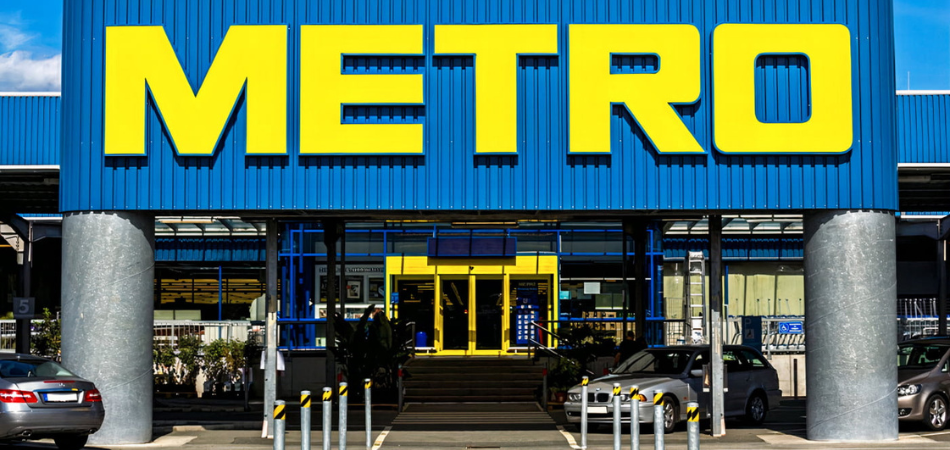 ANALYSIS
The well-known retailer “METRO UKRAINE” has demonstrated a unique business model amid a full-scale war. Despite losing some of its retail locations, the company has been steadily increasing its sales, and recently, the influential Czech billionaire Daniel Kržetinský became its ultimate beneficiary. However, a detailed analysis of the latest financial reports on Opendatabot reveals a harsh reality: the billion-level revenue figures do not translate into actual profits. For years, the company has been generating net losses, accumulating debt, and maintaining its market share at the cost of a profound operational transformation, according to "Komersant Ukrainian".
The German small-scale wholesale giant “METRO Cash & Carry” remains one of the largest pillars of Ukrainian retail. Despite the enormous challenges posed by a full-scale war and the loss of several shopping centers in eastern and southern Ukraine, the company is demonstrating phenomenal growth in sales.
What are METRO’s revenues?
If we evaluate METRO’s business solely by sales volume, the company is experiencing a real boom. In 2022 (the toughest year for the Ukrainian economy), the retailer’s revenue fell by 22.3%—to 20.15 billion UAH. However, the very next year, the company made a strong comeback, having fully adapted to the new realities.
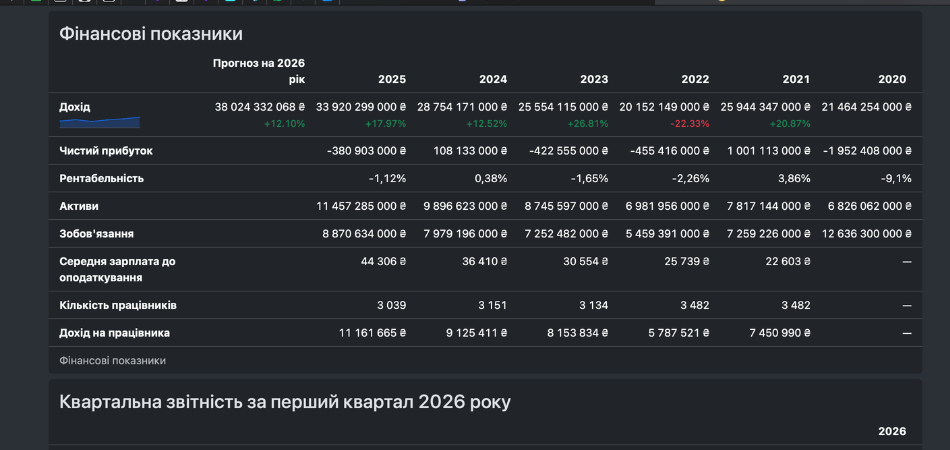
In 2023, revenue grew by 26.8% (to 25.55 billion UAH), in 2024—by 12.5% (to 28.75 billion UAH), and by the end of 2025, the company reached an impressive 33.92 billion UAH. Moreover, the financial forecast for the current year, 2026, promises an all-time high of 38.02 billion UAH (12.1%). Over the past four years, the company has effectively doubled its cash flow, firmly establishing itself in the “OpenDataBot Index” among Ukraine’s top companies.
The profitability paradox: why is the retail giant posting a loss?
The flip side of billions in revenue is net profit, which remains in the red. Over the past five years, the company closed only 2021 with a substantial profit (about 1 billion UAH). What followed was a period of chronic financial turbulence.
In 2022, the loss amounted to 455 million UAH, and in 2023, 422 million UAH. In 2024, the company briefly returned to a symbolic profit (108 million UAH), but by the end of 2025, it again recorded a net loss of 380.9 million UAH. Product profitability stood at 20.13%, but the overall business profitability was negative 1.12%.
Where do these losses come from given such high demand? The answer lies in the balance sheet structure and capital investments. The company has significant liabilities (8.87 billion UAH as of 2025) with total assets of 11.45. The current ratio is 0.89 (with a standard > 1). This indicates that METRO’s Ukrainian subsidiary is actively borrowing from its parent holding company and suppliers to finance capital expenditures for energy independence (generators, relocation) and to maintain low prices for B2B and B2C customers in order to preserve market share.
A Czech Trace in the Ownership Structure
A landmark event occurred in METRO’s registration history that went largely unnoticed by the media. In November 2024, the well-known Czech billionaire Daniel Křetínský officially became the ultimate beneficial owner of the Ukrainian division.
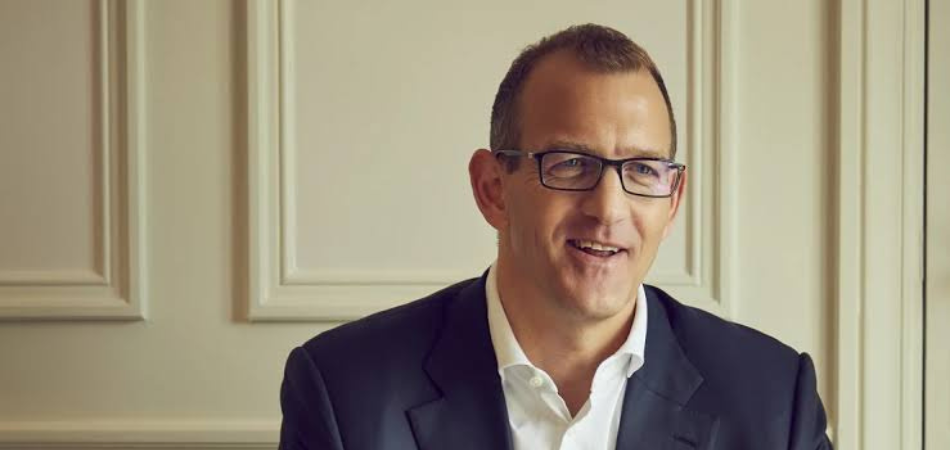
Incidentally, 50-year-old Křetínskýis one of the wealthiest people in Central Europe, with a fortune estimated by Forbes at approximately $9.8 billion as of 2026. He built his fortune in the energy sector (he heads the EPH holding company), but in recent years he has been actively acquiring assets in global retail (the French Casino chain, Germany’s METRO AG), media (the French newspaper *Le Monde*), and sports (co-owner of the English soccer club West Ham United).
Through his conglomerate, EP Corporate Group, Krzetynski has been systematically acquiring shares in the global German holding company METRO AG, and his direct control is now registered in the Ukrainian State Register of Legal Entities. The founders of METRO CASH & CARRY UKRAINE LLC remain METRO MANAGEMENT UKRAINE LLC (97.24%) and “UKRAINIAN WHOLESALE AND TRADING COMPANY” LLC (2.76%), with a combined authorized capital of over 510 million UAH. The influx of substantial Czech capital during wartime demonstrates European investors’ long-term confidence in the Ukrainian market.
Watch us on YouTube: important topics – without censorship
What are the salaries of METRO employees?
Despite financial setbacks, METRO plays a vital social role in Ukraine under the leadership of CEO Olena Vdovichenko. The company consistently provides employment for 3,039 people.
The average official salary (before taxes) rose from 22,603 UAH in 2021 to nearly 36,500 UAH in 2025, and is projected to reach 44,306 UAH in 2026. This is nearly double the average for Ukraine’s retail market. Thanks to process optimization, revenue per employee has reached a staggering 11.16 million UAH per year.
The chain participated in 3,948 tenders (actively supplying goods to government agencies and local communities) and is officially listed in the NACP’s Transparency Register as a lobbying entity.
What losses has the retail sector suffered during the war in Ukraine?
During the period of Russian aggression in Ukraine (beginning in 2014), the METRO shopping center chain suffered significant losses, losing control of or sustaining damage to at least five locations.
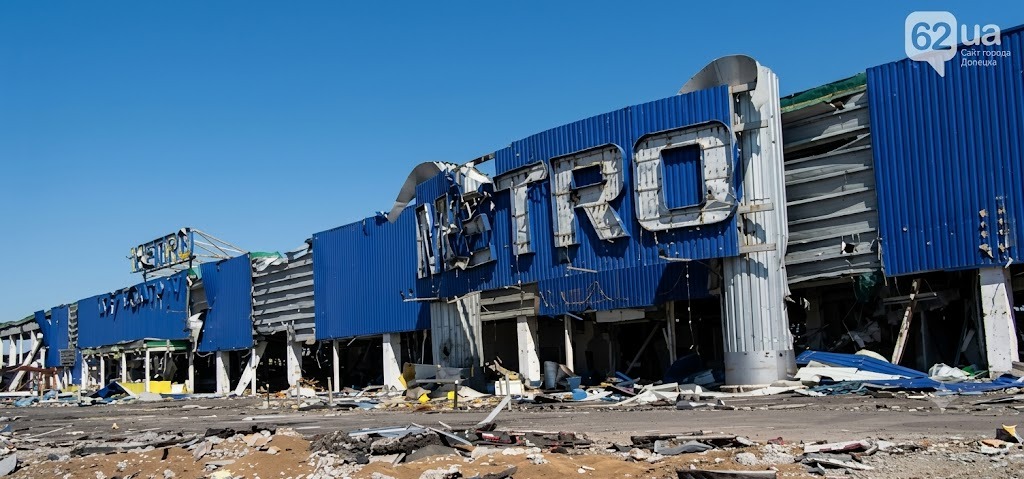
Donetsk (2014) — 1 shopping center: The METRO hypermarket, located near Donetsk Airport, became one of the first symbols of looting and destruction at the start of the war. In May 2014, after the staff was evacuated, the building was completely looted by militants. The company estimated the losses from the loss of merchandise alone at 1 million euros, and the shopping center itself was reduced to ruins.
Mariupol (2022) — 1 shopping center: During the blockade and assault on the city by Russian troops, the shopping center was looted, blockaded, and partially destroyed. That same year, shopping centers in Kharkiv and Mykolaiv were also affected . According to a statement by the chain’s CEO, Olena Vdovichenko, these shopping centers found themselves in the zone of intense combat operations, suffered partial destruction and damage to their infrastructure, and as a result, their operations were completely halted. In addition to the shopping centers, the company’s specialized logistics warehouse—where the chain’s fresh and frozen products were stored—was partially damaged during the full-scale invasion.
Overall, due to the war, 4 of the company’s 26 shopping centers —which were operational as of early 2022—ceased operations; 3 of them sustained significant damage (excluding the shopping center in Donetsk, which was lost in 2014).The loss of capital assets and infrastructure across the country is one of the main reasons for the billions in accounting losses reflected in the financial statements on Opendatabot, despite the growth in total revenue.
Nevertheless, METRO Ukraine exemplifies the classic model of a large international business operating in crisis conditions: maintaining market share and human capital is prioritized over current profitability. The company generates a massive cash flow, pays its taxes regularly, invests in energy security, and raises salaries for its employees. And the arrival of Daniel Krzetynski marks a new chapter in the chain’s financial stability, which remains a critical element of Ukraine’s food security.
Read us on Telegram: important topics – without censorship