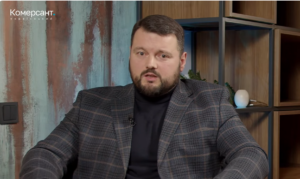
“Artificial intelligence will change not only the labor market but also the economic model itself,” said Minaylo
3 July 18:17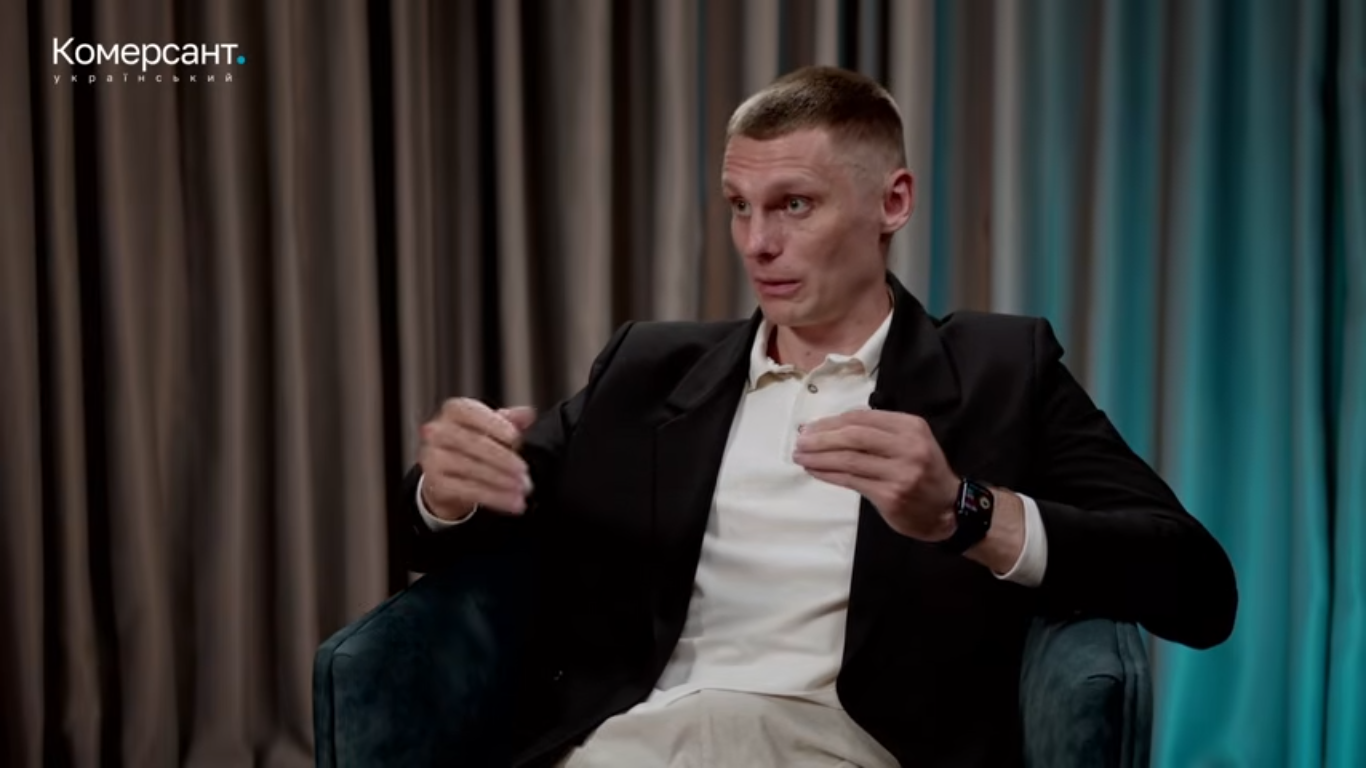 interview
Artificial intelligence is no longer just a technology for automating individual processes. It is gradually transforming the economy, the labor market, education, and the rules of competition. Will AI really leave millions of people unemployed? Why might programmers, accountants, and lawyers be the first to be affected? Is artificial intelligence capable of dismantling the very model of capitalism?
He discusses this in an interview with the YouTube channel
Watch the full video interview on the YouTube channel
— Lately, there’s been increasing mention of Isaac Asimov’s three laws of robotics, the first of which states that a robot may not harm a human being. Would you say that modern artificial intelligence is already violating this principle?
— Not yet. What we call artificial intelligence today consists of software models that run on servers and are subject to very strict limitations. They have no physical body, cannot interact with the world on their own, or make decisions outside the established framework.
Experiments are currently underway in which researchers are testing how far these models can go beyond defined scenarios, but this does not mean they are capable of actually harming humans.
A different situation could arise when artificial intelligence becomes the foundation of autonomous robotic systems. However, I am convinced that developers will simultaneously create safety mechanisms that will prevent such systems from acting against human interests.
— During the quick Q&A, you said that part of humanity is doomed. What exactly do you mean by that?
— I’m talking first and foremost about social inequality. If, thanks to artificial intelligence, humanity creates technologies that allow us to significantly extend life or even find effective ways to combat aging, that doesn’t mean they’ll be accessible to everyone.
There is a risk that only the wealthiest people will have access to such technologies. Therefore, the challenge of the future lies not only in the development of AI, but also in how society will distribute the benefits of that development.
— Which professions do you think will be the first to disappear due to the development of artificial intelligence?
— First and foremost, those whose work is entirely computer-based and lends itself well to digitization. This includes parts of the work done by programmers, accountants, lawyers, and other office professionals who perform routine information-processing tasks. These are precisely the types of tasks that can be best automated using modern language models.
At the same time, this doesn’t mean these professions will disappear entirely. Rather, the very structure of work will change—routine processes will increasingly be handled by artificial intelligence, while people will focus on more complex managerial and creative tasks.
— If your child were 17 years old today, what career would you advise them to choose?
— I wouldn’t recommend any one specific profession. I would advise them to study artificial intelligence. It’s a technology that’s already making its way into virtually every industry—from medicine and finance to manufacturing and education. No matter what someone ends up doing in the future, they need to understand how AI works and be able to use the relevant tools.
In a few years, this will become as basic a skill as working with a computer or knowing a foreign language is today.
— Would you trust artificial intelligence today to fly a plane or perform a complex surgical procedure?
— As things stand today, I wouldn’t trust it to fly a plane. But if, in a few years, statistics show that the system performs these tasks more reliably and safely than a human, I see no reason to reject such technology.
The same applies to medicine. If artificial intelligence demonstrates better results than a surgeon, and this is confirmed by practice and clinical studies, then its use will be a logical step. The main criterion isn’t who makes the decision, but what outcome it produces for the person.
— You’ve also stated that artificial intelligence is already smarter than humans. Why do you draw that conclusion?
— Based on current scientific tests and benchmarks, certain models are already demonstrating results that exceed human capabilities in many specialized fields of knowledge. But here it’s important to understand the difference between intelligence and motivation.
Technically, a system can find solutions more complexly and more quickly than a human. However, it has no desires, emotions, or motives of its own. People can consciously lie or manipulate because they have certain interests. Artificial intelligence has no such motives. That is precisely why today it is far more important to talk not about the danger of AI itself, but about the responsibility of the people who create these systems and determine the rules for their use.
— Back in 2021, you predicted that the development of artificial intelligence could call the very existence of capitalism into question. Has your position changed following the rapid development of AI?
— On the contrary, today I am even more convinced that we are moving in exactly that direction. Capitalism has historically been based on two main sources of wealth creation—natural resources and human labor. It was labor that allowed businesses to make a profit: people produced more value than they received in the form of wages.
But if artificial intelligence and robots perform work more cheaply, quickly, and efficiently than humans, the economic logic will begin to shift. If it becomes more profitable to exploit an algorithm than a human, I have bad news for humanity. Then the owners of such technologies will be able to produce virtually all goods and services without the mass involvement of people. This means that human labor will cease to be the main source of value creation.
— Even now, companies are increasingly refusing to hire junior employees. Can we say that artificial intelligence has already begun to change the labor market?
— Yes. And this is just the beginning. We’re already seeing artificial intelligence take over a significant portion of the routine tasks that traditionally marked the start of young professionals’ careers. That is precisely why employers are increasingly expecting new employees to have skills that, just a few years ago, were required of professionals with much more experience.
The market isn’t disappearing—it’s becoming more complex. Therefore, in the coming years, the main competitive advantage will not be the profession itself, but the ability to work alongside artificial intelligence.
— Who, in your opinion, will be the main winner of this new technological era?
— First and foremost, those who control the technologies themselves. I always say: it’s not artificial intelligence we should fear, but the people who control it. Today, the greatest value is created not by individual models, but by the infrastructure, data, computing power, and capital necessary for their development. Therefore, those who control these resources may gain the greatest economic power. And these will by no means always be public figures.
— What should people be doing right now to remain competitive in the job market?
— First and foremost, don’t be afraid of new tools. Many people still view artificial intelligence as something complicated. In reality, all you need to do is start using it. Modern AI systems can help build websites, automate business processes, analyze information, write code, generate marketing materials, and perform dozens of other tasks. Anyone who learns to use these capabilities today will have a significant advantage tomorrow over those who choose to ignore them.
— Artificial intelligence is already making significant inroads into creative professions. Is the creative economy headed for a major transformation?
— Absolutely. We’re already seeing AI create music, videos, texts, advertising campaigns, and even popular virtual bloggers. This means the amount of content will grow exponentially. At the same time, a countertrend will emerge—more and more people will come to appreciate works created specifically by humans.
But the key thing to understand right now is this: technology cannot be stopped. Even if one country tries to restrict it, development will continue in other countries or within open developer communities.
— Should humanity be afraid of artificial intelligence itself?
— No. Artificial intelligence is just a tool. It all depends on who uses it and for what purpose. Just as electricity can power a hospital or a weapon, AI can be used both to advance society and for manipulation. Therefore, the key issue for the future is not the technology itself, but the rules governing its use, the responsibility of developers, and oversight of those who control the most powerful systems. This is what will determine whether artificial intelligence becomes a tool for human progress or a source of new social and economic risks.