Is Ukraine Facing a Food Shortage? Experts Assess the Situation with Meat, Eggs, and Grains
17 August 21:08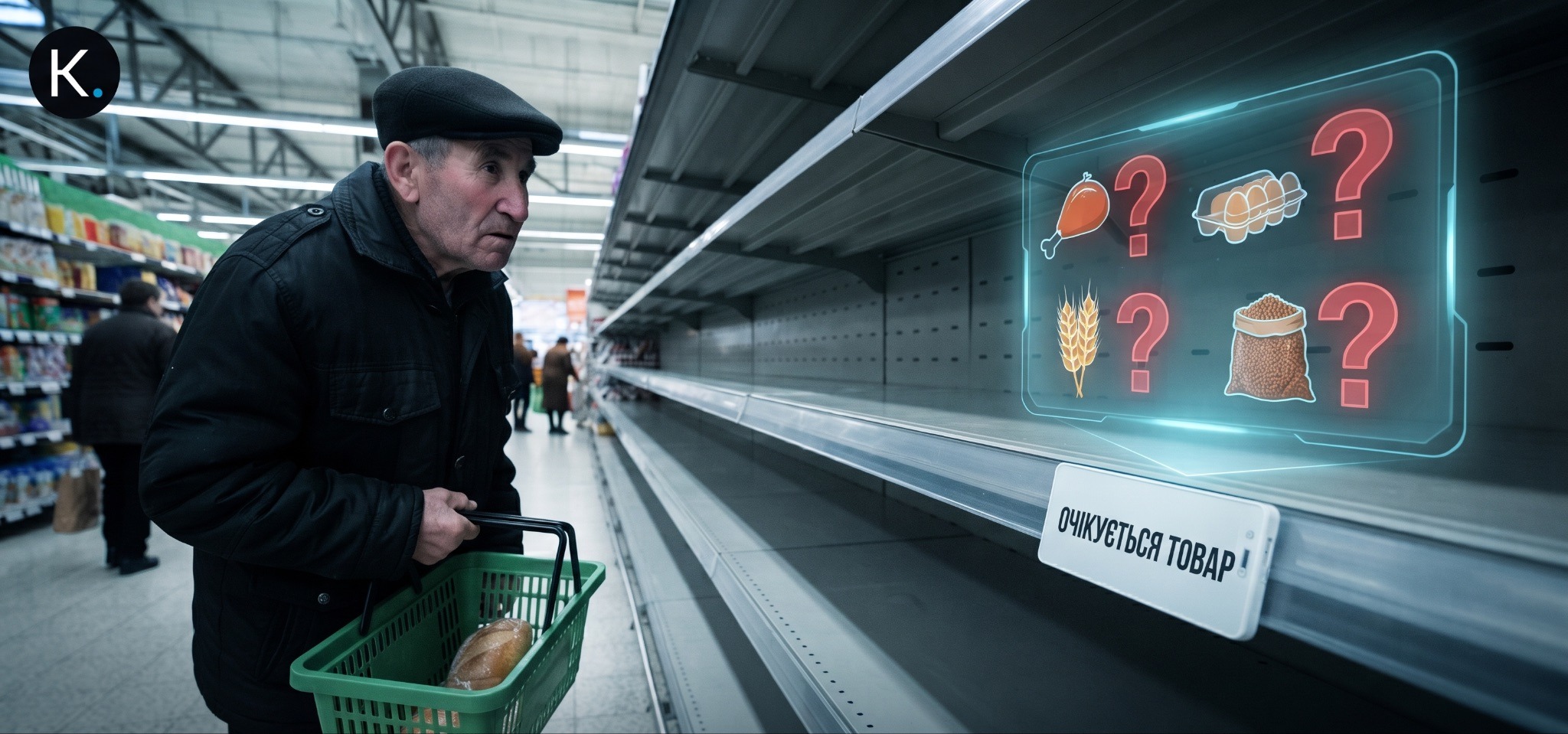 ANALYSIS
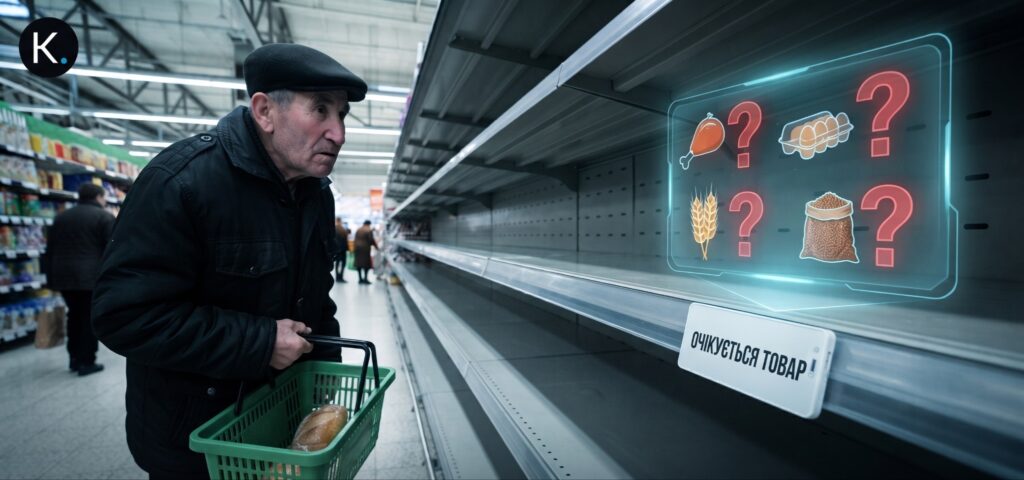
Today , store shelves for certain types of products are half-empty, and this naturally causes concern among Ukrainians. Fears are spreading about a possible shortage of basic foodstuffs. Although experts reassure us that a global collapse is out of the question, the situation is much more complex than it seems at first glance. After all, each sector faces its own unique challenges, ranging from logistics to threats to future harvests. What is really happening in the markets for meat, eggs, grains, and buckwheat—a favorite of many? Will store shelves become even emptier , and what real problems will consumers have to face? In this article
Meat and Eggs: Why There Are Delays on Store Shelves
Some consumers have recently noticed that certain types of meat products or eggs may temporarily disappear from store shelves. However, Serhiy Karpenko , executive director of the Ukrainian Poultry Farmers Association, emphasizes that producers are fully prepared to supply the market with products in any quantity.
“Problems with product availability on store shelves are linked to disruptions in the logistics of national retail chains. As producers, we are ready to supply products in any quantity; the only problem is getting them to the stores,” explains Karpenko.
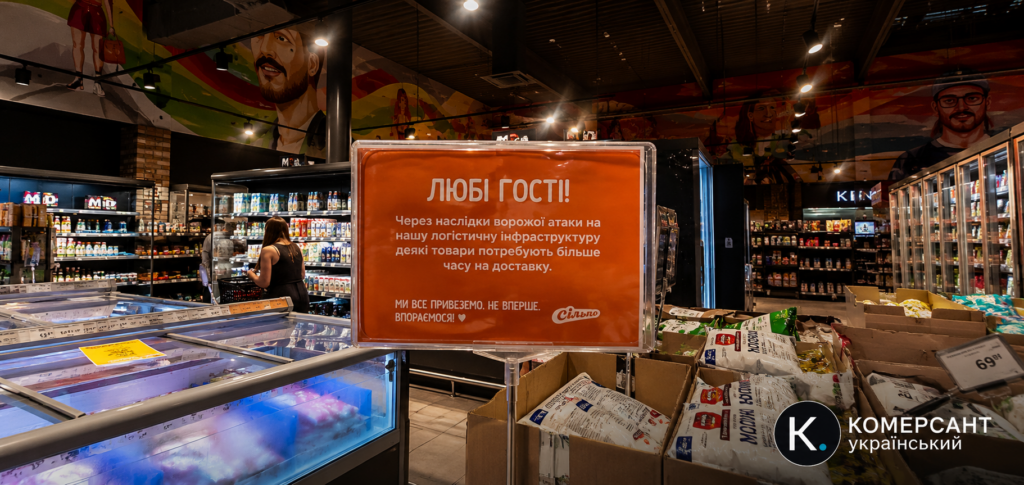
According to Serhiy Karpenko, the government has not built up reserves of perishable goods (such as eggs or meat) for over 20 years. However, temporary logistical disruptions are currently being successfully resolved—the situation is expected to fully stabilize within 2–3 weeks.
“The problem is being resolved; I think everything will return to normal in 2–3 weeks—there is definitely no shortage of our products,” adds Serhiy Karpenko.
This view is also supported by Leonid Kozachenko, president of the Ukrainian Agrarian Confederation. He notes that supply chains are being disrupted by daily hostile attacks on logistics centers that store products for further distribution to stores.
“There’s no need to fear a shortage. It can only occur temporarily due to logistics issues. Logistics are disrupted because we are seeing daily attacks on our logistics centers, which stockpile these products to ensure their delivery and distribution to stores and other retail outlets. And when this happens, temporary problems arise. But there can be no question of a real shortage of any food products. That won’t happen,” emphasizes Leonid Kozachenko.
As for livestock farming, existing dairy farms fully meet domestic demand, although there is still a certain degree of dependence on imports (if imports were to stop, price fluctuations could occur).
Will there be a shortage of dairy products?
Recently, Ukrainians have noticed some disruptions in the supply of dairy products and changes on store shelves. However, Olena Zhupinas, deputy director general of the Association of Milk Producers, assures us that there will be no shortage of dairy products in Ukraine, as processing plants are operating and producing sufficient quantities of goods.
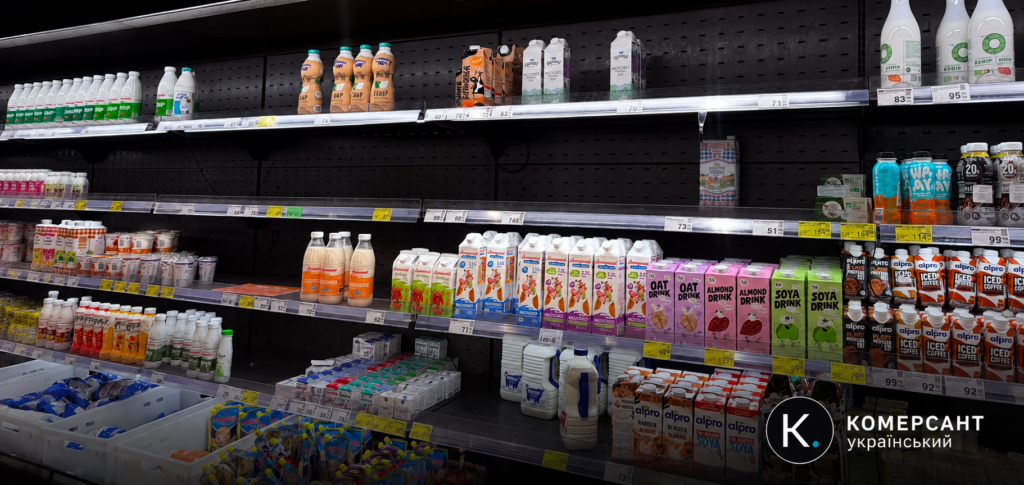
The difficulties observed in the market are related exclusively to logistics and infrastructure damage. As the expert explains, the destruction of large automated retail warehouses has forced a restructuring of supply chains.
“Well, let’s talk about the fact that we have two distribution channels… And it just so happens that the large retail warehouses have been affected. At the same time, these small shops, which are supplied through a slightly different system, continue to receive their deliveries,” notes Olena Zhupinas.
Due to logistical complications and the shift to working with many small warehouses, delivery costs are rising. According to the expert, this will inevitably affect the cost of goods for the end consumer.
“Previously, we said that starting in early September, prices would rise by roughly the rate of inflation—around 10 percent—but now, unfortunately, this price increase could reach 20 percent,” says Župinas.
Due to transportation and warehousing challenges, the range of products from various manufacturers in stores will shrink somewhat, but another trend will emerge.
“We’ll see more regional products on store shelves. If, for example, we’re talking about Kyiv—there will be more products from Yahotyn, more from Vyshneve, and more from Bila Tserkva. And if we’re talking about western Ukraine, of course, we’ll see more from Galicia and Molokiya, because logistically, that makes more sense,” explains Olena Zhupinas.
In addition, processing plants are responding quickly to the situation and increasing production volumes of long-life products. Since pasteurized milk requires strict adherence to the cold chain, the focus is now on other products.
Summarizing the situation, the expert emphasizes that there is no global shortage of dairy products, nor is one expected.
“After all, there is long-life milk, as well as butter, cheese, and cottage cheese. There will be no shortage of dairy products. These are simply temporary inconveniences related to logistics,” said Olena Zhupinas.
Will Ukraine have enough buckwheat?
Recently, Ukrainians have once again begun paying attention to the shelves stocked with grains, and the situation with buckwheat is causing particular concern. Is the country really facing a shortage of this beloved product, why are prices skyrocketing, and are there any state reserves? — he explained in a comment to
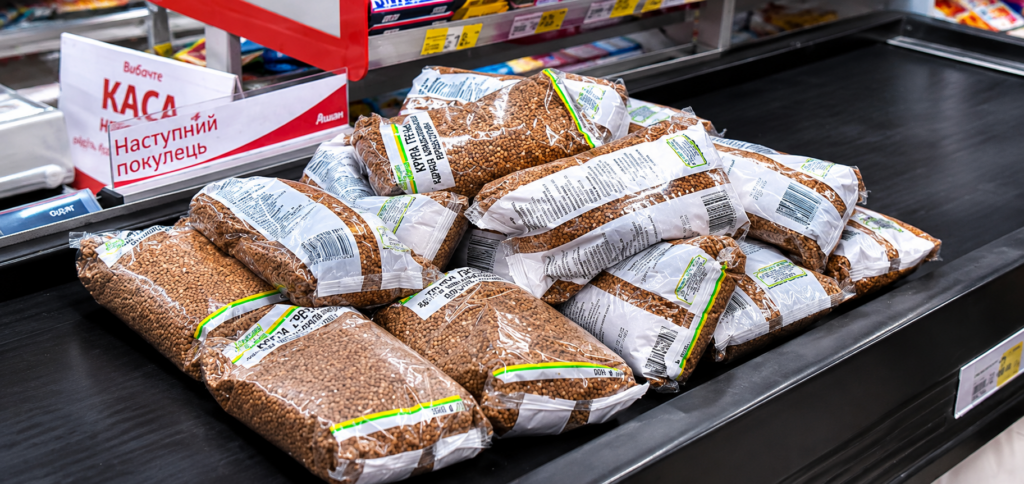
According to the expert, the threat of buckwheat disappearing from store shelves is real, and several significant factors are contributing to this. Sergey Gromov identifies three main reasons why the situation on the buckwheat market has become so tense. The first is last year’s record-low harvest.
“Last year, we harvested the lowest volume of buckwheat in all the years since independence. The lowest figure on record. This is the first factor: the harvest is insufficient to meet domestic demand,” says Gromovoy.
It is precisely because of the physical shortage of buckwheat that its price has doubled over the past year, notes the executive director of the International Buckwheat Association. While a kilogram of buckwheat cost about 30 hryvnias in stores a year ago, today it costs 60 hryvnias.
The second reason for the critical situation with buckwheat is the end of the marketing year and the off-season.
“The harvest of the 25th year is, as always, in short supply. And the new harvest won’t be available until early September. Not before. So, this factor compounds the problem—the shortage of buckwheat itself: there’s already so little of it, and with the end of the year, there are no carryover stocks to make up for the shortfall,” says Serhiy Hromovyi.
And the third factor is panic among the population and stockpiling.
“Because of the war and the unstable situation, people are feeling the strain… And buckwheat is one of the most beloved grains, which people always stock up on,” says Gromovoy.
As the expert notes, people are eager to buy buckwheat specifically because it stores exceptionally well and for a long time compared to other grains, and it is also a beloved and prized food. Because of this, consumers are buying it up “just in case.”
Summarizing the situation, the expert confirms that both further price increases (particularly speculative ones) and a temporary shortage of the grain are entirely possible.
When asked how high prices might rise, the expert notes that everything will depend on the purchasing power and fears of the population itself.
Grain Stocks
The situation with crop products is even more stable. Ukraine has significant carryover stocks and a harvested crop.
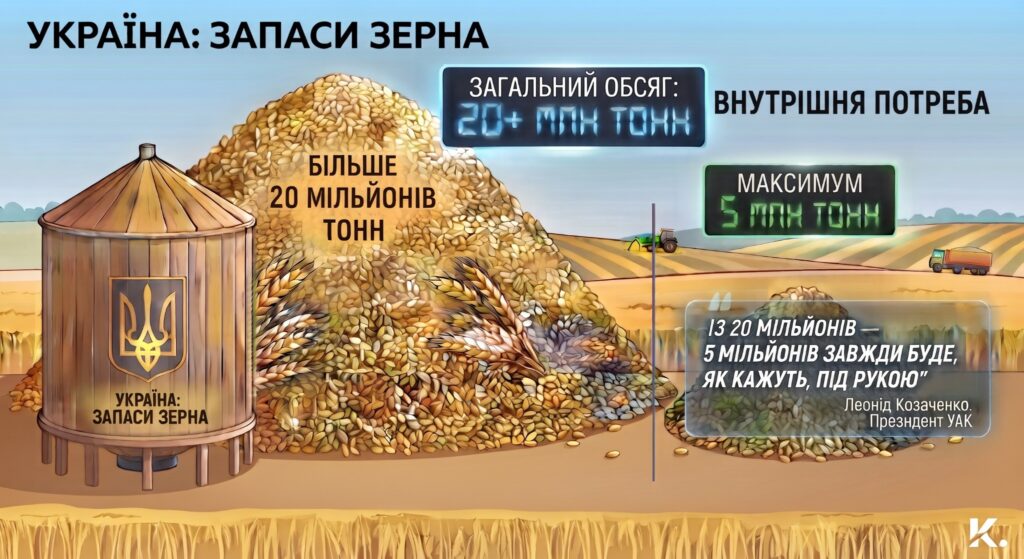
As Leonid Kozachenko, president of the Ukrainian Agrarian Confederation, explains, the country’s domestic needs are quite small compared to the available volumes.
“We need a maximum of 5 million metric tons of wheat per year to meet our needs. Right now, with our carryover stocks and the new wheat that has been threshed, we already have more than 20 million. So, no matter what happens, out of those 20 million, 5 million will always be, as they say, on hand,” said Leonid Kozachenko.
This means that grain reserves are four times the population’s annual needs. As Kozachenko concludes:
“We will not face a food shortage during the coming period, from now until the end of the year and until the new harvest. There’s no need to fear this,” says Kozachenko
Key Challenges for the Future: Exports and Planting Season
According to experts, the main threat lies not in the current availability of food, but in problems with exporting products. This issue is extremely acute, as it negatively affects the state of the entire industry, notes Leonid Kozachenko, president of the Ukrainian Agrarian Confederation .
“Many companies are halting operations, and if there is no progress, the land we cultivated this season will not be planted next year. The area under cultivation will shrink, and as early as next year—if the situation does not change—this could lead to serious problems,” says Kozachenko.
If export difficulties and financial pressure on enterprises persist, this could lead to a reduction in planted acreage next season. In that case, risks to food security could emerge even in the long term.
For now, however, the agricultural sector—including both crop and livestock production—is fully capable of meeting the needs of the domestic market despite the challenging conditions. There is no reason to panic or fear a shortage.
Watch us on YouTube: important topics – without censorship