How to Transport Ukrainian Goods Through Moldova: Customs Has Published Guidelines for Businesses
13 August 13:05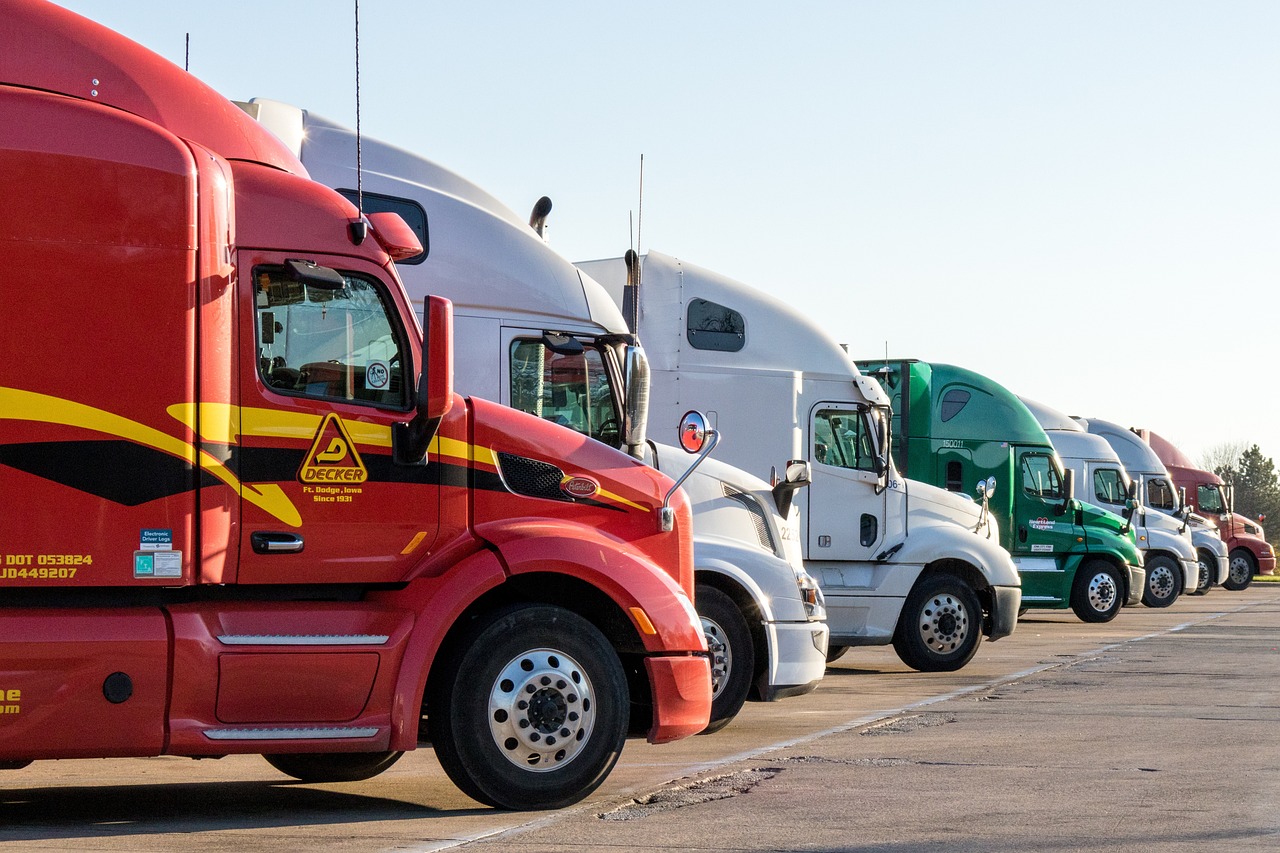
Due to the complex security situation and Russian attacks on transportation infrastructure, Ukrainian businesses are having to use alternative logistics routes. One of these routes passes through Moldova and provides access to the southwestern part of the Odesa region. The State Customs Service of Ukraine has published recommendations on organizing such shipments, according to "Komersant Ukrainian"
What declarations are required for transit through Moldova
To transport Ukrainian goods through Moldova, you must use one of two documents:
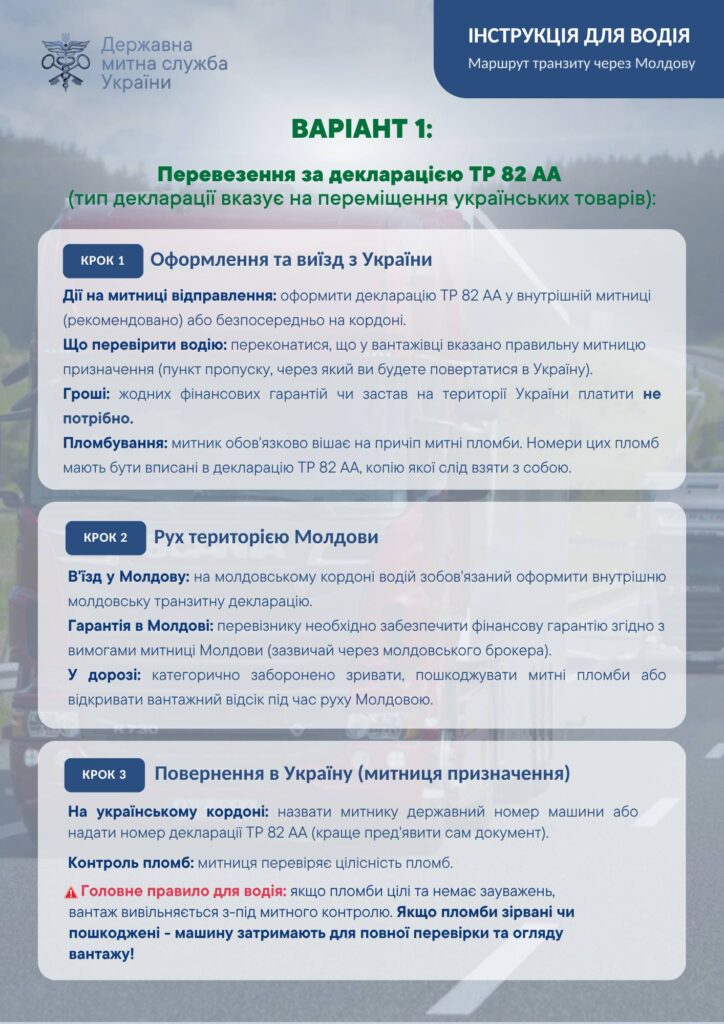
- customs declaration TR 82 AA;
- a T1 transit declaration issued under the common transit procedure.
The choice of document depends on the route, the specifics of the shipment, and the selected customs procedure. Companies are advised to consult with a customs broker before shipping the cargo.
The State Customs Service noted that customs authorities do not prepare declarations. Customs accepts the documents, verifies them, and processes the formalities. The carrier, an authorized declarant, or a customs representative is responsible for preparing and submitting the declaration.
How the T1 Declaration Works
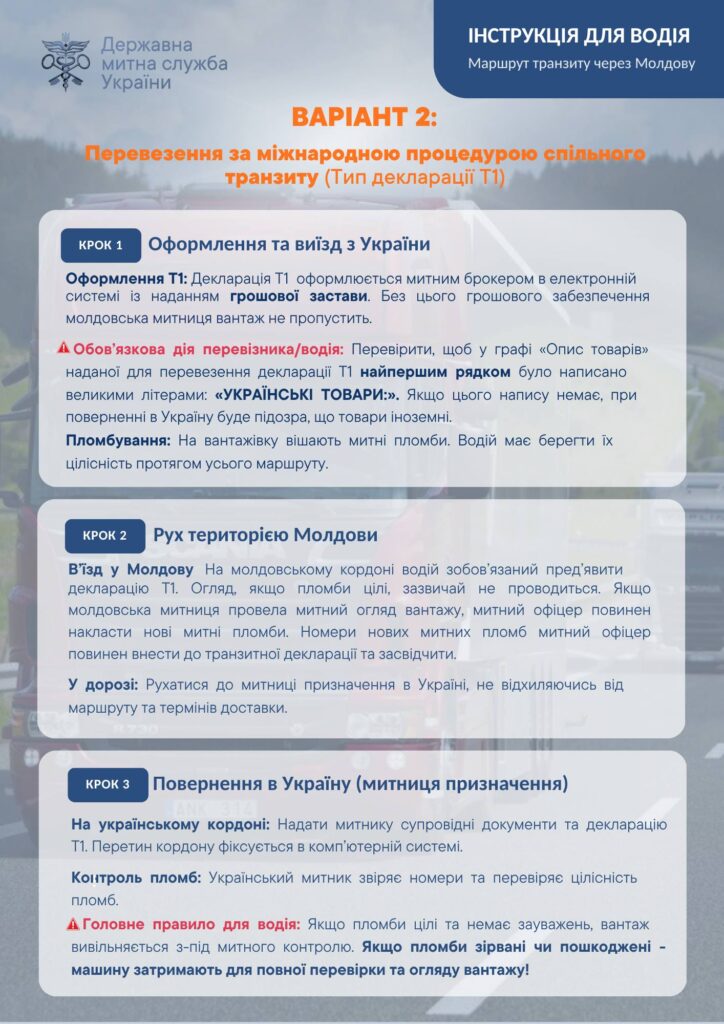
The T1 is a transit declaration used within the common transit procedure. It allows goods to be transported between customs authorities under customs control without paying customs duties in each country along the route.
At the same time, when using the T1, it is mandatory to provide a guarantee for the payment of any potential customs debt. This guarantee is required in case the goods are lost, unlawfully seized, or not delivered to the designated customs authority.
Currently, the territorial scope of general and individual guarantees issued in Ukraine does not extend to Moldova. Therefore, an individual guarantee in the form of a cash deposit is required to transit through Moldovan territory.
Who Can Provide a Guarantee
Customs brokers who prepare the T1 declaration often offer guarantee services. In such cases, the broker may act as the party to the procedure and assume an obligation to the customs authority to pay any potential customs debt.
Such obligations arise if the goods are lost during transit through Moldovan territory or if the shipment is not completed in accordance with the declared procedure.
The carrier may also act as the party to the procedure on its own. To do so, it must:
- update their registration or accreditation with the customs authorities;
- have the necessary status to use the transit procedure;
- deposit a sufficient amount of funds in a customs deposit account;
- assume sole responsibility for the delivery of the cargo.
Before choosing this option, it is advisable to calculate the potential customs debt and compare it with the cost of a broker’s services.
What documents must the driver have?
When transporting Ukrainian goods internationally through Moldova, the driver must have a complete set of personal, vehicle, and commercial documents.
First and foremost, it is necessary to verify the presence of a foreign passport and legal grounds for crossing the state border. The driver must also be registered in the relevant state information systems, if such registration is required by the rules for departure.
An international CMR consignment note must be issued for the transport of cargo. It contains information about the shipper, consignee, carrier, vehicle, route, and characteristics of the goods.
Why Is a Commercial Invoice Required?
The carrier must obtain a commercial invoice from the shipper in advance. This document contains information about the description, quantity, and value of the goods.
This information is used to calculate any potential customs liability that may arise if the shipment is lost or not delivered to the destination customs office.
The invoice must include at least the following:
- the names and contact details of the seller and buyer;
- a description and quantity of the goods;
- the value of the shipment and the currency of payment;
- terms of delivery;
- the document number and date.
The information in the invoice, customs declaration, and CMR must not contradict each other.
Where to File the Declaration
The State Customs Service recommends filing T1 or TR 82 AA declarations at domestic customs offices in Ukraine, rather than directly at road border crossings.
Pre-filing will allow you to:
- reduce the time the vehicle spends at the border;
- avoid additional lines;
- correct errors in the documents in advance;
- verify the availability of the required guarantee;
- avoid vehicle downtime and missed delivery deadlines.
If the documents contain inaccuracies or are incomplete, the clearance process at the border may be delayed.
Watch us on YouTube: important topics – without censorship
Requirements for Cargo Trailers
The design of the vehicle or cargo trailer must allow for the application of customs seals. Once sealed, it must not be possible to remove the goods or replace part of the cargo without damaging the seal.
Before the trip, the carrier should check:
- that the doors, locks, and locking mechanisms are in good working order;
- that the tarp or body is undamaged;
- that there are locations available for affixing customs seals;
- that the actual cargo matches the information in the documents;
- that the seals remain intact after each leg of the route.
In the event of damage to or loss of a customs seal, the driver must immediately notify the competent authorities and act in accordance with their instructions.
Pre-Departure Checklist for Travel to Moldova
Before beginning the shipment, the company and the driver are advised to verify:
- Whether the driver has a valid passport and authorization to cross the border.
- Whether the driver is registered in the relevant government information systems.
- Whether the CMR international consignment note has been completed.
- Whether a commercial invoice for the goods is available.
- That the information on the CMR, the invoice, and the customs declaration matches.
- Completion of a T1 or TR 82 AA declaration.
- Availability of an individual guarantee if the T1 procedure is used.
- Sufficient guarantee amount to cover potential customs debt.
- The ability to seal the cargo compartment or trailer.
- Correct identification of the customs offices of departure, transit, and destination.
Processing documents at the internal customs office and consulting with a customs broker in advance will help reduce the risk of cargo delays.
Read us on Telegram: important topics – without censorship