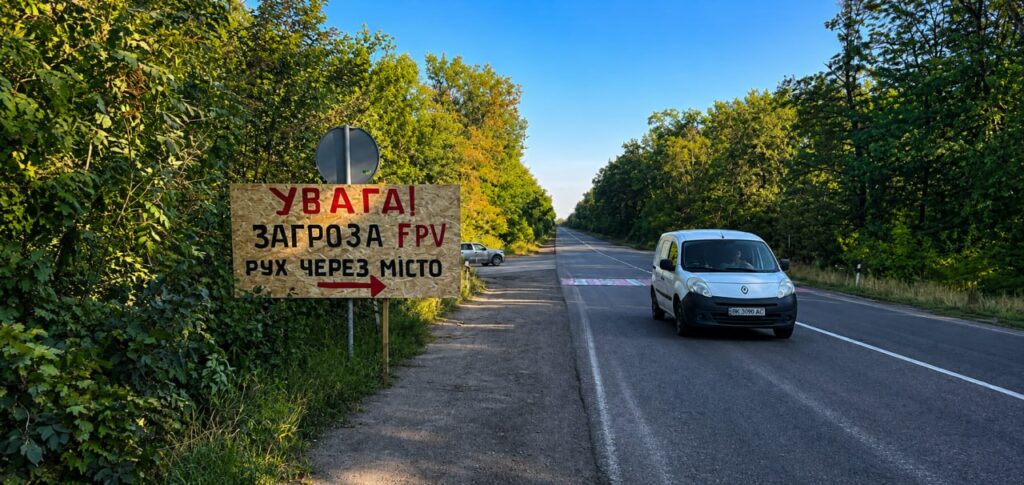
“The Road of Death”: Why the Sumy–Kharkiv Highway Has Become a Death Trap and Where Did the Protective Netting Provided by the Regional State Administration Go?
17 August 17:03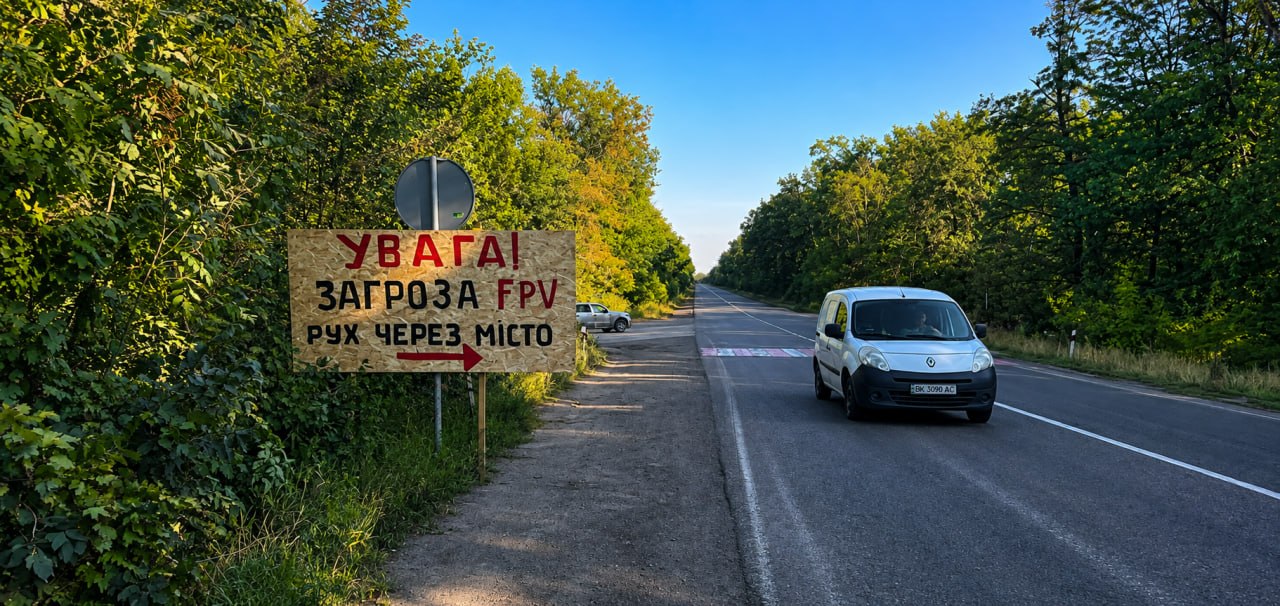 ANALYSIS FROM
The Sumy–Kharkiv highway, on the section from Zolochiv to Okhtyrka, has effectively become impassable due to massive attacks by enemy drones. This transportation artery is critical for supplying the entire city of Kharkiv, yet the government and relevant agencies have still not provided adequate engineering protection. Military officials say the authorities’ inaction is reminiscent of the fatal mistakes made at the start of the full-scale invasion.
Why has this road—which is key to supplying Kharkiv—become impassable, and why has the Kharkiv Regional State Administration still not taken any measures to protect local roads?
Logistics Under Attack: Why People Are Quitting
The enemy fully understands the strategic importance of transportation routes. The occupiers don’t even need to launch large-scale assaults on Kharkiv—it’s enough to bring key supply routes under fire, one of which is the Sumy–Kharkiv highway. This was noted in a comment
The constant danger is directly undermining the region’s life support systems. Due to daily drone attacks, employees of critical infrastructure facilities and logistics companies are refusing en masse to go on runs and are submitting resignation letters, planning to leave for the western part of the country.
“And people are already quitting their jobs at critical infrastructure facilities. For example, a logistics truck driver has already been wounded twice in enemy drone attacks. Of course, he no longer wants to risk his life, so he’s quitting and plans to move to the west,” the officer explains.
Simulation Instead of Protection: Where the Nets Are Actually Being Installed
The officer drew particular attention to the status of anti-drone measures. Protective structures are appearing only in isolated locations.
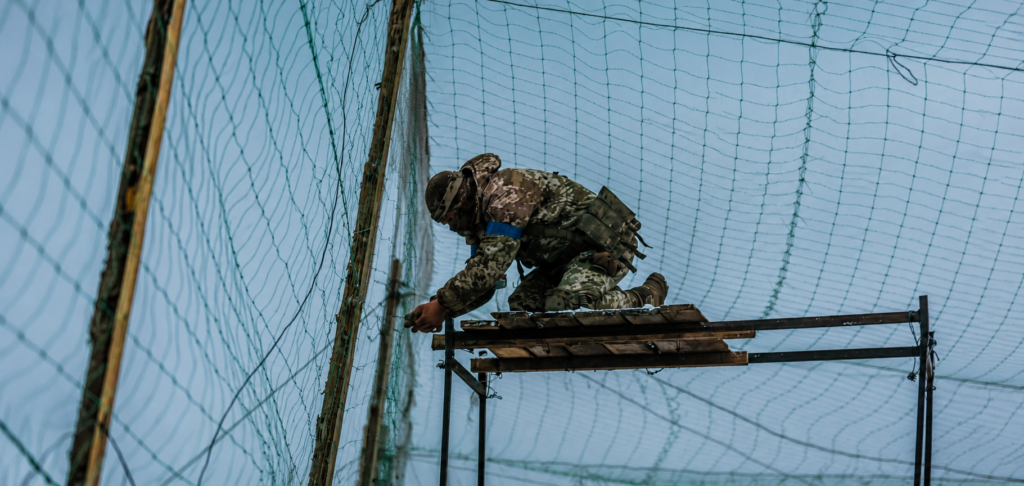
“Anti-drone nets have only been installed at the entrances to farmers’ properties—that’s it; there are none along the rest of the road,” says the servicemember.
At the same time, Yevhen Tykhyi emphasizes that, even though the nets aren’t a magic cure-all given the frenzied activity of enemy UAVs, this absolutely doesn’t mean we should stop installing them.
“Where active combat operations are taking place, special teams are constantly repairing and maintaining the protective nets, but that’s not happening here. We can’t let the situation get this bad; we need to take measures in advance, because later it will be too late,” warns the representative of the Defense Forces.
According to the military official, ignoring the need for engineering protection of roads now bears a direct resemblance to the fatal miscalculations of the first months of the major war.
“It’s like at the start of the full-scale invasion with the trenches: they didn’t dig them in time—and lost far more people and territory,” says Yevhen Tykhyi
What do local authorities say?
The Kharkiv Regional Military Administration responded to a request from the publication
Watch us on YouTube: important topics – without censorship
In its official response, signed by Iryna Ivanova, acting director of the Department of Strategic Communications, the agency effectively shifted part of the responsibility to other agencies, while acknowledging the lack of concrete solutions for protecting local roads.
Upon receiving a request regarding unprotected sections, the Regional State Administration outlined a complex internal procedure for forwarding the request to the relevant agencies—the Department of Defense, Mobilization, and Cooperation with Law Enforcement Agencies, as well as the Department of Capital Construction. However, the final step was to forward the request to another administrative body.
“In order to comprehensively review the request for information, in accordance with Part 3 of Article 22 of the Law, your request has been forwarded for consideration to the Service for Infrastructure Restoration and Development in the Kharkiv Region,” the document signed by Iryna Ivanova states.
In effect, the relevant department of the Regional State Administration avoided providing a direct, independent assessment of the issue by redirecting the requesters to a state agency.
No decisions have yet been made regarding local roads
Regarding the substance of the issue, the Regional State Administration reported that the military command determines the need to install protective nets and other engineering structures, taking into account the operational situation.
At the same time, the agency provided a telling response regarding regional highways.
“As of now, no decisions have been made regarding the installation of protective nets and other engineering structures designed to counter enemy UAVs on local public roads,” stated Iryna Ivanova, acting director of the department.
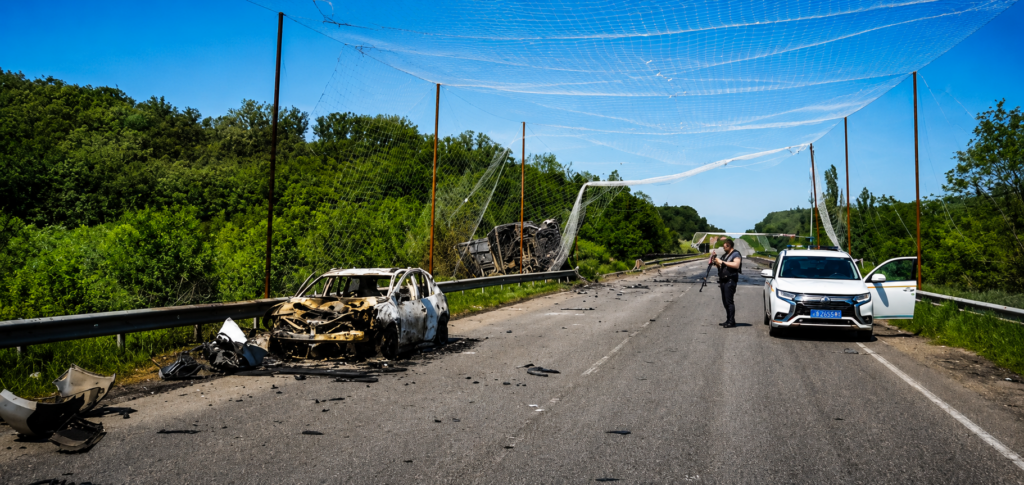
As for state highways, the Regional State Administration cites a decision by the Kharkiv Regional Defense Council from November 2025, according to which anti-drone barriers are to be installed only on specific sections of military-logistical routes (in particular, bypass and frontline roads) based on special designs by the Ministry of Defense.
However, judging by the response, the authorities are in no hurry to fully address the fate of critically important local roads, where civilians and volunteers are subjected to daily attacks by enemy drones.
Editorial Board
Read us on Telegram: important topics – without censorship