Ukraine is among the world leaders in the use of crypto assets
17 August 13:11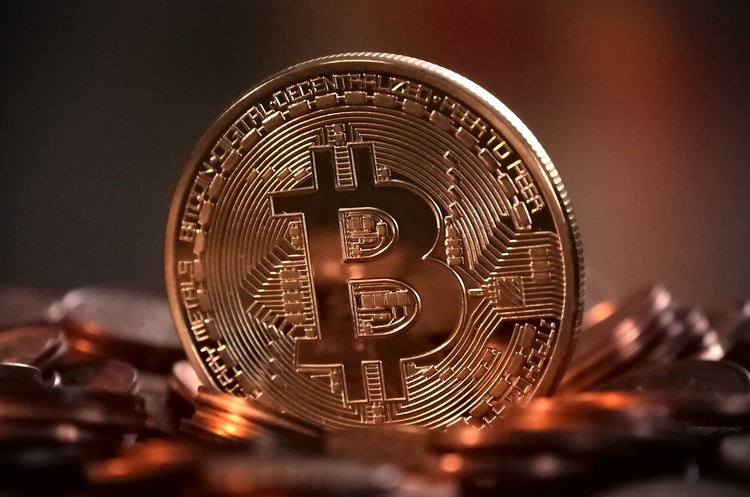
Ukraine is already one of the world’s most active crypto markets. According to Chainalysis’ Global Crypto Adoption Index 2025, Ukraine ranks 8th in the world in terms of crypto asset adoption, and 1st in the world when adjusted for population size. This was stated by Oleksiy Semenyuk, chairman of the National Securities and Stock Market Commission, during an online discussion organized by Incrypted, according to "Komersant Ukrainian".
According to Chainalysis’ Global Crypto Adoption Index 2025, the volume of cryptocurrency transactions linked to Ukraine reached approximately $206.3 billion, an increase of about 52% over the past year.
“When a country ranks first in the world in terms of crypto activity per capita, we can no longer talk about virtual assets as a niche phenomenon. The market exists, Ukrainians are using it, and businesses are creating products. The question is this: where is this business legally based, where does it pay taxes, and to what extent are Ukrainian users protected? This is precisely what the legislation must address,” noted Oleksiy Semenyuk.
According to him, the legalization of crypto assets should ensure that Ukrainians have access to services from authorized providers of virtual asset-related services, and that businesses have clear conditions for operating legally in Ukraine.
This includes, in particular, services for buying, selling, and exchanging virtual assets, as well as their storage, staking, and other products that, once the legal framework is established, will be able to develop in accordance with state-defined rules.
“For individuals, the outcome of the reform must be very concrete: they must understand who is providing the service, whether the company is authorized, what rules it is required to follow, and where to turn in the event of a violation of their rights. Currently, a significant portion of these relationships effectively falls outside the scope of Ukrainian regulation,” emphasized the Commission Chair.
Specifically, this refers to services for buying, selling, and exchanging virtual assets, as well as their storage, staking, and other products, which—once the appropriate legal framework is established—will be able to operate in accordance with state-mandated rules.
Semenyuk identified the tokenization of real-world and financial assets—RWA (Real World Assets)—as a separate area of development.
This involves using distributed ledger technology to represent rights to real-world assets or financial instruments in digital form. In the future, such technologies could be used to create new models for raising capital and developing investment products.
“For me, the strategic goal is much broader than simply legalizing cryptocurrencies. We’re talking about the possibility of integrating virtual asset technologies with the traditional financial market. Tokenization, RWA, and new investment products are already part of the global evolution of the financial system. Ukraine should not be playing catch-up with this process in five years; rather, it should be creating the legal infrastructure for it now,” Semenyuk noted.
Watch us on YouTube: important topics – without censorship
The Next Step—Banks and Payment Infrastructure
One of the key issues remains the interaction between the legal virtual asset market and the banking system.
According to the Chairman of the National Securities and Stock Market Commission, the law alone cannot automatically resolve all issues related to the banking and payment infrastructure. At the same time, without a defined legal status for the market, such interaction is virtually impossible.
“If there is no legal framework, there is no real basis for interaction. The law establishes the rules of the road, but the financial and payment ‘rails’ require joint efforts by regulators, banks, and market participants,” he explained.
During the discussion, market representatives also cited clear taxation, access to banking infrastructure, and predictable authorization rules as key conditions for the development of the legal sector.
Semenyuk emphasized that when creating a regulatory framework, Ukraine must strike a balance between user protection and the competitiveness of the Ukrainian jurisdiction.
“We’re not competing for this business in a vacuum. A company can choose a jurisdiction where the rules are clearer and simpler. Therefore, our task is not to over-regulate the market, but to ensure that it’s profitable to operate legally in Ukraine. Excessive leniency creates risks for people. Excessive regulation drives business abroad. We need a market where it is possible to operate legally, invest, and launch products—while also being protected,” concluded the Chairman of the NSSMC.
As a reminder, in August, the National Securities and Stock Market Commission established a department for virtual assets and plans to become the primary regulator of the crypto market following the adoption of the law on virtual assets.
Earlier in July, Danylo Getmantsev, chairman of the Parliamentary Committee on Finance, Tax, and Customs Policy, announced that the Verkhovna Rada plans to pass a bill on virtual assets as early as August. The bill is intended to regulate the functioning of the crypto market in Ukraine.
Read us on Telegram: important topics – without censorship