In Russia, the chief economist of VEB was fired for speaking out about Russia’s defeat and the social crisis
17 August 08:14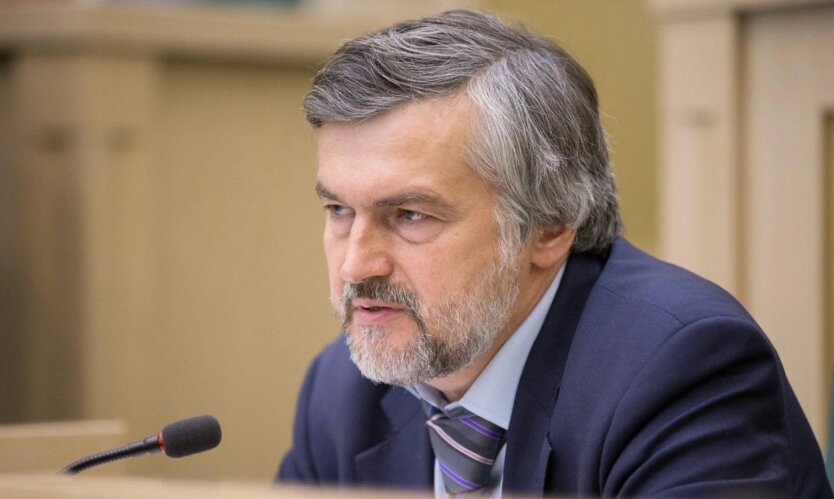
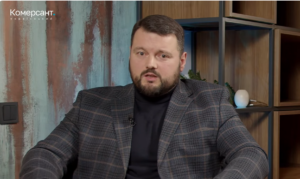
Andrei Klepach, chief economist of the state-owned corporation VEB of the Russian Federation, was fired after the media drew attention to a speech in which he said it was impossible for Russia to win a war of attrition and predicted a social crisis. The Bell reports this, citing two of the economist’s acquaintances, according to "Komersant Ukrainian".
According to the publication, Klepach was fired on Sunday, August 16. The day before, the media had drawn attention to his May speech following a report by The Moscow Times.
“One of The Bell’s sources claims that VEB Chairman Igor Shuvalov fired the economist following a ‘call from above.’ A second source also linked this decision to Klepach’s speech,” the report states.
Klepach served as VEB’s chief economist for about 12 years. In 2004, he headed the Department of Macroeconomic Forecasting at the Ministry of Economic Development, and from 2008 to 2014, he served as deputy minister. After moving to VEB, Klepach also served as deputy chairman of the state corporation. In 2019, he stepped down from the board but remained chief economist.
VEB RF is a state-owned development corporation. Since 2018, it has been headed by Igor Shuvalov, the former First Deputy Prime Minister of the Russian Federation.
Previously, Andrei Klepach, chief economist of the key Russian state-owned bank Vnesheconombank (VEB), stated that Russia will not be able to win the “war of attrition” against Ukraine, which is supported by the West, and is inevitably heading toward a large-scale social crisis. Klepach also acknowledged that Russia is losing the technological and economic competition not only to the U.S. and China, but also to Ukraine.
Watch us on YouTube: important topics – without censorship
What the Report Covered
Andriy Klepach delivered his report, “Russia’s Economy and Geopolitical Challenges,” on May 21 at a meeting of the Nikitsky Club — a nonprofit organization affiliated with the Moscow Exchange that has been organizing discussions with leading Russian economists for 25 years.
In his presentation, Klepach noted that, despite the Russian economy’s high resilience to sanctions, the scale of losses is also growing.
“After record growth rates in the Russian economy in 2023–2024, they fell in 2025 and, according to expectations, this year as well, they are lower than the growth rates of the U.S. and Ukraine, with whom we are engaged in a military-political confrontation,” he said.
GDP growth in 2027 will not exceed 1–1.5% (as analysts note, this coincides with the current forecast by the Ministry of Economic Development) and will generally lag behind the growth rates of the global economy, the economist said.
“If the special military operation, anti-Russian sanctions, and a fairly tight monetary policy—and, in the long term, a tight fiscal policy—continue, the Russian economy is unlikely to achieve growth rates higher than 2–2.5% per year,” he predicted.
In 2026, real disposable household income grew by only 0.6%, and income inequality stopped declining—primarily due to low pensions, which are falling further and further behind wages, as well as a drop in the revenues of small and medium-sized businesses, Klepach said.
“We are losing both the technological and economic competition on the global stage. Moreover, we are losing not only to China and the U.S., but in some respects even to Ukraine, as unpleasant as that may be for me personally. Ukraine’s economy is, of course, somewhat devastated, and there is a demographic catastrophe there. But the Ukrainian economy, despite everything, is surviving,” the economist stated.
He attributed Ukraine’s economic resilience to the fact that Ukraine receives massive aid from Western countries, without which, he said, its economy would have collapsed.
“In this war of attrition, we won’t win the competition. We have the illusion that everything there will collapse. It hasn’t collapsed and it won’t. Our costs are rising. I believe that Russia will not collapse, but I am almost certain that we will face a social crisis. Economically, we will not collapse, but our economic lag will continue to grow, with all the consequences that entails,” Klepach said.
Read us on Telegram: important topics – without censorship