Germany is considering closing the “Russian House”
16 August 19:13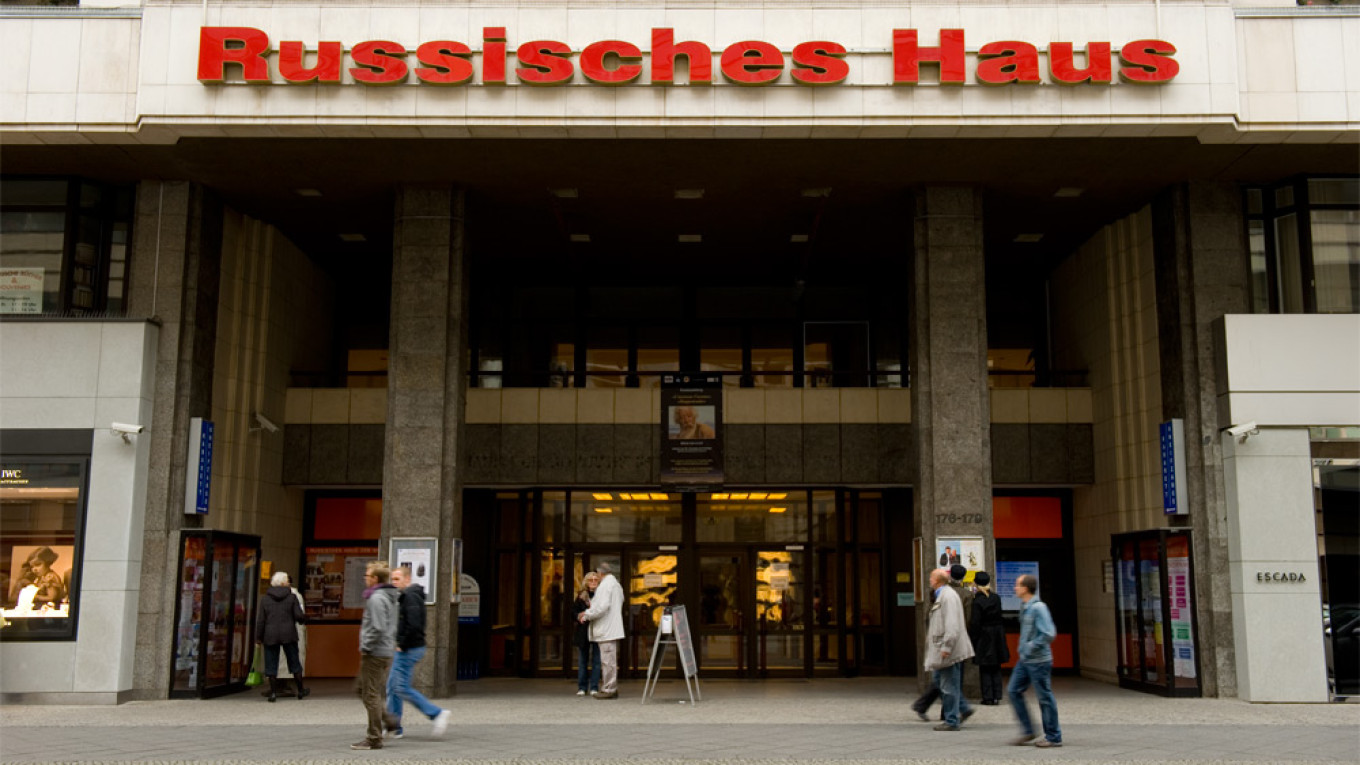
The German government is investigating the legality of the “Russian House” in Berlin, according to the country’s Foreign Ministry, as reported by [Komersant] citing *Welt*.
The authorities are “thoroughly” reviewing the international legal basis for the institution’s activities “in light of Russia’s actions against German organizations engaged in cultural exchange,” the ministry stated.
The “Russian House” operates under a 2011 agreement between the two countries.
Germany may withdraw from the agreement as of June 2027 if it notifies Moscow by December 6. The institution is managed by Rossotrudnichestvo, an agency subordinate to the Russian Foreign Ministry that has been subject to EU sanctions since the start of the war in Ukraine. Since then, the “Russian House” has been able to manage its account only under the supervision of the Bundesbank. It does not enjoy diplomatic immunity. The facility hosts exhibitions, film screenings, concerts, and other cultural events, as well as Russian language courses.
Calls to close the “Russian House” in Germany intensified after the publication of a document by the French Ministry of the Interior stating that Russian intelligence services were using the institution as a front.
Robin Wagener , a Bundestag member from the Green Party, called these allegations plausible. In his view, the cultural center is a tool of information warfare.
“We also know that the activities of this center are not limited to harmless language courses,” Wagener said.
He added that, moreover, the “Russian House” must be closed due to sanctions violations. For his part, Steffen Krach, the Social Democratic Party of Germany (SPD) candidate for mayor of Berlin, demanded that the building be seized.
Due to EU sanctions against Rossotrudnichestvo, the “Russian House” is not permitted to receive funds. However, rent payments continue to be made. The Berlin Public Prosecutor’s Office is conducting an investigation into a possible violation of the law on foreign economic activity.
In a June report, Berlin’s Federal Office for the Protection of the Constitution assessed the threat posed by Russian intelligence services as “consistently high.” The “Russian House” is not mentioned in the document, but it states that it is becoming increasingly difficult for Russian agents to use embassies and consulates as cover, and that “these functions are now being performed in a modified form by other Russian state and quasi-state structures.”
At the same time, the German Foreign Ministry fears that the decision to close the “Russian House” could affect the operations of German cultural institutions in Russia, including the Goethe-Institutes in Moscow and St. Petersburg, which have already faced restrictions: only a few staff members have been allowed to remain there, and language instruction has become virtually impossible. Russian Ambassador to Germany Sergey Nechaev has already warned of the likelihood of such a scenario.
Watch us on YouTube: important topics – without censorship