The Ukrainian Armed Forces Attacked Targets in Russia Using British Drones for the First Time — Media Reports
16 August 15:19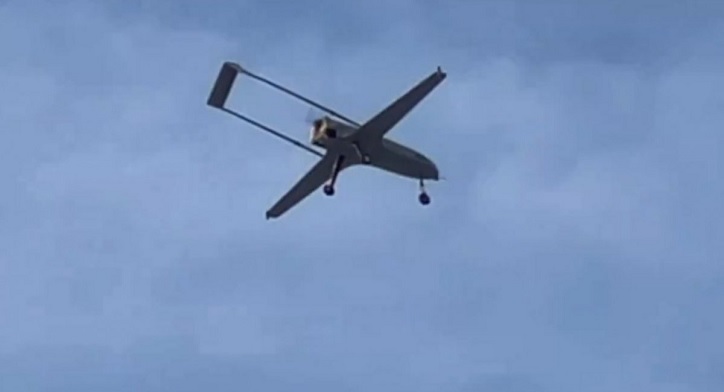
British drones were used for the first time to strike targets on Russian territory. The Ukrainian military deployed drones from two British companies as part of a long-range strike campaign, according to the British newspaper *The Sunday Times*, as reported by [Komersant].
Strikes using long-range drones against industrial and military facilities in Russia caused more than 35 billion pounds sterling (40.9 billion euros) in economic damage, causing fuel shortages and rolling blackouts in some regions, the newspaper notes.
Targets included oil refineries, naval bases, logistics centers, and transportation networks, including one strike more than 1,600 km from the border.
Watch us on YouTube: important topics – without censorship
The Most Effective Weapon
Although Ukraine had previously used Western missiles against Russia on a limited scale, including British Storm Shadow missiles, they caused only limited damage and had no noticeable impact on the course of the war. In contrast, long-range strikes using drones have become the most effective weapon in Ukraine’s arsenal amid a stalemate on the front lines.
Several sources within the Ukrainian Armed Forces have confirmed the use of British UAVs in attacks over the past six months. Targets included oil refineries in Volgograd and Yaroslavl.
British drones have already demonstrated their tactical effectiveness in operations in the combat zone, striking targets in occupied Ukrainian territory. In April, it was reported that the Ukrainian Armed Forces used a T-150 heavy drone manufactured by Malloy Aeronautics to destroy a bridge held by Russian forces across the Konka River in the occupied part of the Kherson region.
Drones Are Cheaper Than Missiles
During long-range strikes over the past six months, the Nyan—a jet-powered drone manufactured by a subsidiary of BAE Systems—has been used. Drones from a second company, whose name The Sunday Times is withholding for security reasons, have also been widely used in long-range attacks.
The UK had previously supplied Kyiv with Storm Shadow cruise missiles, despite initial concerns that this could lead to an escalation of the conflict. Storm Shadow stocks are limited, and the cost of a single missile exceeds 750,000 pounds sterling (877,000 euros), while the missiles have a range of about 240 km.
Drones can be produced quickly, stored in warehouses, and deployed in large groups to overwhelm Russian air defenses. They typically cost between 58,500 and 117,000 euros, making them a cheaper and more scalable alternative to Western long-range weapons.
The Nyan Drone
According to the publication, the Nyan drone, which is manufactured in Wiltshire and has been tested by the Royal Navy, was also used in the attack on Belgorod last year. It was developed by Callen-Lenz, a subsidiary of the British defense contractor BAE Systems.
The Nyan is a black, carbon-fiber strike drone with a wingspan of 2.9 meters and a range of over 240 kilometers. This allows it to be used to strike targets near the front lines and on Russian territory close to Ukraine.
A BAE spokesperson stated: “We are providing the UK Ministry of Defense with a wide range of capabilities as part of the UK’s support for Ukraine’s defense. The Nyan unmanned aerial system is a rapidly developed platform that has proven its effectiveness against new threats in high-intensity combat conditions.”
Support for Ukraine Continues
The Sunday Times notes that despite Moscow’s threats, there are no signs of a slowdown in the supply of military equipment to Kyiv. In April, the government in London announced that it would supply Ukraine with approximately 120,000 drones by 2026, and then-Defense Minister John Healy stated that the UK “is supplying Ukraine with the largest number of UAVs in history this year.”
The U.S. and the UK had previously restricted the use of long-range weapons to strike targets inside Russia due to concerns that President Vladimir Putin might escalate the conflict with attacks on NATO territory. In November 2024, both countries eased this policy.
The U.S. and the UK did not specify the reasons for the policy change. However, it has been reported that the decision was made following pressure from Kyiv, as well as Russia’s deployment of more than 10,000 North Korean troops to the front lines.
Read us on Telegram: important topics – without censorship