Russia Lost Billions Due to a Ruined Season and Power Outages in Crimea
17 July 15:17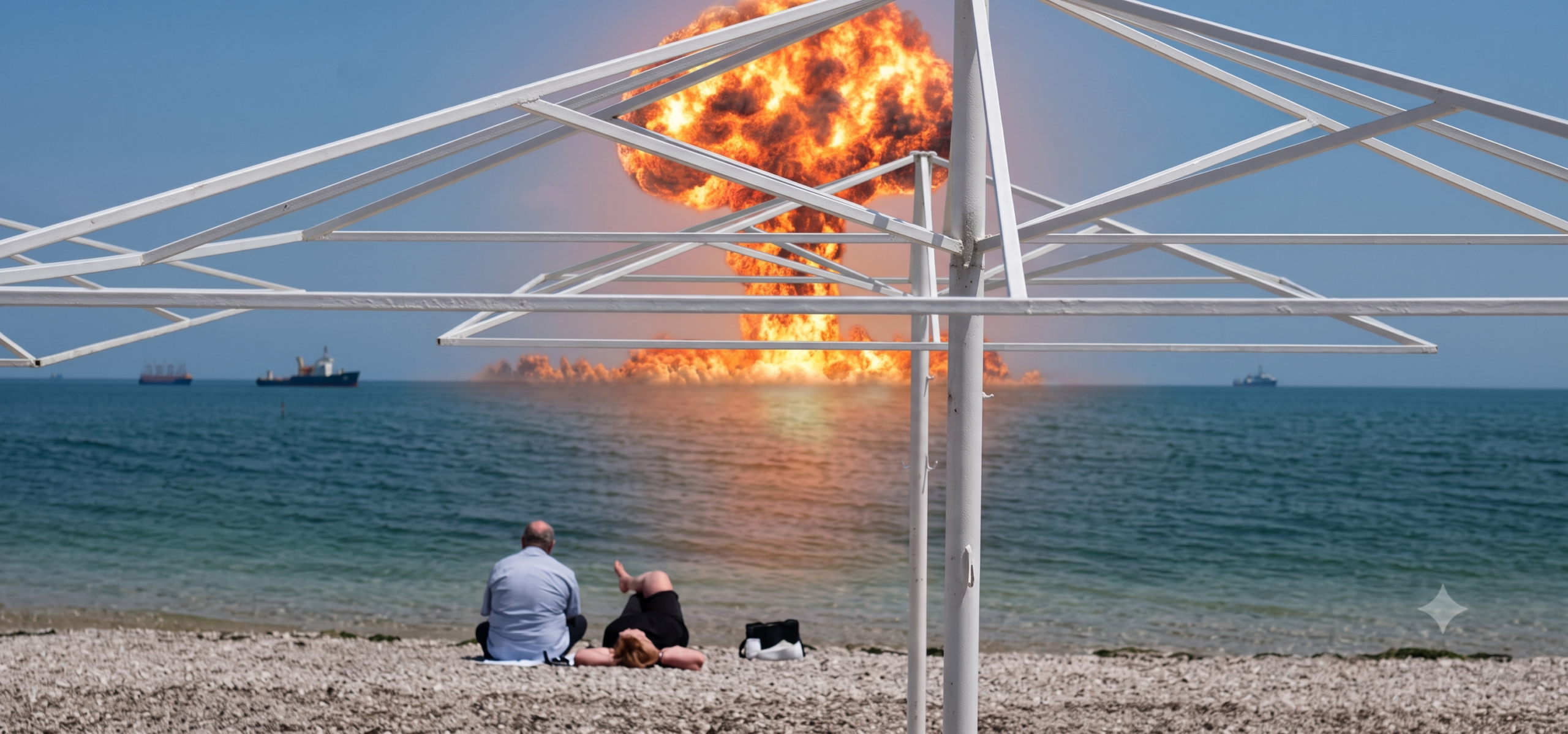 ANALYSIS
This year’s summer season in occupied Crimea was supposed to be a “record-breaking” one, according to the plans of the Kremlin’s puppets. However, the reality of July 2026 has brought the peninsula back to the harsh realities of a frontline zone. Due to regular power outages, fuel shortages, and air defense systems operating directly overhead, Russians are canceling their vacations en masse.
"Komersant Ukrainian" examined how the occupiers’ tourism revenues have changed since the start of the full-scale invasion and why the 2026 season turned into a financial disaster for the collaborators.
Logistical Nightmare and Canceled Trips
The occupiers’ plans to attract more than 8 million Russians in 2026 have been completely dashed. July demonstrated that Crimea has become too dangerous and uncomfortable even for undemanding Russian tourists.
According to data from major Russian booking aggregators and hotel management systems (including TravelLine and reports from the Association of Tour Operators of Russia (ATOR)), panic set in following the June and July incidents involving rocket debris falling on the beaches of Sevastopol and Yevpatoria. The cancellation rate for prepaid hotel reservations in Crimea in June and July reached 79%, and in Sevastopol— 71%. The number of new reservations plummeted by 30–58% compared to the same period last year, depending on the region of the peninsula.
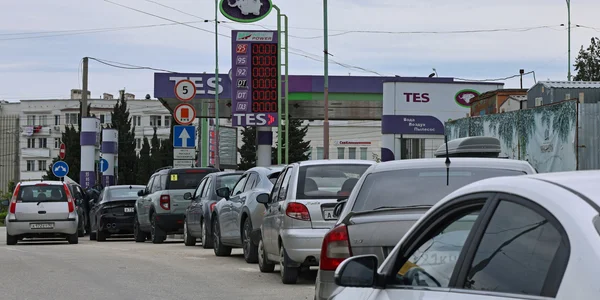
Tourists who took the risk of driving across the Kerch Bridge faced a severe infrastructure crisis. Due to damage to oil depots on the peninsula, limits have been imposed on fuel sales at gas stations ( up to 20 liters of gasoline per car). In addition, strikes on the power grid in southern Russia and the occupied territories have caused widespread blackouts. Russian media (particularly commercial government-affiliated outlets) acknowledge that Crimean hotels without their own generators are left without air conditioning and water for hours on end, making a vacation impossible.
Fortifications Instead of Beach Umbrellas
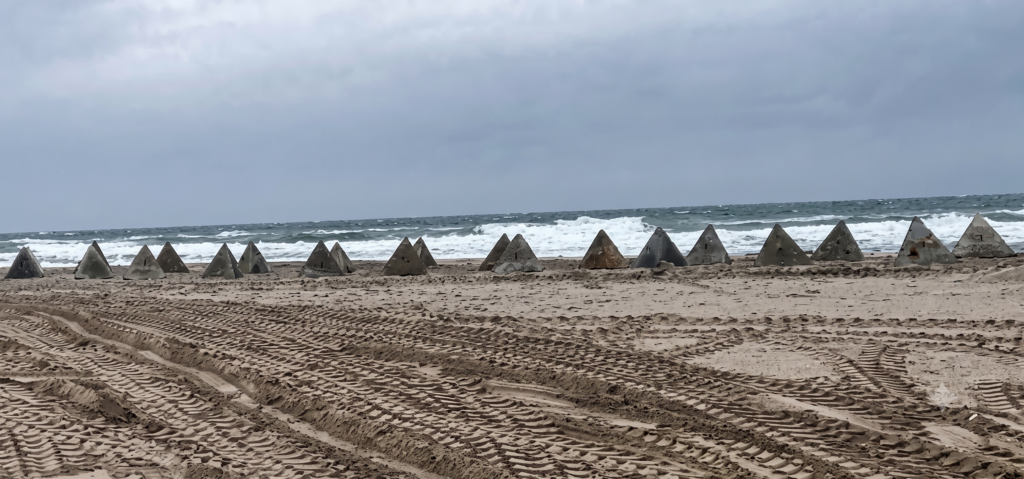
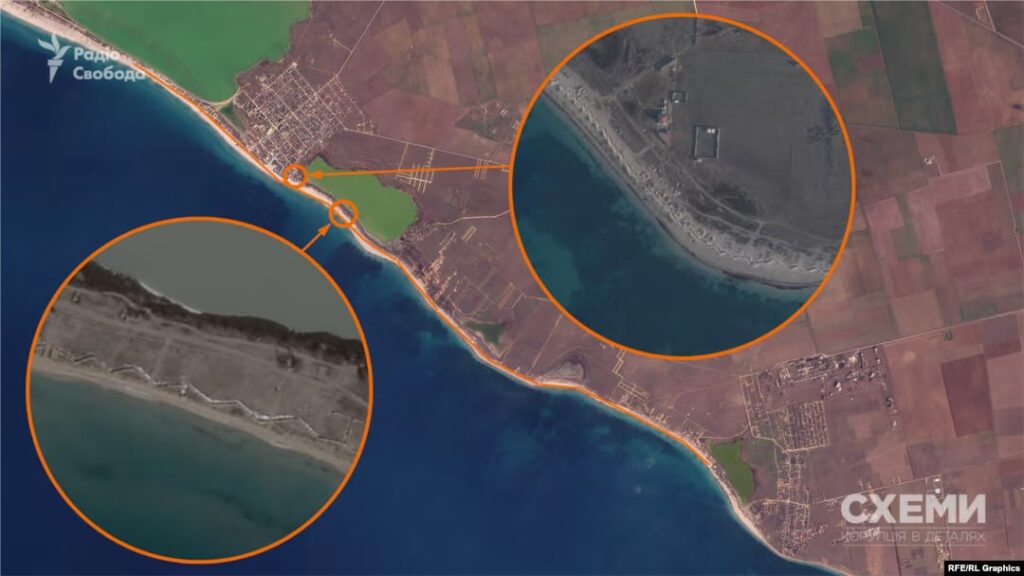
Instead of developing infrastructure, the occupying army continues to turn the western and southern coasts into fortified areas. The sandy beaches of Yevpatoria and Saki are crisscrossed with trenches, and “dragon’s teeth” and firing positions have been installed. Russian social media feeds are full of photos showing vacationers sunbathing against a backdrop of military equipment and barbed wire.
An analysis of the tourist season in occupied Crimea since 2022 shows a clear correlation between the success of the Ukrainian Armed Forces in the south and the willingness of Russians to go on vacation under air defense operations.
Watch us on YouTube: important topics – without censorship
Downward Trend: How Much the Occupiers Earned in 2022–2025
The occupiers’ official statistics are usually inflated, as they count all passenger traffic (including military personnel in transit and local residents) as “tourists.” However, tax revenues published by the so-called “Ministry of Resorts and Tourism of Crimea” and the Federal Tax Service of the Russian Federation (FTS) reveal the reality.
In 2022, at the start of the full-scale war and the first strikes on logistics hubs, according to the occupation administration, Crimea was allegedly visited by 6.5 million people (independent analysts put the figure at up to 4.5 million). Tax revenues to the peninsula’s budget from the tourism sector amounted to approximately 3.3 billion rubles. The year 2025 even showed a temporary increase (approximately 7.4 million tourists according to the Russian Federation and approximately 5.5 billion rubles in taxes ).
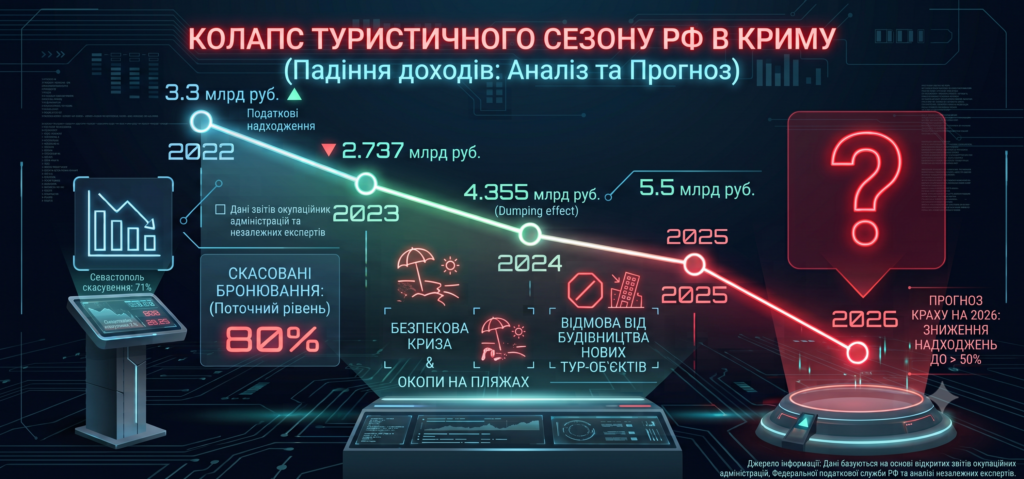
The summer of 2026, however, proved disastrous for the tourism sector in occupied Crimea. The occupying authorities had planned to make that year the “Year of Crimean Hospitality” and expected to welcome over 7.5–8 million visitors. After a state of emergency was declared in late June (due to falling missile debris and air defense operations directly over the beaches), the tourist season effectively came to a halt. A large number of children’s camps have been closed, and losses in Crimea’s tourism industry are in the billions of rubles. According to analysts’ forecasts, tax revenues to the occupying authorities’ budget will fall by at least 40–50% compared to 2025.
The publication NEXTA live reports on the urgent distribution of humanitarian aid on the peninsula.
“There is a humanitarian disaster in Crimea. In the north of the peninsula, residents have been without electricity for more than nine days. People are complaining about disruptions to water, gas, and communications. On social media, they are asking the authorities to order an evacuation… The tourist season has been ruined. In addition, banks have restricted cash withdrawals, and a liter of gasoline costs up to 4.3 euros.”
In addition to the collapse of public services and the cash shortage, local residents are reporting incidents of looting, and the 4.3 billion rubles allocated by Moscow for tourism will most likely be embezzled by collaborators.
What’s next?
The decline in tourism in Crimea is not merely a lack of vacationers, but a direct consequence of Ukraine’s systematic strategy to isolate the peninsula. Defense forces are methodically destroying Russian ships, ports, and oil depots in the Azov and Black Seas, cutting off supplies of fuel and weapons.
Military analyst Grigory Tamar is convinced that the current problems with logistics and fuel are just the “tip of the iceberg,” and that a real systemic crisis lies ahead.
“Look, the planting season is about to begin in Russia, but there isn’t enough gasoline or diesel. And if they don’t plant the crops, famine will set in there in a few months. And famine is precisely the kind of thing that guarantees the regime’s downfall. Because a dictatorship cannot function under conditions of famine,”—Grigory Tamar
Furthermore, the regime relies on its law enforcement agencies. They need to be paid. If there’s nothing to pay them with, the security forces won’t support the regime just for the sake of it. All these mechanisms leading to the collapse of the dictatorial structure are already clearly visible, Tamar is convinced.
At the same time, Europe has definitively closed the door on the Russian tourism industry. Currently, the EU has a complete ban on the sale of tours to Russia and even on any advertising for this destination (even ordinary promotional posters are prohibited). Foreigners who still decide to travel there have to organize the logistics on their own, at their own risk.
At the same time, domestic tourism in the Russian Federation is also showing a downward trend. Overall, in the first half of 2026 , demand for domestic travel in Russia fell by 3% (to 40.1 million trips), although a 7% increase was observed during the same period last year. But the start of summer was a disappointment—bookings in June fell even more sharply, by about 4% compared to last year.
Read us on Telegram: important topics – without censorship