
Today is Ivan Kupala Day and the Nativity of John the Baptist: traditions, superstitions, and taboos for the day
24 June 06:50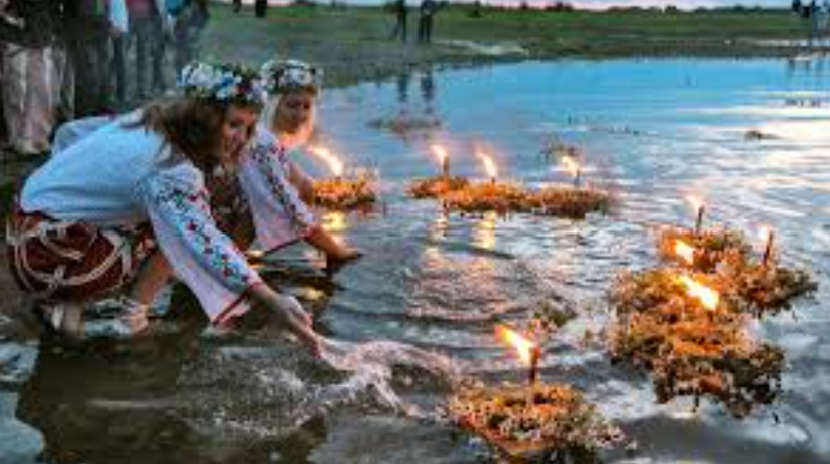
On Wednesday, June 24, 2026, Christians celebrate the Nativity of the Honorable and Glorious Prophet John the Baptist—one of the most important church holidays. In the folk calendar, this date corresponds to Ivan Kupala, whose traditional festivities take place on the night of June 23–24. "Komersant Ukrainian" has compiled information about the traditions, superstitions, and taboos of the day.
What church holiday is celebrated on June 24
According to the New Julian church calendar, on June 24, Orthodox and Greek Catholics celebrate the Nativity of John the Baptist, who is also known as John the Forerunner.
John the Baptist is one of the most revered saints in Christianity. He preached repentance, called on people to change their lives, and prepared them for the coming of Jesus Christ.
It was John who baptized Jesus in the Jordan River, which is why he was given the name “the Baptist.” He is called “the Forerunner” because he preceded Christ and announced to the people the coming of the Savior.
According to the biblical account, John’s parents were the righteous Zechariah and Elizabeth. The couple had been childless for a long time. An angel announced to Zechariah that they would have a son who was destined to fulfill a special spiritual mission.
Why is St. John the Baptist now celebrated on June 24?
After the Orthodox Church of Ukraine and the Ukrainian Greek Catholic Church adopted the New Julian calendar, the dates of most fixed feasts shifted by 13 days.
Previously, the Nativity of John the Baptist and the associated folk Kupala traditions were celebrated on July 7. Now the church holiday falls on June 24, and Kupala Night is from June 23 to 24.
Ivan Kupala has ancient folk origins and combines pre-Christian customs associated with water, fire, plants, and the summer solstice with the later Christian tradition of honoring John the Baptist.
At the same time, the church holiday and the folk Kupala rituals are not identical. For Christians, June 24 is first and foremost a day of prayer and veneration of John the Baptist.
Traditions on St. John’s Day
The celebration of Ivan Kupala traditionally began on the evening of June 23. Young people would gather near bodies of water, sing ritual songs, dance in circles, and light bonfires.
One of the most famous traditions was jumping over the fire. Our ancestors believed that the Kupala flames had purifying power. Couples would jump over the bonfire while holding hands, and by observing whether their hands remained joined, they would try to predict the future of their relationship.
Young women wove wreaths from wildflowers and herbs, decorated them with candles, and set them afloat on the water. They used the direction in which the wreath drifted to tell fortunes about love and marriage.
If the wreath floated far away, it was considered a good omen. If it washed ashore, according to folk belief, a quick wedding was not to be expected. Such interpretations are part of folklore, not reliable predictions.
The Legend of the Fern Flower
One of the most famous Kupala legends tells of a fern flower that supposedly appears only for a brief moment on Kupala Night.
Folklore promised that whoever found this magical flower would be granted happiness, wealth, and the ability to understand the language of animals.
In reality, ferns do not bloom, as they reproduce via spores. The search for the fern flower is a symbolic part of folk legends and festive celebrations.
What is customary to do on June 24
On the Feast of St. John the Baptist, believers may attend church services, pray, and reflect on the prophet’s life. On this day, people ask for spiritual strength, purification from evil thoughts, and guidance in making the right decisions.
In folk tradition, it is also customary on June 24 to:
- gathering medicinal herbs;
- weaving wreaths from wildflowers;
- spending time with family;
- helping people in need;
- avoid arguments and insults.
Our ancestors believed that plants gathered on Kupala Day possess special properties. However, it is dangerous to use unfamiliar herbs for medicinal purposes without consulting a specialist.
What Not to Do on June 24 According to Church Tradition
The Church does not impose any specific everyday restrictions related to money, work, or found items. At the same time, on this major holiday, believers are advised to avoid behavior that contradicts Christian values.
You should not:
- argue, swear, or insult others;
- wish ill upon others;
- refuse to help when you are able;
- abuse alcohol;
- turn the holiday into dangerous activities.
It is best to devote the day to good deeds, prayer, reconciliation, and peaceful time with loved ones.
Read us on Telegram: important topics – without censorship
Folk Taboos on Midsummer’s Night
Many ancient beliefs are associated with Kupala Night. These are not church rules and have no scientific basis.
According to folk beliefs, on June 24, it was not advisable to:
- lending or borrowing money, so as not to “give away one’s prosperity”;
- picking up money or jewelry found on the road;
- spend Kupala Night alone;
- sleep through the night, as ancestors believed that mythical forces become active at this time;
- argue with family members or loved ones;
- throw away the herbs and flowers gathered on this day.
These prohibitions should be viewed as part of Ukrainian folklore, not as mandatory rules.
Folk Omens for June 24
Based on the weather on Ivan Kupala Day, our ancestors tried to predict the harvest and the rest of the summer.
Among the well-known folk omens are:
- a strong smell of grass — rain is coming;
- heavy morning dew — a good cucumber harvest;
- rain during haymaking—there will be little hay;
- a starry night—a bountiful mushroom harvest;
- plenty of dew and a clear sky — warm weather is coming;
- if the rye hasn’t headed yet—expect bad weather;
- a thunderstorm on this day — means changeable weather in the near future.
These folk sayings are based on years of observation, but they cannot replace a modern weather forecast.
Who Celebrates Their Name Day on June 24
According to the new church calendar, men named Ivan celebrate their name day on June 24.
The name Ivan has ancient Jewish origins and translates as “God’s grace” or “God is gracious.”
Those celebrating their name day are wished good health, family well-being, peace, strength, and the fulfillment of their good intentions.
Watch us on YouTube: important topics – without censorship









