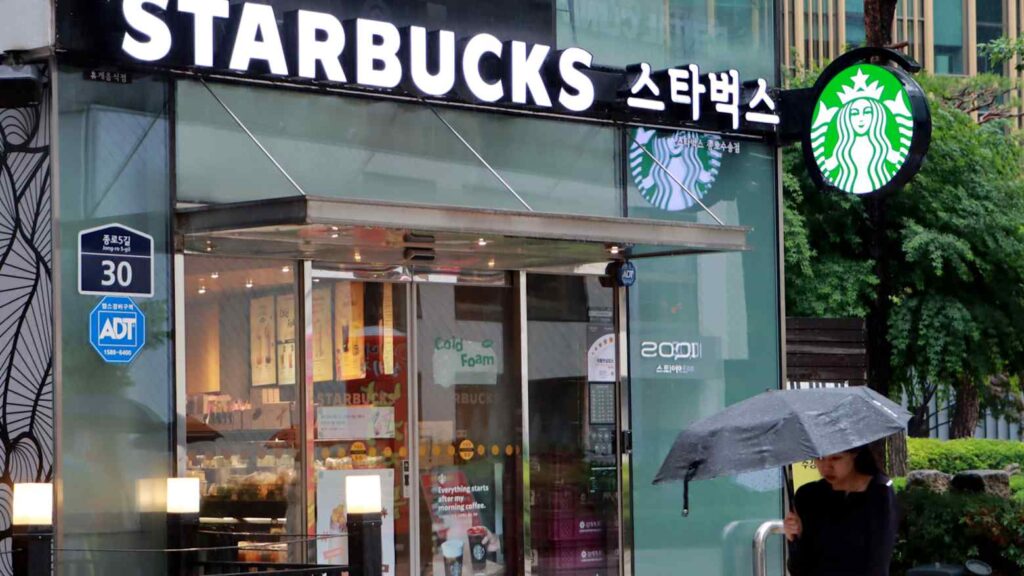
Starbucks Korea has found itself embroiled in a scandal over its “Tank Day” promotion on the anniversary of the Gwangju tragedy
25 May 18:50
Starbucks Korea has found itself at the center of a major scandal over an advertising campaign for its new Tank series of thermal mugs. Following public outcry and calls for a boycott, the company fired CEO Song Jeong-hyun, according to "Komersant Ukrainian".
The campaign was launched on the anniversary of the Gwangju tragedy
According to the BBC , the campaign, titled “Tank Day,” began on the anniversary of the suppression of the Gwangju Uprising on May 18, 1980. On that very day, the military regime brutally crushed pro-democracy protests using military equipment, including tanks. Hundreds of people were killed in the bloody events.
Consequently, the name and concept of the advertising campaign evoked associations with the tragic events of the past for many Koreans. Social media users stated that using the word “Tank” on such a date was inappropriate and offensive to the memory of the victims.
Following a wave of criticism, Starbucks Korea pulled the campaign just a few hours after its launch. The Shinsegae Group, which owns a controlling stake in the chain, called the situation “inappropriate marketing” and announced personnel changes—the CEO of Starbucks Korea was fired. The company also stated that it regrets the incident and intends to review its internal processes to prevent similar situations in the future.
“We sincerely apologize for causing inconvenience and concern to our customers. We have immediately suspended the event and will review and improve our internal processes to prevent similar incidents from recurring in the future,” the company stated.
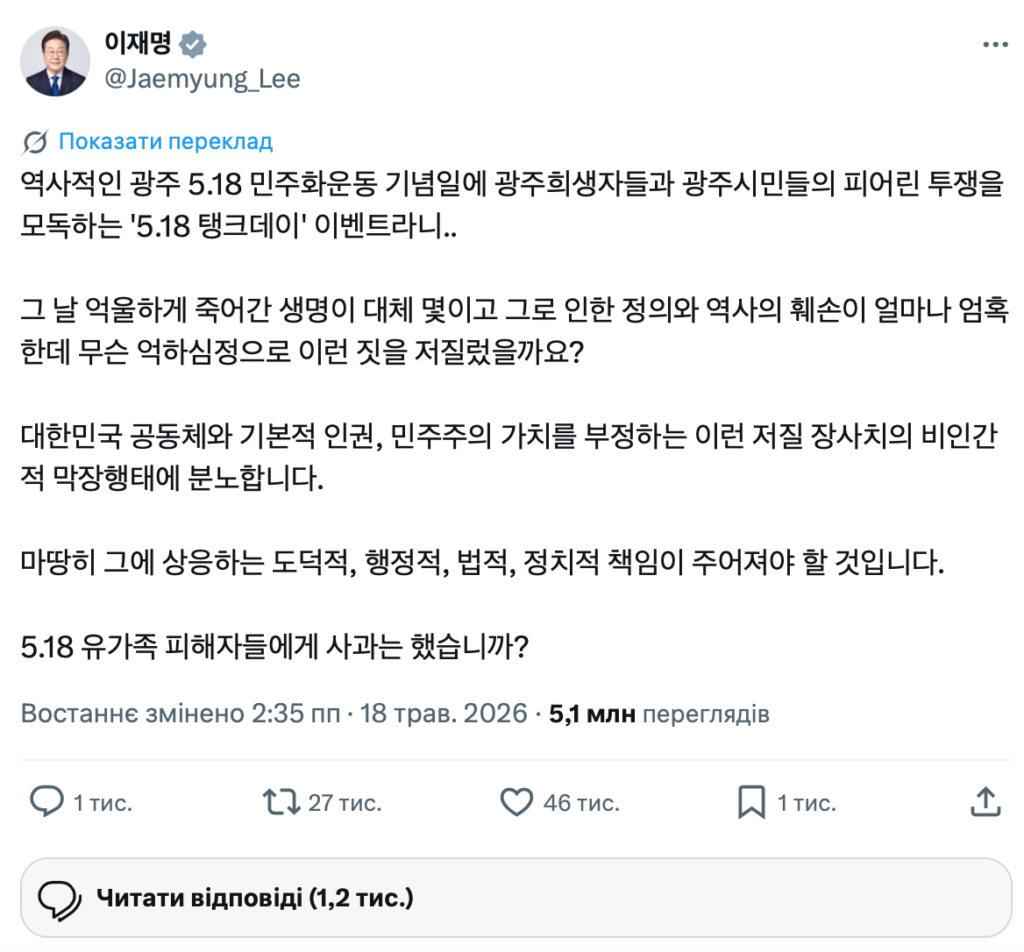
South Korean President Lee Jae-myung sharply criticized the advertising campaign, stating that it “insults the victims and the bloody struggle” of the people of Gwangju. In a post on X, the head of state emphasized that such marketing decisions demonstrate a lack of respect for the country’s historical memory and democratic values.
Starbucks headquarters in the U.S. also responded to the situation. They noted that the incident was unintentional, but “this should never have happened.”
The Gwangju tragedy remains a painful topic for the country
The Gwangju tragedy, also known as the May 18–27, 1980 Uprising, became one of the most tragic and, at the same time, most significant events in South Korea’s modern history. Mass pro-democracy protests erupted after General Chun Doo-hwan’s military regime imposed martial law nationwide, restricted political freedoms, and began persecuting the opposition.
On May 17, the authorities closed universities, banned political activities, and arrested a number of opposition figures, including the country’s future president, Kim Dae-jung. The very next day, students from Chonnam University held a peaceful protest near the provincial government building in Gwangju. The military brutally dispersed the demonstrators, using batons and force, which only intensified public outrage. Over the next few days, thousands of city residents joined the protests. After the army opened fire on civilians, protesters seized weapons from armories and drove government forces out of Gwangju. For a time, the city effectively came under the control of a citizens’ committee formed by local residents.
On May 27, the military authorities launched a large-scale operation to storm the city. Regular army units, armored vehicles, and helicopters were deployed to Gwangju, quickly crushing the protesters’ resistance.

Officially, the authorities reported about 200 deaths, but human rights activists and the victims’ families claimed that the actual number of people killed could have ranged from 600 to 2,000. Subsequent investigations also confirmed widespread human rights violations, including violence and abuse by the military.
Despite the brutal suppression of the uprising, the events in Gwangju became a symbol of the struggle for democracy in South Korea. It was the tragedy in Gwangju that largely served as the impetus for the democratic reforms the country underwent in the late 1980s.