“First laughter, then sadness”: Battalion commander criticizes new rules for payments for eliminating the occupiers
25 July 20:06
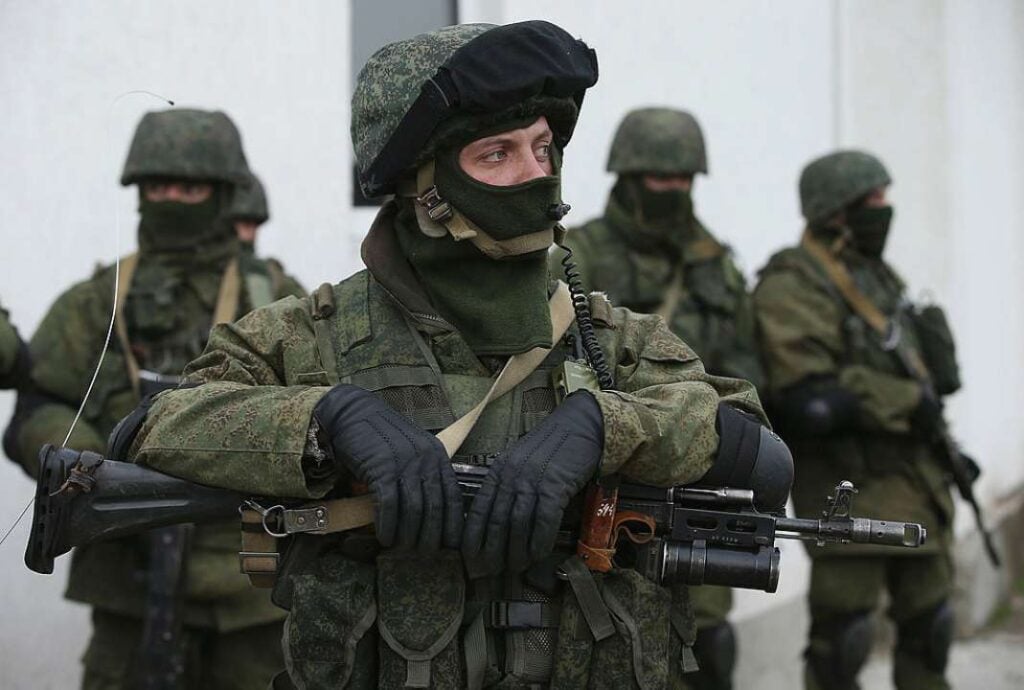
Battalion Commander Lieutenant Colonel Roman Kovalev sharply criticized former Defense Minister Mikhail Fedorov’s “ingenious and well-thought-out reform” regarding cash rewards for eliminating the enemy. According to him, certain requirements that soldiers must meet to receive such payments do not correspond to the realities of modern combat and are practically impossible to fulfill.
In his Facebook post, the officer cited an example from the unit’s recent combat operations. According to him, the battalion’s reconnaissance and search team received information that two Russian soldiers had infiltrated a specific area, reports [Kommersant].
“On my orders, the team moved into the specified area and immediately detected the enemy. The enemy was eliminated in a firefight. The following items were seized as trophies: two radios, two assault rifles, documents, and phones containing maps and routes,” Kovalev wrote.
Upon completion of the operation, the commander noted, the soldiers followed all required procedures: they filed reports, entered the information into the combat log, prepared statements from the participants, and compiled a photo report from the scene.
Subsequently, the soldiers recalled a new reward system that provides for a payment of 15,000 hryvnias for each enemy eliminated in a firefight or hand-to-hand combat. According to Kovalev, it was then that they encountered a requirement that raised quite a few questions.
“But there’s a catch—a mandatory condition: ‘appropriate video evidence,’” the officer noted.
The commander explains that the military spent a long time trying to understand exactly what kind of video evidence the authors of the new policy had in mind.
“There are no surveillance cameras at infantry positions; body cameras are not provided for in the standard issue of infantry equipment; and if we’re talking about video from a ‘Mavic,’ then any competent commander, in order to save lives, would rather attach ‘bombs’ to it and destroy the enemy from the air than film a firefight,” he emphasized.
At first, the military decided that it would be sufficient to document the outcome of the completed mission. They returned to the battlefield, filmed the destroyed enemy soldiers with geotags, and uploaded the footage to the relevant system.
However, according to Kovalev, their request was denied.
“Not verified. Please provide a video recording of the firefight confirming that the specified personnel were killed specifically as a result of a combat engagement. Please also attach a video recording from the shooter’s body camera,” he quoted the response as saying.
According to the commander, this response initially provoked laughter, followed by disappointment.
“This response initially provoked uproarious laughter among everyone present at the command post. And then—deep sorrow for the army and the state,” the officer wrote.
He is convinced that such decisions are made without a sufficient understanding of the specifics of combat operations.
“Why not consult with battalion or brigade commanders before writing such nonsense?” Kovalev noted, adding that reforms should be developed with the participation of military personnel who are directly fighting on the front lines.
Separately, the commander drew attention to the practical difficulties of implementing such requirements. According to him, even with body cameras, the question arises: “Where do you charge them at forward positions without a stable power supply, and how do you transmit the video to the ‘mainland,’ where there is neither internet nor carrier pigeons?”
At the end of the post, Kovalev reported that the Ministry of Defense had already issued clarifications regarding the new financial support system. According to him, the document also contains a number of controversial provisions, to which he plans to devote a separate post.
In conclusion, he called for electing technocrats and professionals to positions of power—rather than social media managers and bot farm operators—at least within the Ministry of Defense; otherwise, we’ll lose the war.
Watch us on YouTube: important topics – without censorship