Cardboard Instead of Storefronts: Which Retailers and Brands Supported the Protest
25 July 13:11 ANALYSIS
Social tensions reached a new peak in July 2026. Mykhailo Fedorov’s resignation as head of the Ministry of Defense and the immediate reshuffling of the Armed Forces of Ukraine’s high command—specifically, the appointment of Mykhailo Drapato to replace Oleksandr Syrskyi —brought people out onto the streets. The main weapon of protest—or perhaps simply a well-established tradition—was ordinary packing cardboard adorned with direct and uncompromising messages. However, it wasn’t just politics that found itself at the center of events, but Ukrainian brands as well. Some are sharing resources, some are printing custom merchandise, and others are treating protesters to refreshments. Where in this reaction does genuine civic solidarity end and banal newsjacking begin? Find out in this article "Komersant Ukrainian".
“A marker for a hryvnia” and coffee for a cardboard box: how business is adapting to the context
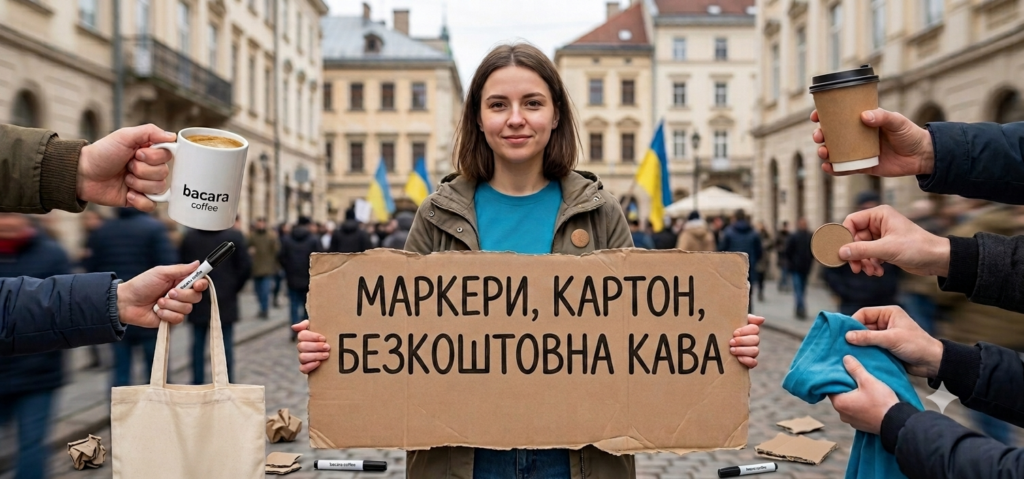
The response from Ukrainian retailers and small businesses is unfolding on several fronts: from direct aid in the form of “tools of the trade” to the release of themed merchandise.
Watch us on YouTube: important topics – without censorship
When protesters needed materials for posters, retail chains responded immediately. Stories about how employees and retail chains are helping protesters are spreading widely on social media:
“A promotion has started at ‘Aurora’: buy a marker for 1 hryvnia and get cardboard for free,” users share on Threads.
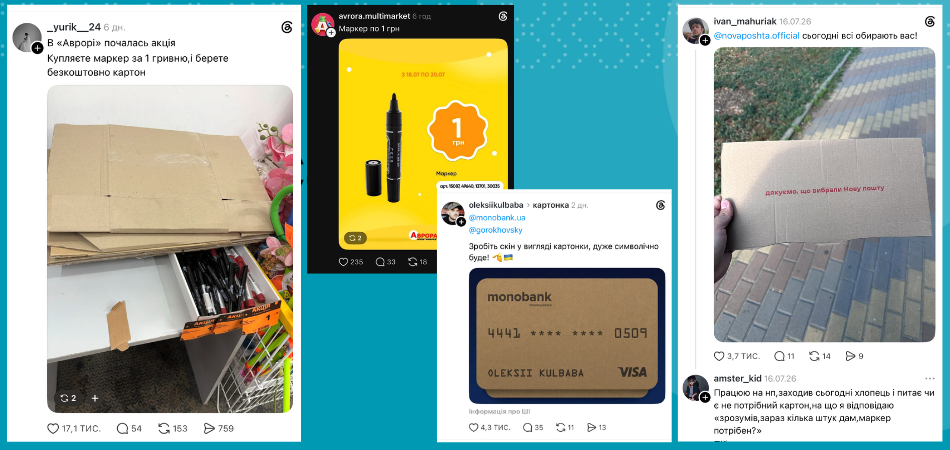
The largest postal operator isn’t falling behind either. A photo has appeared online showing a piece of a box with the company’s branding still visible: “Thank you for choosing Nova Poshta,” accompanied by a short comment: “@novaposhta.official—everyone is choosing you today!” In the comments, branch employees confirm this demand:
“I work at Nova Poshta. A guy came in today and asked if we had any cardboard we didn’t need, to which I replied, ‘Got it, I’ll give you a few pieces right now. Do you need a marker?’”
Meanwhile, on social media, users are already tagging monobank co-founder Oleg Gorokhovsky with calls to create a special bank card skin featuring a cardboard-textured design.
Storefronts Against Silence: How Stores Joined the Protest
Retail stores and local clothing shops have proven to be the most flexible players, transforming their storefronts, mannequins, and windows into real platforms for expressing civic stances. Instead of the usual calls for discounts or seasonal sales, brands began to reflect what was happening on the streets.
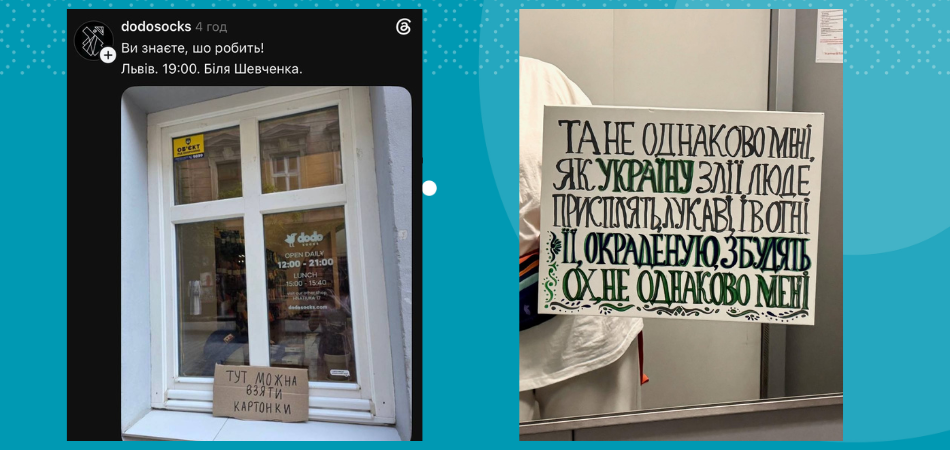
Stores began communicating directly with protesters right through the glass of their shops. The Dodo Socks brand in Lviv placed a sign in its window with the message: “You can take cardboard here, ” and on social media, it called for a gathering at the Shevchenko monument at 7:00 p.m. with the brief message: “You know what to do !”
The fashion sector has reacted particularly strongly, adapting mannequins in store windows to resemble protesters. “If we don’t change, we’ll perish” and “We might have kept quiet, but this has really gotten to us.” In its announcement, the store openly called on customers to come pick up cardboard.
“Ukrainians won’t stay silent—together we’re strong! Come get some cardboard; we’ll come up with a slogan and make it happen.”
Some stores treated the cardboard signs as art, creating intricate calligraphic posters featuring classic Ukrainian poetry by Taras Shevchenko:
“But it matters to me deeply how evil, deceitful people will lull Ukraine to sleep, and then rouse her, robbed and in flames… Oh, it matters to me deeply.”
This approach by retail stores shows that for small and medium-sized Ukrainian retailers, the storefront has long since ceased to be about commerce and is now about a bold demonstration of solidarity with their customers.
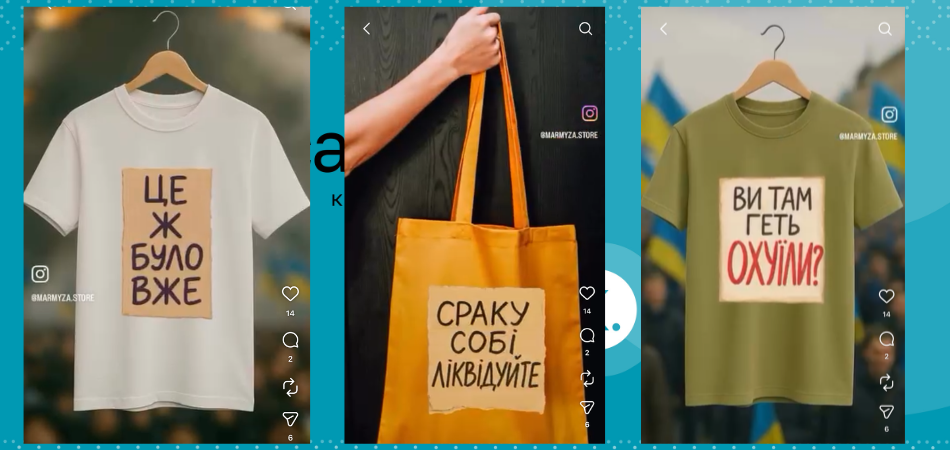
The creative industry and some clothing stores have also responded by releasing a series of T-shirts, shopping bags, and accessories featuring designs inspired by “cardboard posters.” These feature the most popular slogans from the streets.
Local Services and Fostering a Sense of Community
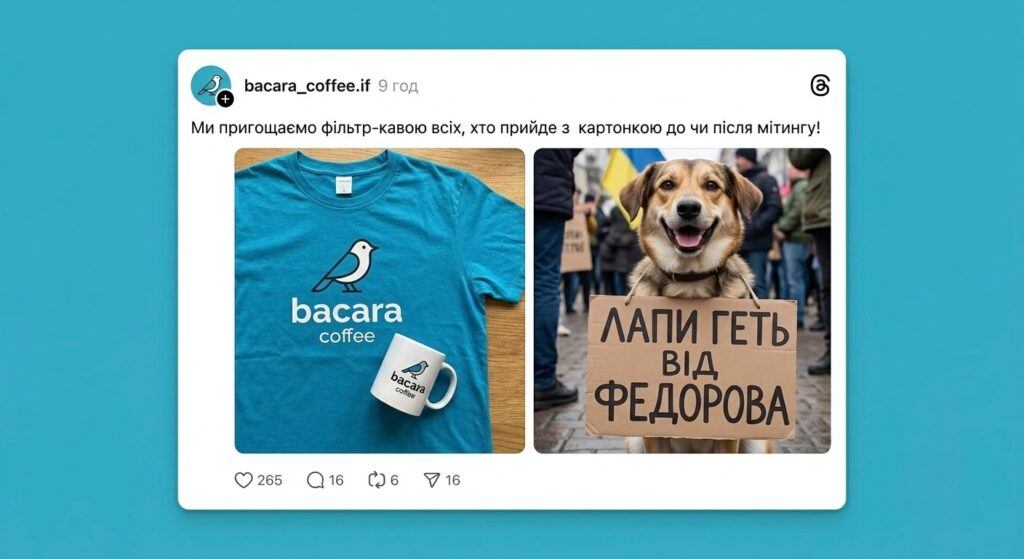
Coffee shops near protest gathering spots have turned into hubs of solidarity. For example, a coffee shop in Ivano-Frankivsk issued an open call:
“We’re treating everyone who comes with a card before or after the rally to filter coffee!” the café states, illustrating the post with a photo of a dog holding a sign that reads “HANDS OFF FEDOROV.”
This kind of support resonates with city residents. Heartwarming stories of solidarity are appearing online, even from public transportation drivers.
“I get on the minibus with my card, give the driver some money. Driver: ‘Are you going to the rally?’ I say yes. Driver: ‘Take your money back—you’re going for a good cause.’”
However, PR and communications experts note that involving brands in politically sensitive issues always carries reputational risks. After all, when a business helps in whatever way it can directly at the scene—handing out signs, providing markers, or serving hot coffee— This is perceived as caring for the community and doesn’t come across as exploitation. But an attempt to quickly capitalize on the protest mood (for example, by mass-selling expensive merchandise collections without a social or charitable component) can spark a barrage of criticism. Consumers can easily tell when someone is trying to profit from their genuine emotions and outrage.
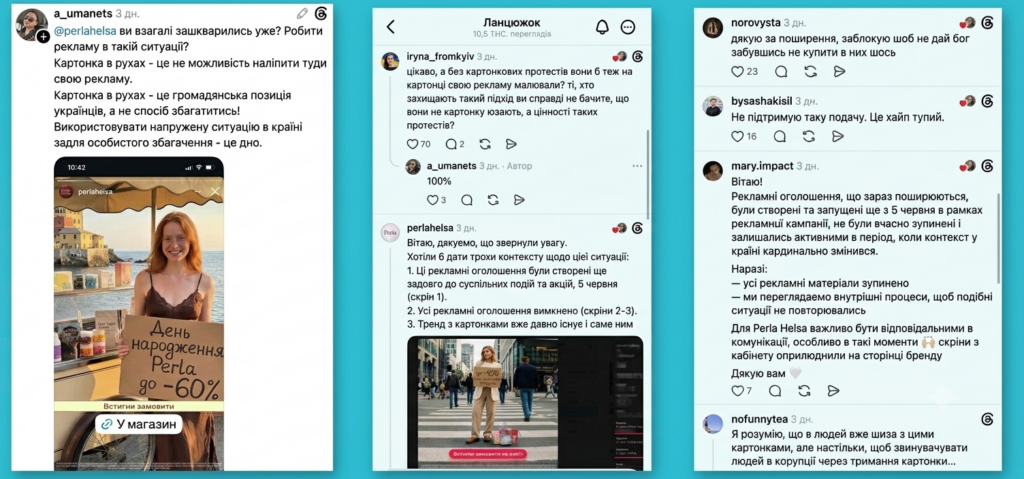
For example, an advertisement by one brand on a cardboard sign sparked a storm of criticism on the social media platform Treads. Social media users perceived it as a cynical and inappropriate attempt to exploit a serious sociopolitical issue.
Thus, the “cardboard protest” phenomenon has once again demonstrated that modern Ukrainian business is an integral part of society that reacts to events instantly and emotionally. The line between genuine civic solidarity and commercial newsjacking depends primarily on the goals and formats of such communication. Society, in turn, clearly distinguishes between genuine solidarity and the banal desire to profit from a hot-button issue, granting the reputational right to make mistakes only to those who act sincerely.
Read us on Telegram: important topics – without censorship