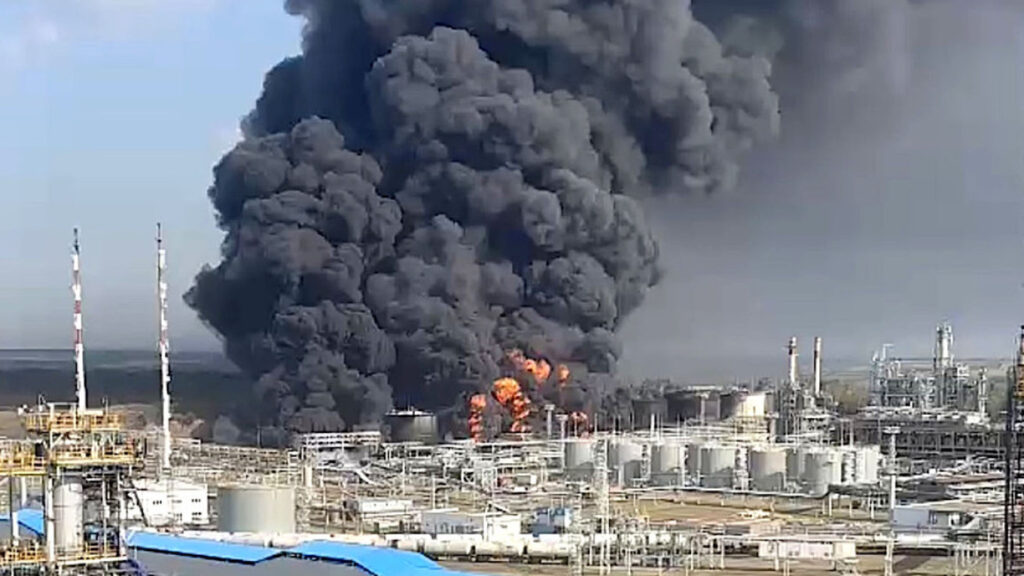
Russia was unable to restore 18 major oil refineries following drone strikes
30 July 21:54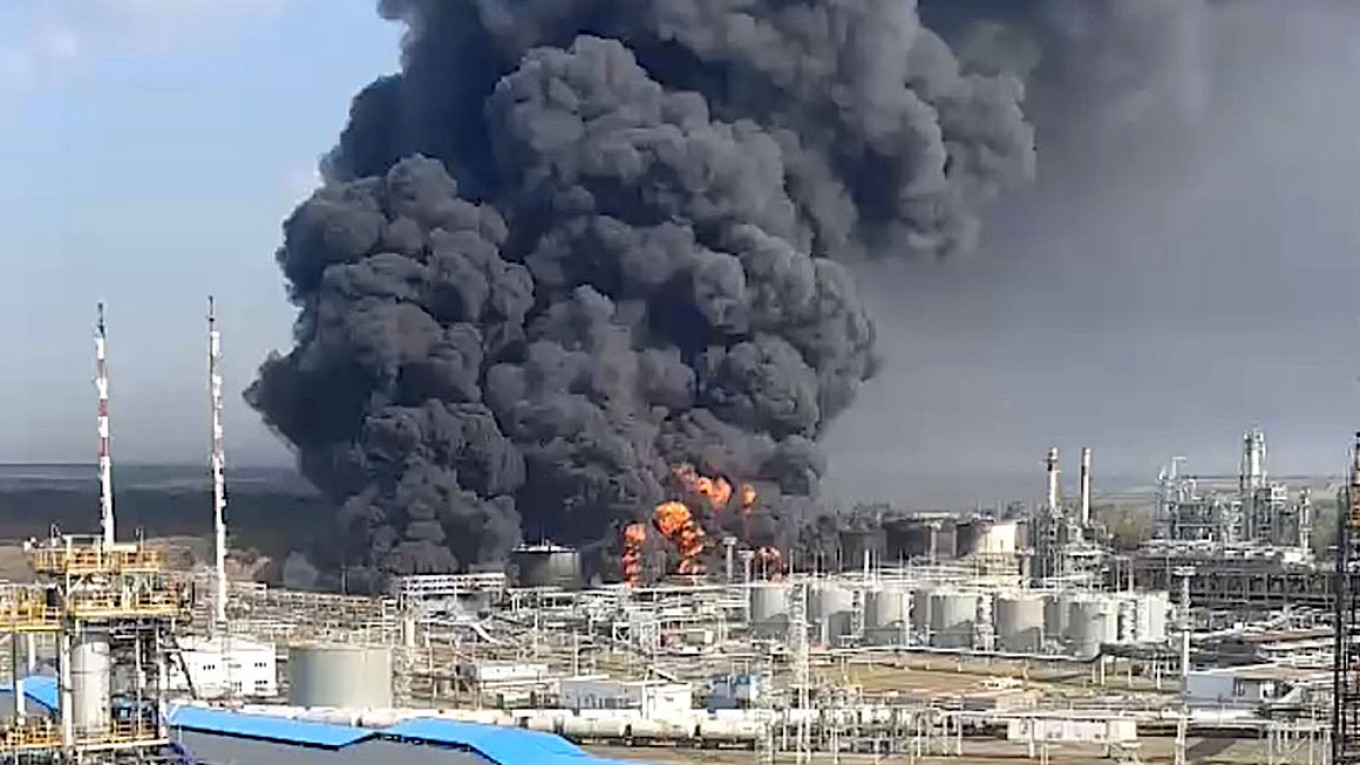
The campaign of Ukrainian long-range strikes against Russian oil refineries—carried out by the Ukrainian Armed Forces with the assistance of U.S. and French intelligence agencies—has severely disrupted oil refining — one of the country’s largest industrial sectors, accounting for about 12% of the country’s total output. This is reported by [Kommersant], citing FT.
Of the 26 refineries that were struck and halted production, only 8 had resumed full operations as of July 27.
Russia’s largest refinery, the Omsk Refinery, as well as the Taneco plant in Tatarstan, “Gazpromneftekhim Salavat” in Bashkortostan, “Ufaneftekhim,” “Permnaftorgsintez,” the Novoufa, Ukhta, and Antipsky refineries.
Watch us on YouTube: important topics – without censorship
At the same time, at least 11 refineries have been able to resume production only partially, while 7 remain idle. Among them are “Kinef” in the Leningrad Region, the second-largest in the country by capacity, Rosneft’s Tuapse, Syzran, Kuibyshev, and Novokuibyshevsk refineries, as well as the plant in Slavyansk-on-Kuban and Gazprom’s Astrakhan Oil Refinery.
The refineries in Ryazan, Nizhny Novgorod, and Volgograd—which rank among Russia’s top 10 in terms of capacity—have been able to restore only half of their capacity; the Moscow refinery has restored about one-third.
On average, according to media estimates, oil refineries affected by drone attacks lost 45% of their capacity. As a rule, repairs take several months, according to analysts at Finam. But some units are more difficult to replace or restore. For example, those that separate salt and water from crude oil—they are located at the beginning of the refining process, notes Isaac Levi, an analyst at the Finnish Centre for Research on Energy and Clean Air. One such unit was damaged at the Omsk Refinery, which has an annual capacity of 22 million metric tons and is among the largest in the world.
Unlike last year’s campaign, the 2026 Ukrainian campaign is focused on secondary refinery units. These units extract light petroleum products, such as gasoline, jet fuel, and diesel, from crude oil, explains Sergey Vakulenko, a senior research fellow at the Carnegie Russia Eurasia Center. Although the refineries can continue production, the quality of the products is declining.
In July, oil refining volumes in Russia fell to 3.5 million barrels per day—the lowest level in more than two decades—and regions from Siberia to Kaliningrad were hit by fuel shortages.
Russia has now managed to restore some of its refining capacity, mainly by restarting the Omsk refinery, notes S&P Global Energy analyst Daniel Evans. However, a significant portion of capacity remains idle, making the task of balancing the Russian fuel market “extremely difficult,” he emphasizes.
Read us on Telegram: important topics – without censorship