Gasoline lines have returned to Russian regions
10 August 16:09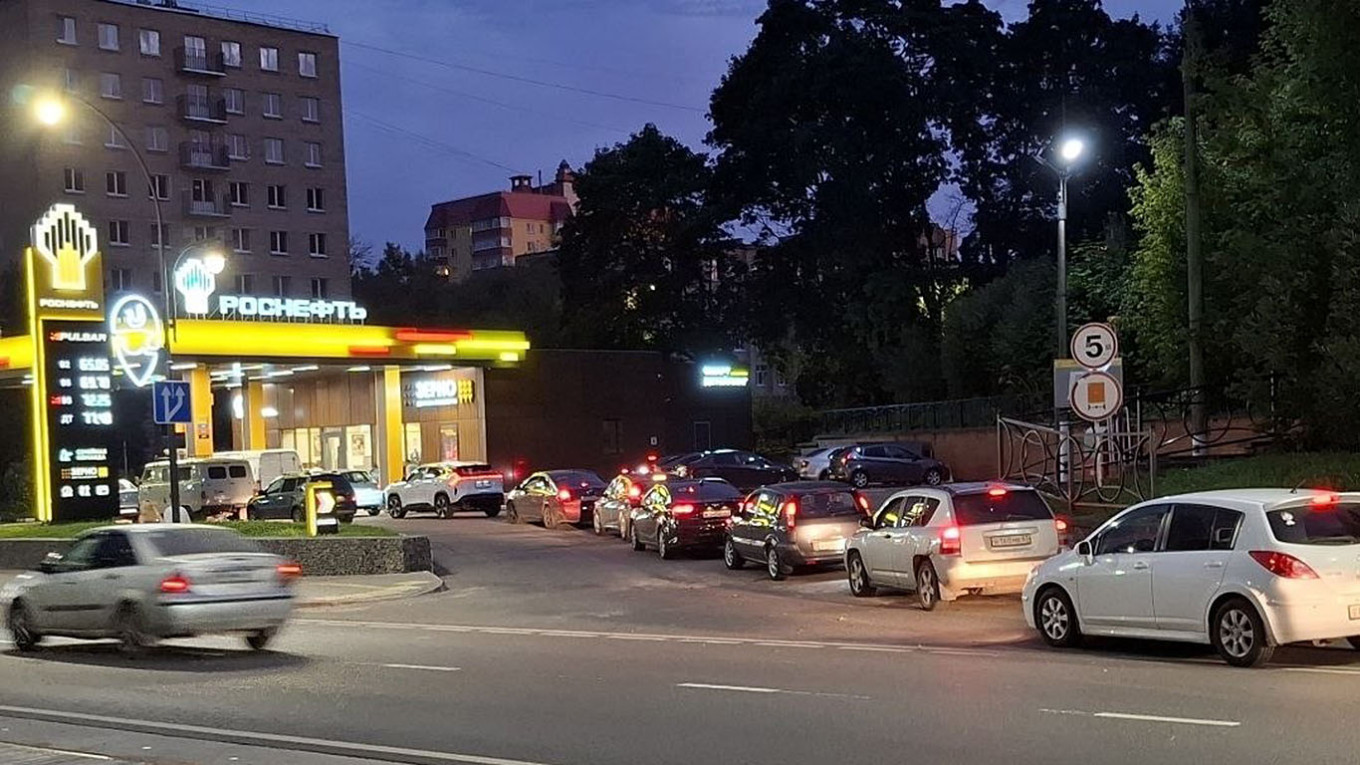
The lines at gas stations caused by the fuel crisis, which had gradually disappeared in July, are returning to Russian regions. Residents of at least 12 regions of the Russian Federation are complaining about the inability to freely refuel their cars and the need to spend many hours waiting, reports "Komersant Ukrainian", citing Russian propaganda media.
Queues are forming at gas stations in Krasnodar and Sochi—where there had previously been no fuel shortages—as well as in Gelendzhik. However, on July 30, Veniamin Kondratyev, governor of the Krasnodar Krai, stated that the gasoline situation in the region had stabilized.
Authorities in the Kaluga Region attributed the renewed lines for gasoline to increased demand ahead of the weekend and people’s desire to stock up for the future. Meanwhile, in Smolensk, sales of Ai-95 and Ai-92 gasoline have ceased at Gazprom, Lukoil, and Naftik gas stations, and cars lined up at Rosneft gas stations are blocking intersections. In Rostov-on-Don, some gas stations have closed again, while lines have begun to form at others.
Watch us on YouTube: important topics – without censorship
A similar situation is being observed in Tambov, Tula, Ulyanovsk, and the Penza, Saratov, Ryazan, and Voronezh regions, as well as in the Primorsky Krai. At the same time, gas stations in some regions are limiting refills to no more than 30 liters per tank.
The fuel crisis in Russia erupted in early June due to Ukrainian drone attacks on oil refineries. Since the beginning of the year, the Armed Forces of Ukraine (AFU) have disabled at least 26 facilities. As of the end of July, only 8 had been able to resume full operations, 11 more had partially resumed production, and 7 remained idle, the Financial Times reported, citing satellite data and analysis by S&P Global. As a result, according to an estimate by EA Analytics, oil refining in Russia has fallen to its lowest level since May 2002—3.6 million barrels per day. This is about one-third below the seasonal average.
In response, the Russian government banned fuel exports, increased gasoline imports from Belarus by 25 times, and began purchasing gasoline from India and Morocco. The authorities also sharply lowered quality standards for gasoline producers and suppliers. In early July, a number of refineries received permission to produce Euro-3 standard gasoline with a sulfur content of 150 mg/kg, and subsequently, the quality requirements were lowered to the Euro-2 standard, which had been banned in Russia in 2013. The Ministry of Energy stated that this measure will remain in effect until July 1, 2027.
Read us on Telegram: important topics – without censorship