The EBRD stated that Ukraine needs to rethink Ukrzaliznytsia’s business model: what are the proposals?
27 June 19:10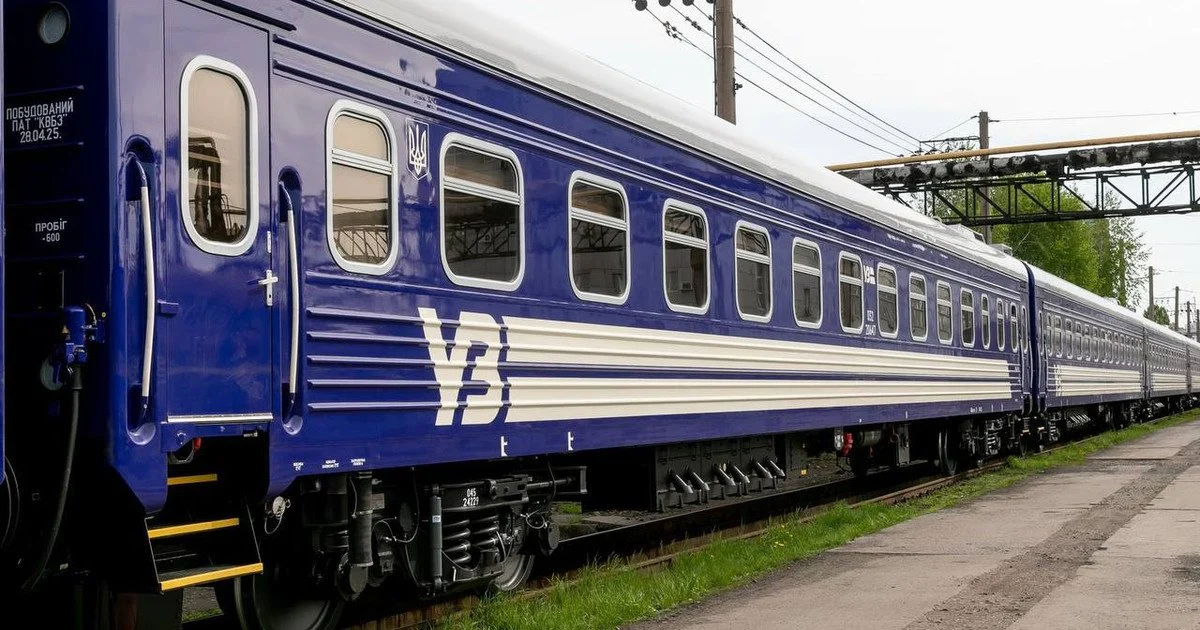
Ukrzaliznytsia’s business model—which relied on cross-subsidizing passenger transportation with revenue from freight without government funding—has reached its limit during the war and amid declining transportation volumes and requires change; It is also necessary to make a decision regarding adjustments to freight transport tariffs, which have not changed since 2022, according to Mark Magaletsky, the EBRD’s Deputy Director in Ukraine, who oversees the infrastructure sector, as reported by "Komersant Ukrainian" citing “Interfax-Ukraine.”
“We need to focus now on what we would call financial sustainability, because the model under which the company has operated for the past 30 years has likely run its course… “Ukrzaliznytsia” and the government must rethink the company and its business model,” he said during a discussion at the infrastructure platform at the URC 2026 Ukraine Recovery Conference in Gdańsk.
Magaletsky noted that restructuring this model is also necessary so that the company can continue to attract assistance from financial institutions, including ones such as the EBRD, which has already provided Ukrzaliznytsia with over EUR700 million since the start of Russia’s aggression against Ukraine, including EUR54 million in grants.
Watch us on YouTube: important topics – without censorship
The model was that, well, you make money on freight rates, there are significant volumes of freight, and passenger transport is cross-subsidized by revenue from freight, and the government was satisfied—the issue was resolved in some way, and the company is operating without needing state funding—but this model has now reached its limit, and I think that.
An EBRD representative welcomed the experimental Public Service Obligation (PSO) compensation model introduced by the government in February of this year, which covers part of the company’s costs for such services.
“This is a temporary solution, but it’s a step in the right direction, and the next step will be to make it permanent, define it clearly in quantitative terms, and include commuter services, because this is a major burden for Ukrzaliznytsia,” Magaletsky emphasized.
Regarding the discussion on adjusting freight rates—which have not been indexed since 2022—the expert called it “painful and complex,” but stressed the need to make this difficult decision.
“And finally, the next step will be to define and develop a new business model for the company, open up the market, and, in essence, accelerate integration with the EU,” he added.
Magda Kopczyńska, Director-General for Mobility and Transport at the European Commission, supported the EBRD representative’s remarks and the Ukrainian government’s steps to provide budgetary support to Ukrzaliznytsia to ensure its financial stability.
“Mark covered three-quarters of what I wanted to say… But I’ll start with one of the last points: … “Ukrzaliznytsia will have to reinvent itself during the EU accession process, because you, like any company in any business sector in Ukraine, will have to comply with a set of harmonized EU rules,” the director noted.
She advised taking into account the experience of the Polish railways and navigating this process, “which first requires complex questions and then complex answers, not only from the Commission but also from you.”
Kopchynska called for the development of legislation and regulations in this area and welcomed the law on the safety and interoperability of Ukraine’s rail transport, which was adopted by the Verkhovna Rada in early June.
“This is not a simple process, but one that is inevitable… You can count on our support and engagement, and I also hope for the support of EU member states, including Poland, in helping you resolve these issues,” noted the European Commission representative.
In turn,Oleksiy Balesta, Ukraine’s Deputy Minister of Community and Territorial Development, noted that Ukrzaliznytsia’s current centralized operational model—which is still used by only a few countries (Belarus, Russia, Kazakhstan, Uzbekistan), currently ensures its stability—especially during wartime—and this must be taken into account when considering changes.
“We’re not saying that an open market is a bad solution. Of course, it’s an excellent solution for investment. But we need to think about how we can adapt this model for crisis situations. Because what has helped the Ukrainian railways right now is centralization,” Balesta explained.
According to him, such centralization allows for the rapid reallocation of resources and the restoration of infrastructure.
“We also need to think about security and military mobility,” emphasized the representative of the Ministry of Development.
Oleksandr Pertsovskyi, Chairman of the Board of Ukrzaliznytsia, noted in his speech that the company is currently spending a lot of time searching for solutions to stabilize its financial situation.
“What we need to learn in the first days or months of the war is resilience, enthusiasm, and changes in operations—for example, how to evacuate people. But now that we are in the fifth year of the war, this also applies to economic stability,” he explained.
Pertsovsky thanked the EBRD and the European Commission for their assistance in this area: providing liquidity, negotiating debt restructuring, and securing funding from funds such as Connected Europe for joint projects that Ukrzaliznytsia continues to develop.
As previously reported, Ukrzaliznytsia proposed indexing freight rates by 45%, but the Ministry of Development published a draft decision to raise them by 30%. This adjustment is expected to take effect on August 1 of this year, and the next rate increase of approximately 10% will occur in 2027.
In 2025, freight volumes decreased by 12.5% compared to the previous year, and Ukrzaliznytsia’s net loss amounted to 7.6 billion hryvnias. In the first four months of 2026, the loss reached 9.3 billion hryvnia.
In January of this year, Ukrzaliznytsia refused to make $45 million in coupon payments on its 2026 Eurobonds with an 8.25% coupon rate totaling $703.2 million and on its-2028 with a 7.875% coupon, totaling $351.9 million, and announced its intention to begin a comprehensive restructuring of its bond obligations with the assistance of financial and legal advisors.
The company cited the ongoing decline in revenue from freight transportation amid a decrease in freight volumes, as well as an increase in attacks on the railway, the total number of which in 2025 (1,195) exceeded the combined total for 2023–2024.
Read us on Telegram: important topics – without censorship