Ukraine has lost more than 70% of its pre-war watermelon production—it is impossible to assess what is currently happening in the occupied fields of the Kherson region
9 July 19:19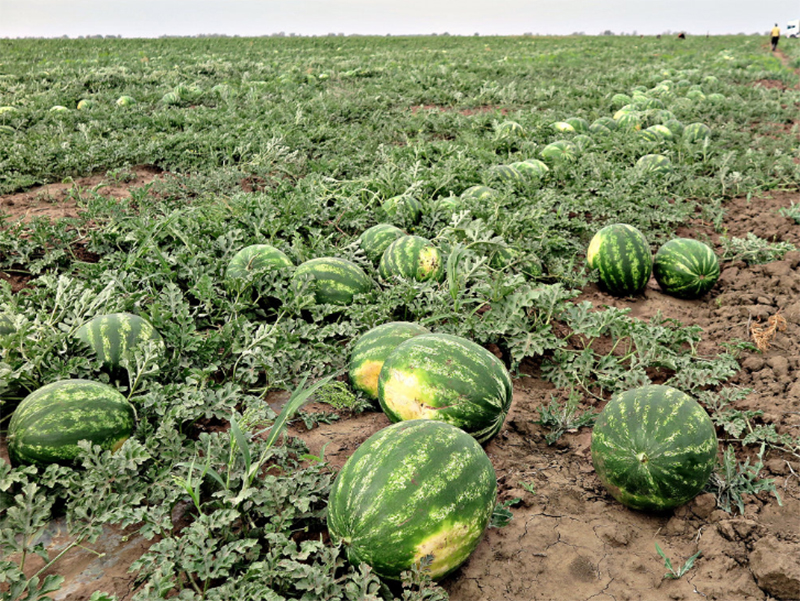 exclusive
Due to the full-scale war and the occupation of its territories, Ukraine has lost the vast majority of its famous melon-growing regions. The situation on the left bank of the Kherson region, which has always been the country’s main supplier of this crop, remains critical, and it is currently virtually impossible to assess the actual state of affairs in the occupied fields. Agricultural market expert Oleksandr Khorev spoke about this in an exclusive interview with "Komersant Ukrainian".
The Scale of Losses: Kherson Oblast Under Occupation, Mykolaiv Oblast Has Not Recovered
According to the expert, the geography of Ukrainian watermelon cultivation has undergone catastrophic changes since the start of the full-scale invasion. The brunt of the impact fell on southern Ukraine, which supplied not only the country but also, in some cases, the European market with this juicy fruit.
“Nothing has changed since the start of the war. In Mykolaiv Oblast, part of the territory has been lost, and operations haven’t resumed even in areas that have been de-occupied, because there are specific challenges there. In the Kherson region, all the main areas where melons were grown are now outside Ukraine’s control,” notes Oleksandr Khorev.
When asked about the exact percentage of lost acreage, the expert cited staggering figures.
“If we’re talking about the day the war began, we’ve lost, probably, 70 percent or more of total production.”
Due to the occupation of key southern regions, Ukraine has effectively lost the ability to export watermelons to the European Union. The unique climate of the Kherson region used to allow us to fill supply gaps in the EU, but that is now impossible.
“We’re practically not producing for export right now, because in the Kherson region, we were the only ones who could grow such high-quality late-season watermelons, which were harvested only in September—and they’re in demand in the European Union precisely in September, since the EU has its own crop from May through September. It’s still hard to say anything about exports right now…,” the expert explains.
Watch us on YouTube: important topics – without censorship
The Great Relocation: Where Are Watermelons Grown Now?
Despite the loss of a staggering amount of territory in the south, Ukrainian farmers were able to save the domestic market through regional relocation. Farmers began planting watermelons en masse in regions that were previously atypical for this crop, which helped offset the shortage at least in the domestic market. Because of this, it is currently very difficult to assess the net loss of acreage on a national scale, as the market has undergone a complete restructuring.
“The relocation of production is now complete, and substantial growing areas have been established in all regions. Therefore, it is very difficult to even speak of a loss of any acreage, because they have replaced as much as was needed,” notes Khorev.
The expert adds that the geography of cultivation now covers nearly the entire country.
“As we said last year, watermelons are a crop that grows well in all regions of Ukraine, even in the west. They’re grown exceptionally well in the Kirovohrad region, in the center—literally across all regions. Well, maybe they won’t have that exact same sweet flavor, because the ones from Kherson—they were really amazing. But there will be Ukrainian watermelons. That’s for sure. And there will be enough.”
What will happen to prices and selection in supermarkets?
The expert isn’t ready to predict the exact price of watermelons on store shelves just yet, noting:
“As for prices—wait two weeks; it’s too early to say.”
At the same time, he firmly asserts that Ukrainian retail chains will switch entirely to domestic produce as soon as the mass harvest begins, since domestic watermelons have a significant advantage in logistics and price compared to imports.
As is well known, juicy berries from Turkey, Greece, or Azerbaijan can currently be found on Ukrainian store shelves.
“As for supermarkets—when the season is in full swing and domestic produce is available—without factoring in its cost in foreign currency or logistical overhead, it will naturally be more affordable, and supermarkets will switch to it. Especially since our watermelons have always been of decent quality, and I don’t think we should even consider switching from imported to domestic watermelons… There will be enough watermelons for the population,” concluded Oleksandr Khorev.
Read us on Telegram: important topics – without censorship