A Long Game and €70 Billion: What Results Is the West Expecting in Return for Its Financial Aid to Ukraine?
9 July 17:35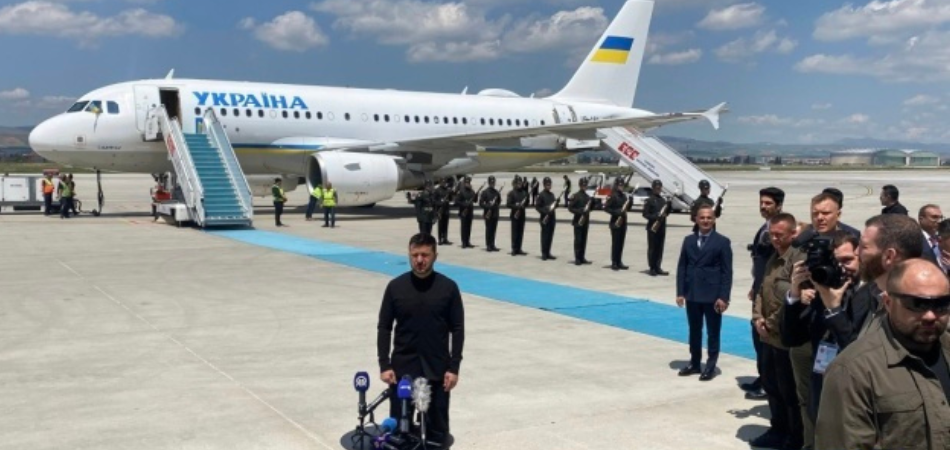 ANALYSIS FROM
The NATO summit in Ankara marked a fundamental shift in relations between Ukraine and the North Atlantic Alliance. Despite the absence of a formal invitation to join, Kyiv has de facto become a central figure in the European security architecture, cementing its status as Europe’s primary military and technological shield. A €70 billion financial package for 2026, a massive drone deal, and Donald Trump’s sensational statements about licenses to manufacture Patriot missiles in Ukraine—these are likely the beginning of a global restructuring of the entire Western defense industry around Ukrainian expertise. "Komersant Ukrainian", together with experts, analyzed: what the billions are being allocated for, whether Ukraine will be able to launch its own production of Patriot missiles, and how the Ukrainian delegation managed to resolve long-standing disputes with partners and turn historical differences into a united front against Russia?
The summit’s main financial breakthrough was the member states’ agreement on a €70 billion military and financial aid package for Ukraine for 2026, with a commitment to maintain this level of funding in 2027 as well.
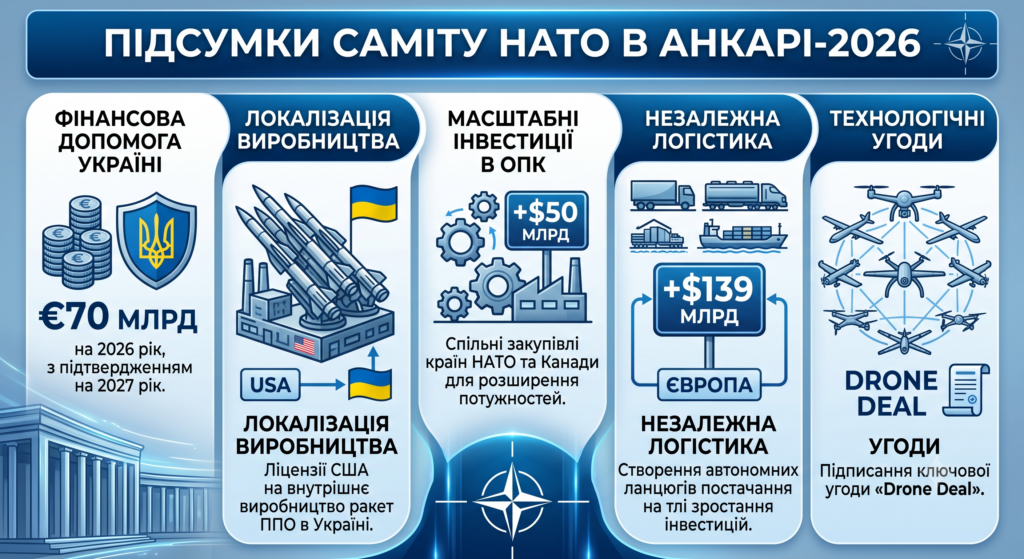
At the same time, the Alliance is launching a global restructuring of the defense-industrial complex (DIC), which will fundamentally change the European security system. A key step is the localization of production, as the United States has expressed its readiness to grant Ukraine licenses for the domestic production of missiles for air defense systems. This process is backed by large-scale investments: NATO countries and Canada have already agreed on joint procurements totaling $50 billion, which will be directed toward expanding industrial capacity.
At the same time, the Alliance is moving toward creating autonomous supply chains to establish independent logistics, a development taking place against the backdrop of a rapid increase in European defense spending, which has risen by $139 billion. Technological breakthroughs are also a key component of this restructuring, as a number of strategic agreements were signed at the summit, the most significant of which was a large-scale contract in the field of unmanned technologies—the so-called “Drone Deal.”
Western Pragmatism: What Is Ukraine Getting €70 Billion For?
The Western world has demonstrated a willingness to invest heavily in Ukraine’s defense industry and technology (particularly the Drone Deal), as Kyiv proves its effectiveness directly through actions on the battlefield. Taras Zagorodniy, a political analyst and managing partner of the “National Anti-Crisis Group,” emphasizes that financial packages are approved only based on actual strength and results, which Ukraine demonstrated right during the meetings in Ankara:
“You could say that Ukraine went to the summit with results already in hand… that is, while attacks were being carried out on Russian territory during the summit. In other words, it was a demonstration of its capabilities. The Western world is quite cynical and pragmatic. If you ask for additional money there… the question is always, ‘What are you using the money for?’ By striking Russian oil refineries—and carrying out strikes during this summit—Ukraine has demonstrated that it is, in essence, NATO. And, accordingly, there is a legitimate reason to provide funding,” says Zagorodniy.
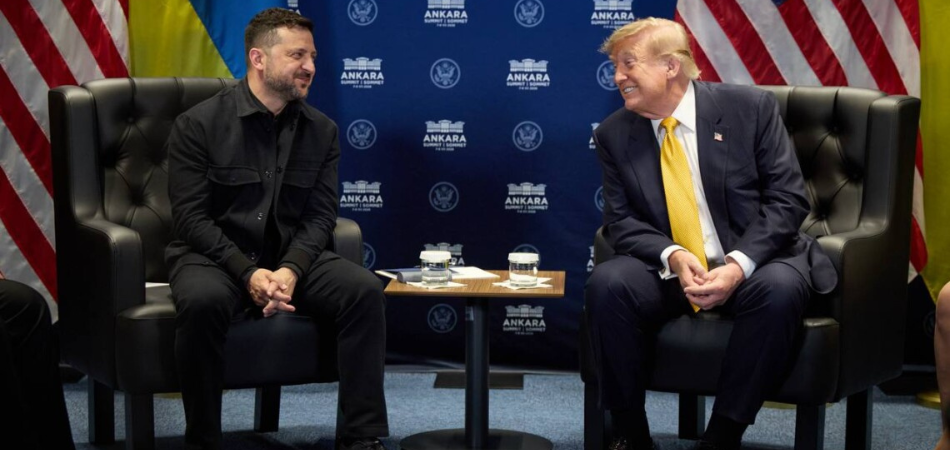
These financial commitments, amounting to billions, stem from the fact that European armies are in dire need of Ukrainian expertise. Military historian Hryhoriy Tamar notes that in the Western world, only three countries have real-world experience in conventional warfare—the U.S., Israel, and Ukraine. At the same time, most European NATO armies have experience only with local or police operations. Ukraine’s experience, however, is unique to NATO’s General Staff due to its ability to fight using all types of weaponry available in the world.
“The Ukrainian army is the only army in the world today that can equally effectively employ both Soviet or Russian weapons and Western ones in combat. And the range is vast: American, French, British, German, Turkish, some Israeli… At the General Staff level, there is a clear understanding of the strengths and weaknesses; all specifications have been studied. “From an intelligence perspective, this is invaluable data,” Tamar notes.
Carrying Out Diplomatic Missions and Working Toward the Future
On the sidelines of the NATO summit in Ankara, U.S. President Donald Trump announced his intention to grant Ukraine a license to manufacture missiles for Patriot air defense systems.
“A little birdie told me that we’ll grant them the right to produce Patriots… We’ll show them how it’s done; it’s very complicated, but you’ll quickly grasp the complexity,” the American leader said during a joint press conference with Volodymyr Zelenskyy.
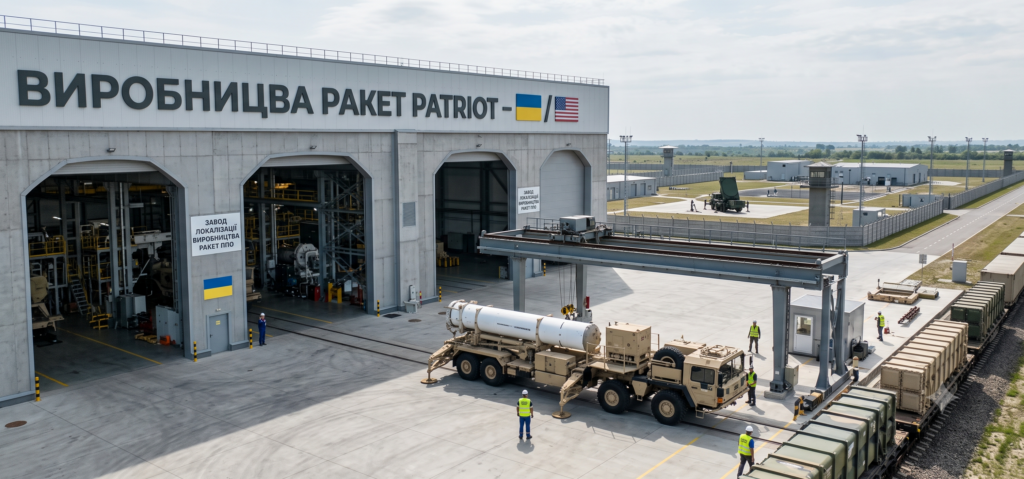
Military expert Hryhoriy Tamar commented on this initiative with cautious skepticism, emphasizing that such large-scale projects are not implemented quickly. At the same time, he stressed that Ukraine has no other civilizational path but to transform itself over the course of decades into a major military power with a robust defense industry.
“Such issues aren’t resolved quickly; it doesn’t happen overnight. But because you’ll now have to transform into a major military power over the course of many decades, you need to develop a long-term strategy. And such factories are absolutely essential. As they say, you’ve already missed all your deadlines. You need to have your own weapons and production facilities today—or, more precisely, you needed them yesterday,” said Grigory Tamar.
At the same time, the Ukrainian delegation managed to shift the focus of international meetings exclusively toward countering common threats, thereby neutralizing long-standing disputes. Political analyst Oleg Saakyan notes the successful fulfillment of the visit’s key objectives.
“As for the key objectives—namely, air defense and meetings with partners to coordinate broader support—we can give them two thumbs up. Both objectives were achieved. We can even see that the meeting with Navrotsky also ended with an emphasis on countering Russia, rather than on historical differences. It seems to me that this best demonstrates the overall atmosphere of the summit for Ukraine. If even Navrotsky is speaking about a common threat, that indicates the summit was a success for Ukraine,” notes Sahakyan.
Ukraine’s Status: From Supplicant to Key Security Contributor
The main political outcome of the summit is the official recognition of Ukraine’s new role: even without being a member of the Alliance, it has become a security contributor for the entire European continent. Against this backdrop, Finland’s defense minister emphasized that Ukraine should be integrated as closely as possible into NATO and EU structures. Political analyst Volodymyr Tsybulko notes that the summit proceeded without internal crises, despite external political factors.
“There was no scandal, and that in itself is a victory. But it must be said that all the draft resolutions prepared by the NATO Secretariat—in principle, they are all supported, despite the fact that Trump is behaving very erratically… But the point is something else. After all, Ukraine—despite not receiving an invitation to join NATO—was recognized as a ‘security contributor,’ that is, specifically in the role of a security contributor. This is, in essence, a higher level of partnership with NATO for a non-member,” says Tsybulko.
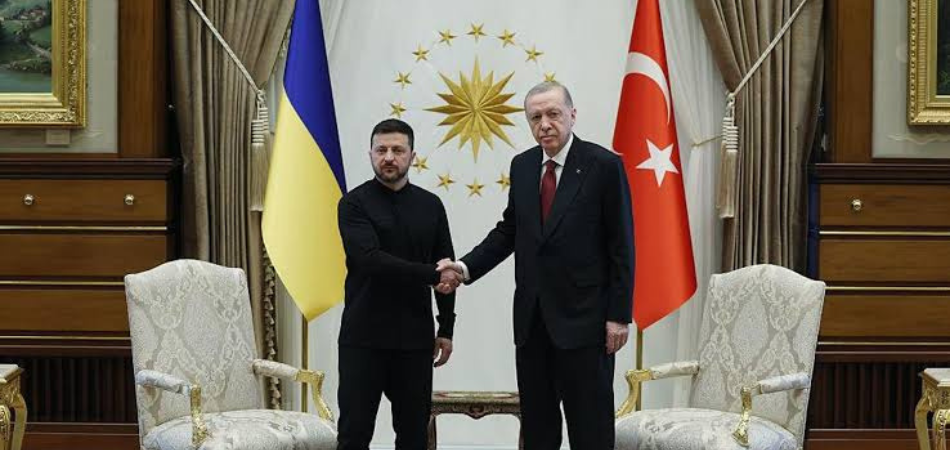
Military expert Grigory Tamar adds that such recognition is entirely logical, since attitudes toward the country have changed dramatically.
“Today, Ukraine has become a shield for European civilization. If Ukraine remains on the map, it is only as a major military power. There is no other way. “At first, you essentially dismantled your army. But with the start of the war, you very quickly built one of the best armies in the world,” says Tamar.
At the same time, the change in wording regarding Russia in the NATO summit declaration in Ankara does not represent a weakening of the West’s position, but rather an evolution in the perception of the threat and a shift from words to concrete actions. This view was expressed by Artem Mykolaychuk, Chairman of the Board of the Pylyp Orlyk Foundation. According to him, although the previous U.S. administration called Russia “the most significant and direct threat,” the volume of military aid and restrictions on the use of weapons did not allow Ukraine to achieve victory.
“I wouldn’t say this is a step backward. On the other hand, we have the ‘White Book’ on Euro-Atlantic security, adopted last year, which identifies Russia as a threat. Troop levels will be adjusted and defense budgets increased in accordance with it. This is a practical program to expand Europe’s military capabilities specifically in response to Russia. Therefore, NATO’s position has not weakened; it has evolved. “Now it’s no longer just words, but attempts to take practical action,” Artem Mykolaychuk concludes.
The summit in Ankara clearly demonstrated that the West has finally shed its illusions and shifted to the language of pragmatic calculation. Financial packages worth billions, plans to localize Patriot missile production, and the Drone Deal are not acts of charity but rather the Alliance’s investment in its own survival. Ukraine is no longer simply asking for help; it is dictating the rules of the world’s new defense architecture. The most difficult stage lies ahead. As experts note, the rollout of high-tech production within the country will not happen in a matter of months. However, Ukraine simply has no other path forward. To withstand this war of attrition and guarantee the security of the European continent for decades to come, the state will have to implement a long-term strategy and build one of the most powerful and independent defense-industrial complexes in the world. And the first stones of this foundation have already been laid in Ankara.