2025 for Ukraine: 5 Major Achievements and 5 Serious Challenges Facing the Country
1 January 19:03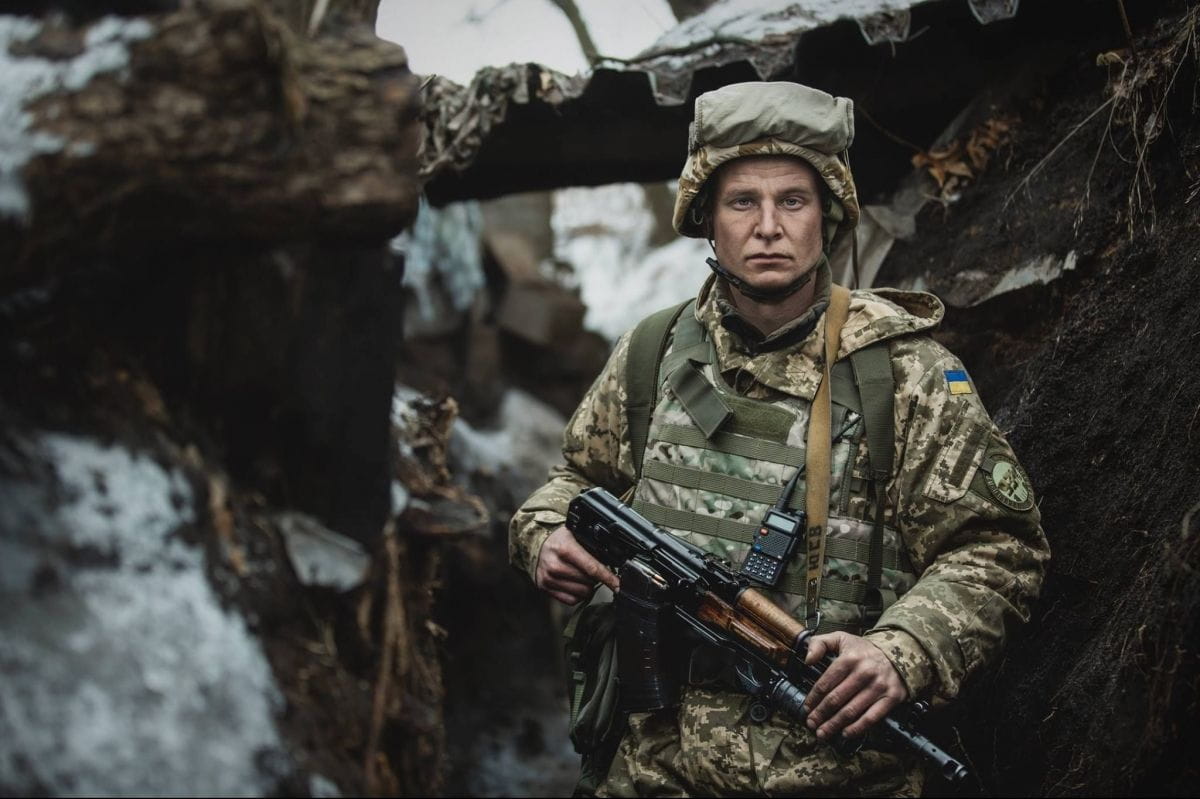 РОЗБІР ВІД
The year 2025 tested Ukraine’s resilience and ability to stand up to the aggressor. Despite the difficult military situation, the country managed to hold the front lines, conduct effective operations against Russian forces, and strengthen international support through the “Coalition of the Willing.” At the same time, 2025 demonstrated that for Ukraine, war is not just about the front lines and weapons, but also a struggle for energy security and the trust of its citizens. From blackouts and mass emigration to corruption scandals and complex negotiations with the U.S.: these challenges show just how resilient the state must be. What lessons in resilience, unity, and innovative solutions does 2025 leave for future generations of Ukrainians? What challenges will need to be faced in 2026—in the article "Komersant Ukrainian".
Ukraine’s 5 victories in 2025
- Holding the Front and Strategic Resilience
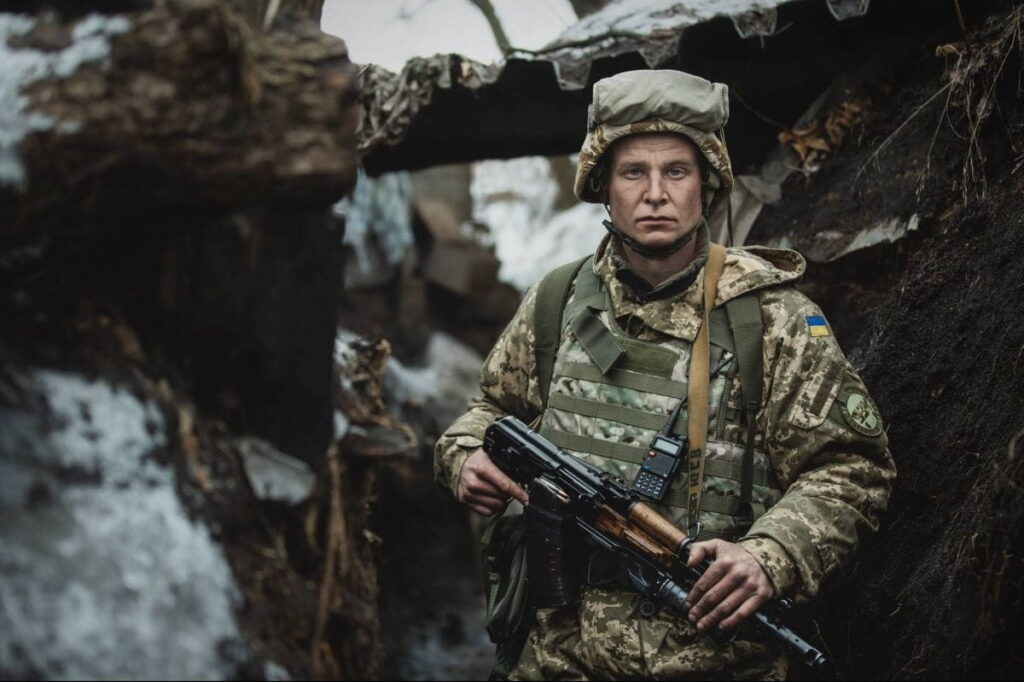
The year 2025 on the front lines of Ukraine’s war against Russia was marked by a transition into a phase of attrition and technological competition. Ukraine managed to hold the front line, deliver effective strikes deep into Russian territory, and develop its own weaponry. Meanwhile, Russia strengthened its defenses, and Europe recognized its role in regional security.
Strategic resilience and the ability to hold the front line are key factors determining Ukraine’s current position on the international stage and its negotiating leverage, emphasizes Serhiy Yagodzinsky, PhD, professor, and vice rector of the European University.
“Ukraine did not lose the front line and did not collapse, as our enemy expected, which gave us a fairly strong negotiating position,” – Serhiy Yagodzinsky
IDF Reserve Officer Grigory Tamar, assessing the results of the war in Ukraine, called Operation “Spiderweb” a great victory. Ukraine, lacking sufficient resources for a conventional war, was able to create a highly professional and effective deterrent that made a strong impression on the West and demonstrated the vulnerability of even strategic elements of the Russian military system.
“This is a professional, forced, yet extremely effective approach that Ukraine has employed against the aggression. And ‘Spiderweb’ is not over yet. We will see its continuation,” Tamar concluded.
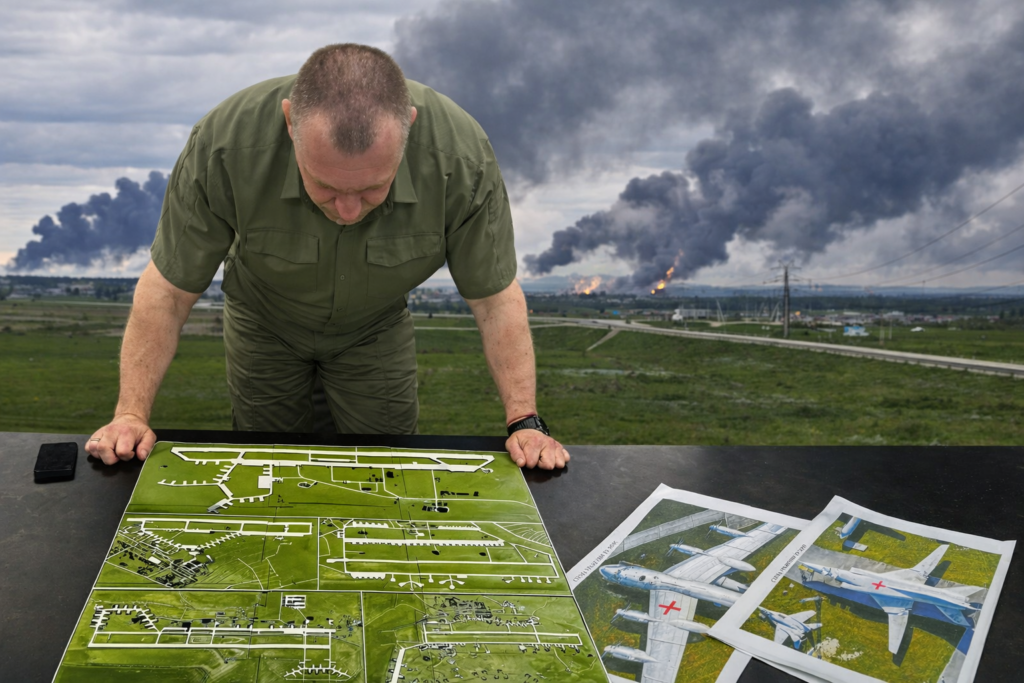
At the same time, Yevhen Tykhyi, a servicemember of the Defense Forces, noted that victory should only be assessed in the long term.
“How will Russia behave, how will the world behave, including Europe… Right now, it’s good that we’re still alive, that we exist. In particular, thanks to our foreign partners—the U.S. and other countries. We all understand that Russia will not stop, and historically, looking at all the wars it has waged, if something didn’t work out, they tried again and again,” – Yevhen Tykhyi
- International Support
Ukraine continues to receive significant political and diplomatic support on the international stage, particularly through the “Coalition of the Willing, ” which unites about 30–40 countries.
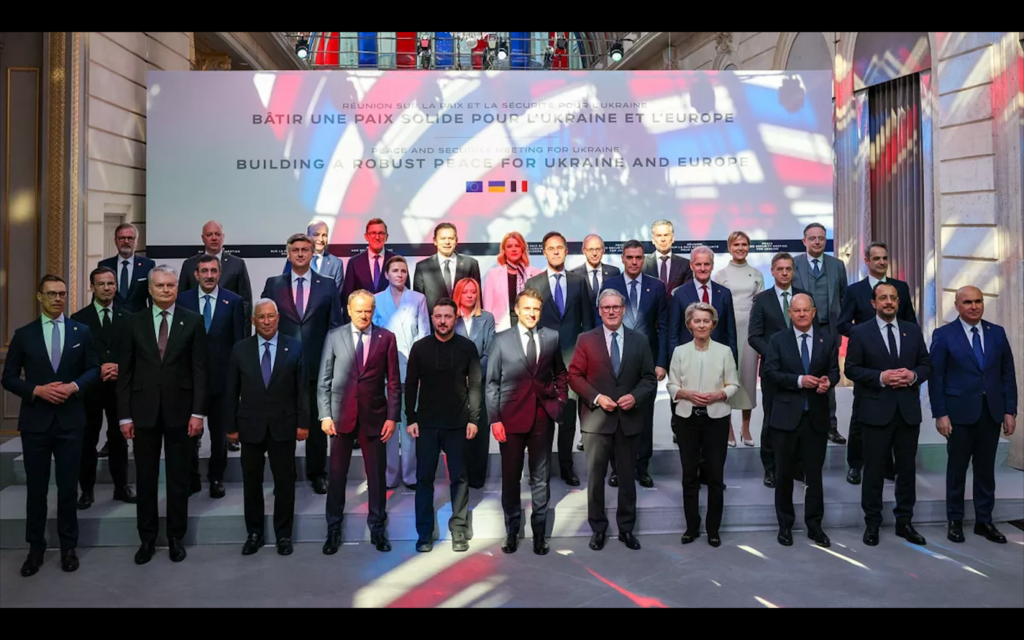
Key conclusions:
- Security guarantees: The coalition has agreed on the parameters of guarantees that avoid the mistakes of the Budapest Memorandum and strengthen Ukraine’s negotiating position.
- Diplomatic engagement with the U.S.: Strategic dialogue on long-term security guarantees continues, with an emphasis on their legal force.
- Stable support from partners: 26 countries agreed to create a “reassurance force” for post-war security and to deter new aggression.
- Sanctions and economic pressure: Coalition leaders have confirmed that sanctions against Russia will remain in place until the end of the war and that actions regarding the energy and financial sectors will be coordinated.
- The role of Europe and the UK: France and the UK are leading the coalition, ensuring coordination and a unified European response to the aggression.
“Whatever conditions are offered to us, they are not always favorable, but, gritting our teeth, we are following this path, and there is hope for a certain resolution. It is also important to normalize relations with the U.S. and find a balance in communication with the Donald Trump administration, which had tense rhetoric at the beginning of the year but is now showing some softening,” notes Professor Yagodzinsky.
Ukraine’s “Economic Miracle”
Mykhailo Kukhar, a lecturer, managing partner, and senior economist at the Independent Group for Macroeconomic Analysis and Forecasting (Ukraine Economic Outlook / EMBA ), described the current state of Ukraine’s economy as an “economic miracle” during an appearance on the YouTube channel “DumaI.”
Indeed, without the support of Western partners, Ukraine would have been able to wage war for only 2–4 months, after which the country would have faced the risk of default. The economist emphasized that currently, thanks to well-planned financial aid and grants, default is not a threat.
The economist explained that if all external borrowing and non-tax revenues (grants, aid from partners) are combined, they cover almost all the costs of waging war. This allows Ukraine to simultaneously sustain its economy and cover peacetime budget expenditures, which, in his words, is a unique phenomenon.
“To be honest, this is an economic miracle. In the fourth year of the war, we still have such a resilient, healthy economy that is capable of collecting taxes and covering defense expenditures,” Kuchar concluded.
If the war ends tomorrow, the budget revenues we collect through taxes would be more than enough to finance all peacetime budget expenditures, the economist concludes.
- Resilience. The ability to withstand Russian tactics
Sociological surveys from 2025 indicate a strong desire for peace among Ukrainians, while simultaneously demonstrating a willingness to endure the hardships of war and defend sovereignty.
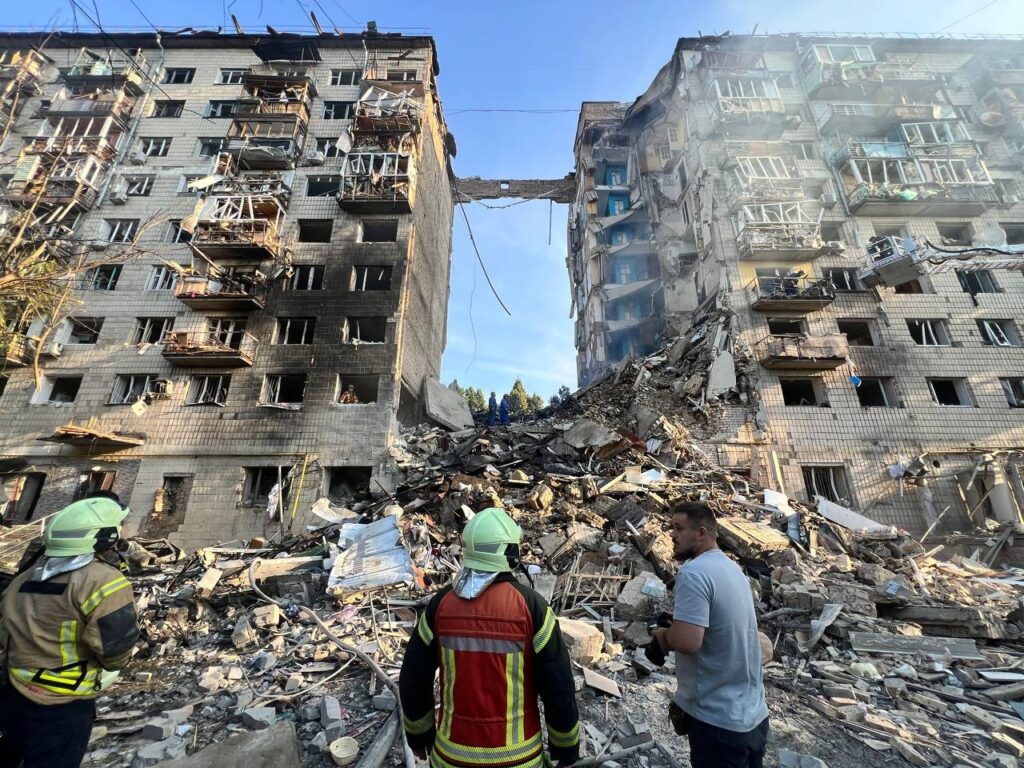
According to the Institute of Social Psychology (ISPP), over 76% of Ukrainians believe that Ukraine needs peace, but not at any cost, which is an increase compared to 2023.
An Interfax-Ukraine poll confirms these sentiments: over 70% of citizens want peace, but are not willing to accept terms that undermine Ukraine’s sovereignty.
Data from the Razumkov Center / KIIS show that 62% of Ukrainians are ready to “endure the war for as long as necessary.”
“Despite all the restrictions, people are finding ways to adapt. At the same time, we will continue to live with the hope that the war will end and hold onto the moral conviction that this war was unjust,” noted Serhiy Yagodzinsky.
The professor emphasized that the losses have not broken Ukrainians; on the contrary, they motivate them toward further achievements and rebuilding the country’s future. According to Yagodzinsky, after the war, many Ukrainians will return home, while some will remain abroad; however, love for their homeland remains a key factor.
A Fight for the Title and for the Country: Usyk’s Victory
In 2025, Ukraine achieved another outstanding victory on the world sports stage: Oleksandr Usyk defeated Daniel Dubois in a grueling rematch and regained the undisputed world heavyweight title.
The fight took place on July 19, 2025, at the legendary Wembley Stadium in London. Usyk won by knockout in the 5th round, confirming his status as one of the world’s best boxers and bringing Ukraine yet another source of sporting pride. In an interview before the fight, Usyk confirmed that he really wants to fight in Ukraine one day, once the war is over:
“…I don’t hope—I know it will happen. Everything I start, I see through to the end… We’re waiting for the war to end, but it has to be in a way that it doesn’t start again,” – Oleksandr Usyk
This victory became a symbol of the resilience of Ukrainian sports even in the midst of war. A photo of Usyk training at a damaged thermal power plant made it onto the list of the most striking sports photos of 2025.
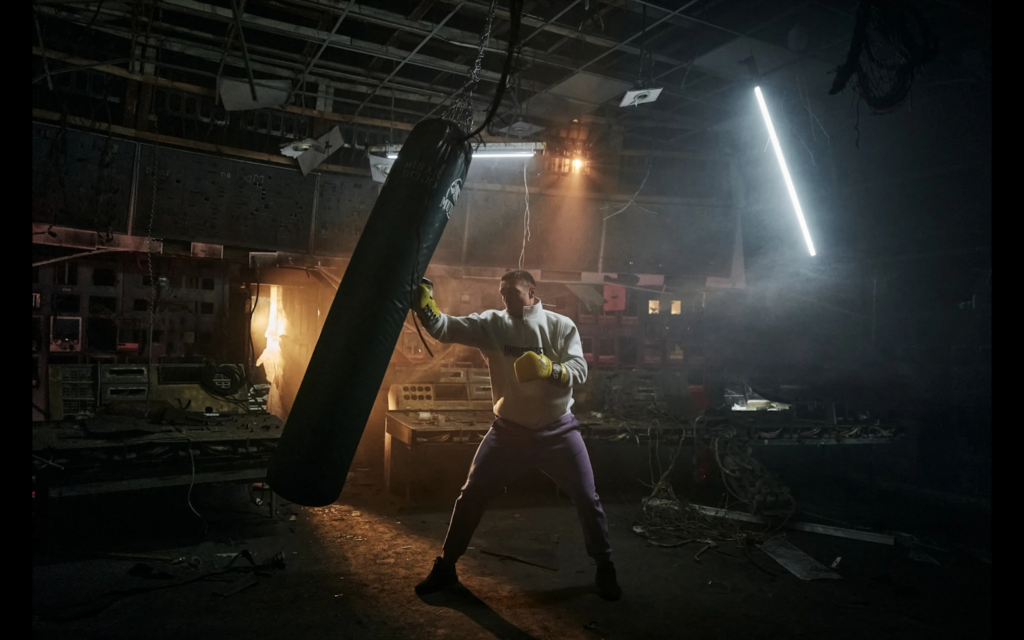
Usyk himself explained his action simply: it was a gesture of support for Ukrainian energy workers and a reminder to the world of the scale of destruction to civilian infrastructure in Ukraine.
The Sky Sports editorial team noted that the photograph perfectly captures the emotional tension and resilience that have become the defining characteristics of the year for Ukrainian sports and society.
5 Challenges for Ukraine in 2025
The year 2025 brought Ukraine a series of serious challenges—from massive strikes on energy infrastructure and military casualties to corruption scandals and complex international politics. The country managed to hold the front, but energy collapses, large-scale migration of citizens, and internal crises of confidence demonstrated just how difficult it is to simultaneously fight on the front lines and maintain stability at home. At the same time, Donald Trump’s return to world politics and the temporary suspension of cooperation with the U.S. posed additional challenges for Kyiv.
- Massive strikes on energy infrastructure
Russian forces continued large-scale missile and drone attacks on Ukraine’s energy system, which intensified toward the end of 2025. For the first time, the country declared a state of emergency. The Odesa region suffered a series of massive strikes on critical infrastructure, causing disruptions in electricity, water, and other utility services. Part of the population remained without power for a long time, and restoring the power supply took several days.
According to the Ministry of Energy, in the third quarter of 2025, Russian attacks damaged up to 8,000 MW of generating capacity, with approximately half already restored as of the end of December, but the attacks continue.
Energy expert Serhiy Dyachenko commented on whether Ukraine should prepare for a complete power outage in 2026.
“I don’t think there will be a total blackout. Our nuclear power plants are operational, and although the enemy is trying to damage the associated infrastructure, we’ve learned to restore it quickly. Problems arise only with certain power distribution and cooling systems, and they are being resolved promptly,” – Serhiy Dyachenko
- Resource depletion and loss of trust
The growing conflicts between military personnel at territorial recruitment centers and civilians are increasingly becoming the subject of public debate and disinformation campaigns. High-profile incidents in Lviv, where Yuriy Bondarenko, a serviceman at the Territorial Recruitment Center, died during a document check, and the death of a man on the premises of the Regional Territorial Recruitment Center in the Odesa region have only exacerbated the crisis of trust in mobilization processes.
And although the head of the Main Intelligence Directorate, Kirill Budanov, stated that cases of violence by TCC employees are isolated and account for less than 1%, the public perception is shaped by the deliberate amplification of individual incidents.
“The fundamental failure is the breakdown in communication between the government and civil society. People have lost direct contact with government agencies, and today even correct and well-founded decisions are met with skepticism or hostility,” concludes Serhiy Yagodzinsky.
- A protracted war: loss of life
In an interview with British journalist Piers Morgan, released on February 4, 2025, Ukrainian President Volodymyr Zelenskyy reported on the losses suffered by the Ukrainian military since the start of Russia’s full-scale invasion in February 2022. According to him, the total losses of the Armed Forces of Ukraine amount to about 45,100 killed and approximately 390,000 wounded, clarifying that the number of wounded exceeds the number of casualties because some soldiers were wounded multiple times.
“Regarding our casualties, accurate figures are very important to us. 45,100 people have been killed and there have been about 390,000 cases of injuries…,” Zelenskyy said.
However, these are the only official figures regarding Ukrainian casualties. This number has increased in one way or another by the end of the year. According to the U.S. Center for Strategic and International Studies (CSIS), total human casualties in the war since February 24, 2022, have reached 1.4 million people, of whom about 1 million are Russian occupiers (approximately 250,000 killed), and 400,000 are Ukrainian military personnel. The study is based on estimates by the U.S. and British governments, though it notes that the exact number of casualties is difficult to determine due to Moscow’s underreporting and Kyiv’s failure to disclose full information.
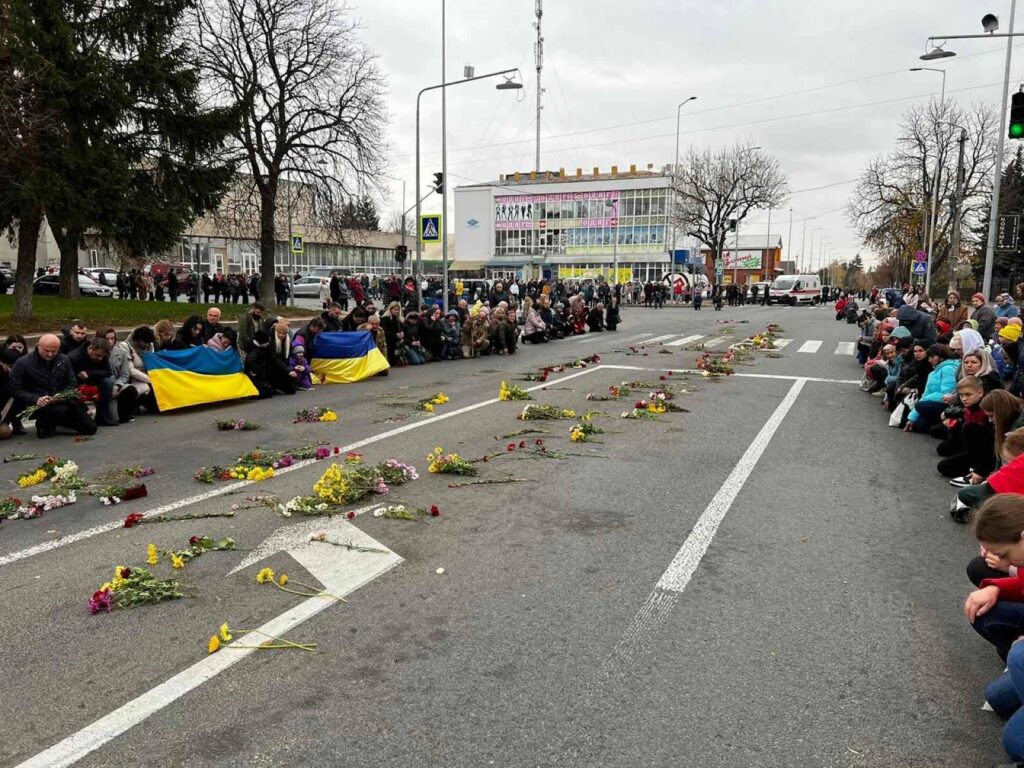
Furthermore, Russia is holding Ukrainian military personnel and civilians in over 300 detention facilities, 186 of which are for prisoners of war, with additional facilities for civilian hostages, according to Dmytro Lubinets, the Verkhovna Rada’s Commissioner for Human Rights. According to confirmed data, 2,577 Ukrainian servicemen and approximately 1,800 civilians are being held captive by the Russian Federation, while the total number of those missing exceeds 15,000. The return of every Ukrainian serviceman and civilian home remains a key priority for President Volodymyr Zelenskyy.
At the same time, according to data from the National Bank of Ukraine and government reports, by the end of 2025, it was reported that over 7.5 million Ukrainians had left the country due to the war, economic hardships, and the search for safety. The total number of Ukrainians abroad reaches about 25 million, including earlier emigration. The peak of departures occurred in the fall of 2025, when nearly 6 million people left within a month and a half. Analysts predict that citizens will not return until at least 2027, when the economy and social situation stabilize.
- Corruption Scandals
In 2025, Ukraine faced massive anti-corruption challenges that engulfed the business sector, government agencies, and the political elite. The most high-profile case, known in the media as “Mindich-gate,” involved the National Anti-Corruption Bureau of Ukraine (NABU) and the Specialized Anti-Corruption Prosecutor’s Office (SAPO) exposing a massive embezzlement scheme at the state-owned company Energoatom. According to the investigation, money from contracts was laundered through a “back office”—a shadow network—and total losses exceed $100 million.
Among the key figures is businessman Timur Mindich, a former partner of Volodymyr Zelenskyy at “Kvartal 95.” According to the recordings, the suspects discussed interactions with high-ranking officials, including the president, which caused a public outcry.
In December 2025, NABU and the SAPO conducted a raid on the Verkhovna Rada building, investigating possible bribery among MPs in exchange for votes.
According to NABU and SAPO, in the first half of 2025 alone, more than 115 people were charged, including the current Deputy Prime Minister and the former Deputy Head of the Office of the President.
“Unfortunately, corruption has emerged, and it has been exposed by the agencies that were created. We hope they will see this through to the end. We are continuing our work; we are committed to eradicating corruption. It is a long process. Americans spent many decades trying to overcome corruption. And we need to follow the same path,” emphasized Ivan Stupak
- Trump: A Challenge for Ukraine and the World
Donald Trump’s return to high-level politics once again presents the world with a difficult choice. For some, he is a symbol of “hard realism” and pragmatism; for others, he is a source of instability that could undermine the fragile international security system.
In early 2025, the U.S. temporarily suspended intelligence sharing with Ukraine, dealing a serious blow to Kyiv. The loss of access to critical information about the movements and intentions of Russian troops complicated defense planning and operational activities of the Ukrainian Armed Forces.
In February 2025, a meeting between Ukrainian President Volodymyr Zelenskyy and Donald Trump at the White House ended in a public clash. Trump accused Zelenskyy of being unwilling to take steps toward a peaceful resolution of the conflict with Russia, and agreements on economic deals and resource extraction were not signed.

As Israeli military analyst Grigory Tamar noted, the truth in Trump’s case “always lies somewhere in the middle.” He is neither a savior of the world nor the embodiment of absolute evil. Trump is a product of his time and U.S. interests, which do not always align with those of Ukraine or Israel.
“He has completely different priorities… It’s the confrontation with China. That is the strategic goal of the U.S. And in order to adhere to this goal, one must understand that he will sacrifice both your interests and ours,” – Grigory Tamar
Trump is neither a death sentence nor a panacea. He is a complex factor forcing Ukraine to mature in its foreign policy.
“The winner is the one who looks at reality soberly and acts not on emotion, but with cold calculation,” notes Tamar.
The year 2025 has shown that Ukraine is capable of achieving victories even under extremely difficult conditions: holding the front lines, international support, economic stability, and sporting achievements demonstrate the strength of the state and society. At the same time, energy crises, corruption scandals, mass emigration, and geopolitical challenges serve as a reminder that the struggle continues and requires coordinated action from both the government and citizens. This year has been a lesson in resilience: Ukraine’s strength is defined not only by its weapons but also by its ability to preserve sovereignty, trust, and hope for the future.