Is it really possible to “penetrate” Moscow right now? Yuriy Kasyanov assesses Russia’s air defense capabilities and the chances of reaching the Kremlin
7 May 10:13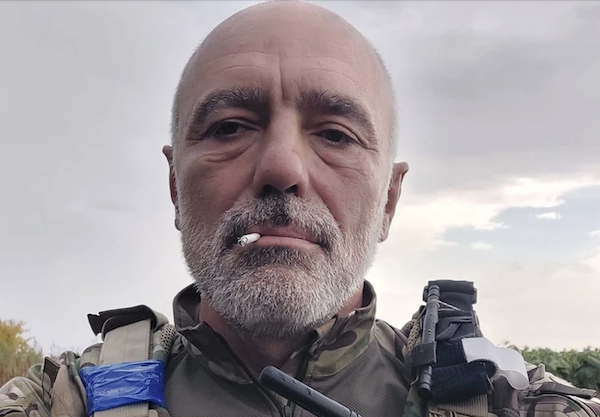 YOUTUBE
Only certain types of Ukrainian drones—not ballistic missiles—are capable of penetrating the dense air defense system surrounding and within Moscow itself. This was stated in an exclusive interview with "Komersant Ukrainian" by Yuriy Kasyanov, an officer in the Ukrainian Armed Forces, an aerial reconnaissance specialist, and a design engineer.
According to Kasyanov, all attacks on key targets in the Russian capital, particularly the Kremlin, were carried out by his unit, which used drones of its own design (the “Spis” series).
He attributes the success of several operations to the use of stealth technology and the identification of vulnerabilities in the enemy’s electronic warfare (EW) system.
“Over the past two years, no drone other than ours has reached Moscow. We’ve had several successful operations during this time. Drones built using ‘Stealth’ technology are better at reaching Moscow—they’re hard for radar to detect, fly low, and are quite difficult to shoot down,” the expert explains.
He notes that during this period, Russia has managed to significantly modernize its defenses, which makes conducting similar operations much more difficult today.
Kasyanov emphasized that one should not underestimate the Russian S-300, S-400, and S-500 systems, which demonstrate high effectiveness against ballistic targets. This makes Moscow a rather difficult target to strike. That is precisely why creative engineering solutions are needed for strikes against such targets.
One of the most pressing issues raised in the interview was criticism of government approaches to funding defense contracts.
Watch us on YouTube: important topics – without censorship
Kasyanov cited the example of the purchase of a large batch of drones, which, according to him, proved unsuitable for performing complex tasks in the Russian capital.
“Another ‘good’ drone—there were about 3,000 of them, costing over $400 million—and not a single one made it [to Moscow]. Yes, this company now makes decent UAVs that can reach oil refineries or less heavily guarded factories, but Moscow is beyond their capabilities,” the officer noted.
He added that his unit operated not only in the Russian capital but also at airfields, factories, and Russian air defense facilities, demonstrating “precision.”
In particular, during the well-known attack on the Senate Palace, the drone “missed by only half a meter” from the main target—the flagpole.
Despite the reported successes, the strike drone unit within the State Border Guard Service, led by Kasyanov, was disbanded.
The official reason given by the agency was “lack of effectiveness.”
Kasyanov, however, categorically rejects this explanation, viewing the decision as retaliation for his public criticism of the government’s methods for procuring drones and developing missile weapons.
Former MP Ihor Lutsenko, who worked in the same unit, confirms the successful operations but points to internal conflicts within the team as one of the reasons for the unit’s disbandment.
Read us on Telegram: important topics – without censorship