Amazon has rejected new tax rules in Ukraine: what this means for shoppers
13 May 05:21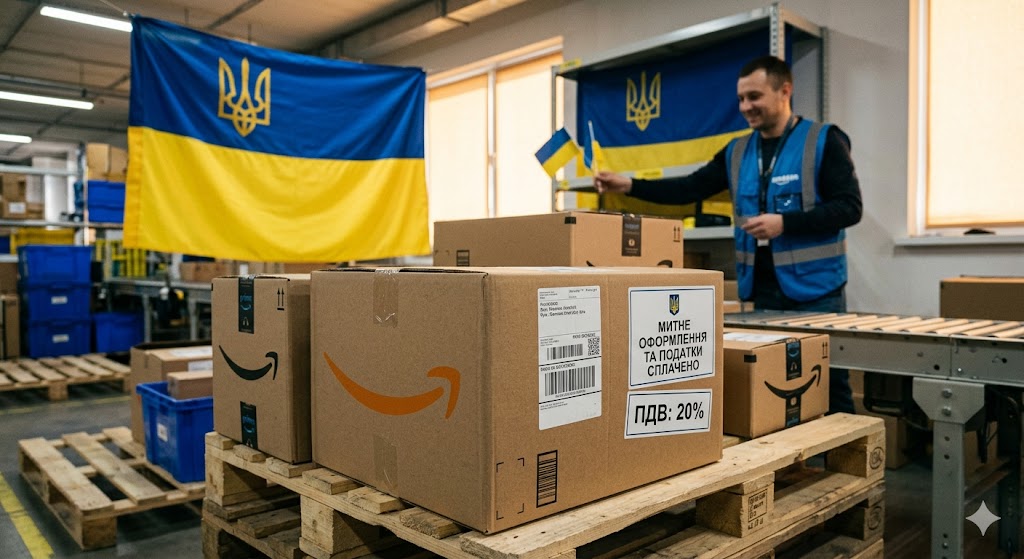
The American marketplace Amazon does not see any possibility of becoming a VAT payer or an actual tax agent in Ukraine if the rules for taxing international parcels are changed. This was stated by Nina Yuzhanina, a member of parliament and member of the Parliamentary Committee on Finance, Tax, and Customs Policy, according to "Komersant Ukrainian", citing Censor.
The issue concerns an initiative to abolish the €150 tax-free limit for international parcels and require foreign online platforms to charge VAT on purchases made by Ukrainians.
Ukraine wants to abolish the exemption for parcels worth up to 150 euros
New rules for taxing international parcels are being discussed in Ukraine. Legislative changes could abolish the current exemption, under which goods in international shipments valued at up to 15
0 are not subject to VAT.
If these changes are adopted, value-added tax could be charged on every purchase—effectively “from the very first penny.” It was expected that global marketplaces, including Amazon, AliExpress, Temu, eBay, and Etsy, would independently add VAT to the order total and remit it to Ukraine.
However, according to Nina Yuzhanina, Amazon has already stated that it does not see a way to become a VAT payer in Ukraine.
What does “tax agent” mean in this situation
In this context, we’re talking about a model where a foreign marketplace calculates the tax itself when selling goods to a Ukrainian buyer, adds it to the order price, collects the funds from the buyer, and transfers the VAT to Ukraine’s budget.
In other words, the buyer immediately sees the final price including tax, and the state receives the VAT not during customs clearance of the package, but already at the online ordering stage.
It is precisely this model that is challenging for some global platforms, as it requires technical integration, registration, reporting, and separate administration for the Ukrainian market.
Why Amazon is refusing
There is currently no official detailed explanation from Amazon in open sources. Information about the company’s position was shared by MP Nina Yuzhanina.
According to her, Amazon does not see a way to become a VAT payer in Ukraine. This may be due to the fact that the new model would require international platforms to restructure their taxation, accounting, and interaction processes with the Ukrainian tax system.
At the same time, Amazon already has experience charging Ukrainian VAT in another segment—for AWS services. Starting March 1, 2024, AWS Europe will charge local VAT on services for accounts located in Ukraine if the customer does not have a valid Ukrainian VAT number.
However, the taxation of digital services and the taxation of physical goods in international shipments are different mechanisms.
Watch us on YouTube: important topics – without censorship
How this could affect prices for Ukrainians
If the exemption for parcels up to 150 euros is abolished, purchases from foreign marketplaces may become more expensive. VAT will potentially be added to the cost of goods, and in some cases, customs duties as well, depending on the price, product category, and customs clearance rules.
This could most significantly affect Ukrainians who regularly order:
- clothing and footwear;
- electronics;
- cosmetics;
- home goods;
- children’s products;
- accessories;
- small appliances;
- products from Amazon, AliExpress, Temu, eBay, and Etsy.
In 2025, more than half of international and express shipments to Ukraine came from China, nearly a quarter from Poland, and over 14% from the U.S. Together, these three sources accounted for about 90% of the packages Ukrainians received from abroad.
What will happen if marketplaces do not become tax agents
If major platforms refuse to collect VAT for Ukraine on their own, the question arises: who exactly will administer the tax.
Possible options:
- VAT will be charged during customs clearance of the package;
- The buyer will pay the tax upon receipt or when arranging delivery;
- responsibility will fall partly on postal operators and delivery services;
- imported purchases may become slower due to additional administrative procedures.
This is precisely one of the risks of the new model: if marketplaces do not integrate into the Ukrainian system, the tax burden may shift to buyers, logistics operators, or customs.
What bills is the Verkhovna Rada considering
According to media reports, these are bills No. 15112-d and No. 12360, which are intended to change the rules for taxing goods purchased through foreign online platforms. They provide for the automatic application of VAT to purchases made through international marketplaces.
The idea behind these changes is to bring Ukrainian legislation in line with European Union practices and reduce the inequality between Ukrainian sellers who pay taxes and foreign platforms, whose goods often enter Ukraine VAT-free within the €150 limit.
Read us on Telegram: important topics – without censorship