Think tanks have criticized the government’s social benefits: what’s the issue?
6 May 13:55
Ukraine cannot afford non-targeted social payments that do not take into account the actual financial circumstances of recipients: its commitments to the IMF require the rational use of financial resources to support vulnerable segments of the population. This is stated in a statement by think tanks specializing in economic policy. As reported by "Komersant Ukrainian".
“Given the chronic state budget deficit and the prioritization of resources for defense, Ukraine cannot afford non-targeted social payments that do not take into account the actual financial circumstances of recipients,” reads the statement addressed to the President of Ukraine, the government, relevant parliamentary committees, and others.
Analysts emphasize that every hryvnia of social spending must reach those who truly need it: low-income households, internally displaced persons, and the families of fallen and wounded defenders.
They note that Ukraine has obligations, as defined in the memorandum with the International Monetary Fund, regarding a balanced approach by the government. This applies both to increasing the fiscal burden on businesses and to the rational use of financial resources to support vulnerable segments of the population.
In particular, the provisions of the memorandum call for the development of a new social support mechanism based on targeting and verification of the income of social assistance recipients.
Failure to comply with the conditions of targeting jeopardizes the receipt of subsequent tranches.
In contrast, social assistance measures initiated in Ukraine are often based on entirely different approaches, according to think tanks.
The “National Cashback” Program
In particular, the “National Cashback” (e-cashback) program provides for payments of up to 3,000 per month for the purchase of goods from Ukrainian manufacturers, but its effectiveness remains questionable.
In the first year of the cashback program, the Ministry of Economy estimated its impact at 0.001% of GDP, which is within the margin of statistical error; no calculations were made for subsequent years.
“Furthermore, the program is designed in such a way that it applies to large and medium-sized businesses but not to small ones (entrepreneurs on the simplified tax system are excluded from the program), which essentially discriminates against small businesses,” the statement reads.
There are also examples where government ministers and their deputies are recipients of payments under this program.
State budget expenditures for this program are estimated at 4 billion UAH per year.
Meanwhile, the fuel cashback program (15% on diesel, 10% on gasoline, 5% on autogas, up to 500 UAH/month) is regressive in nature, analysts say.
“Car owners with higher fuel consumption receive a larger absolute amount of reimbursement regardless of their income level. The program effectively subsidizes the consumption of predominantly imported fuel rather than supporting vulnerable households,” analysts say.
State budget expenditures on this program are estimated at 5 billion UAH per year.
Watch us on YouTube: important topics – without censorship
“Winter Thousand”
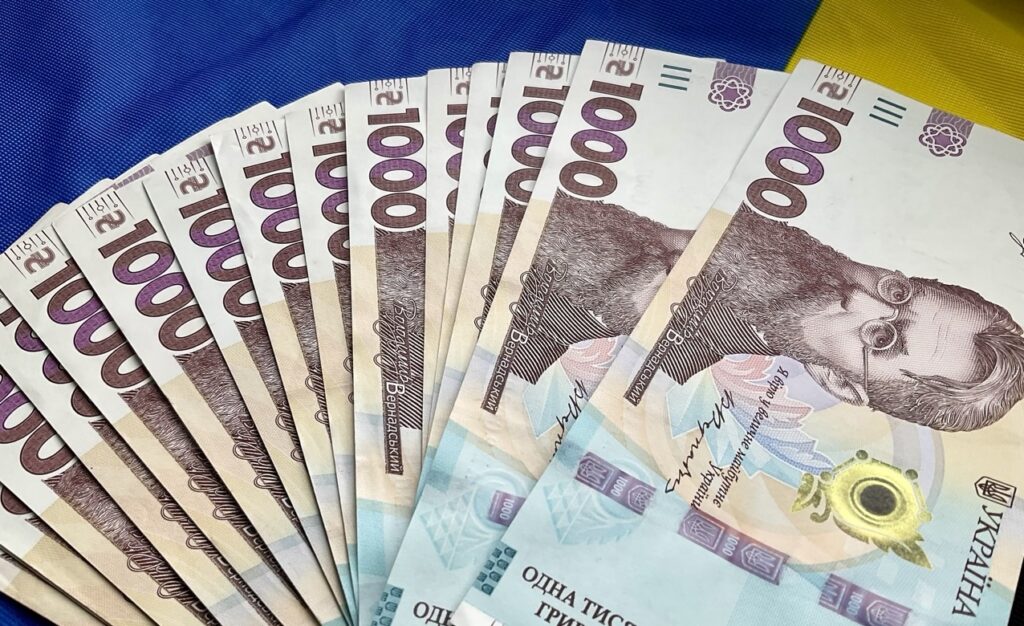
Another program, “Winter Thousand,” provides a one-time payment to a wide range of recipients without verifying their income or financial status.
“This approach does not address the structural problems of social protection: funds are scattered among those who do not need support, while the most vulnerable groups—IDPs, low-income households, and families of fallen and wounded defenders—receive the same amount as the well-off,” analysts note.
State budget expenditures on this program are estimated at 17 billion hryvnia per year. They believe these funds could instead provide targeted monthly assistance to over 1.7 million of the most vulnerable households throughout the year—with a real, measurable social impact.
“The recently announced one-time payment to pensioners will cover about 13 million people—nearly half of the country’s actual population. According to available data, among the recipients are over 1.5 million people with pensions exceeding 10,000 UAH per month,” the report states.
Introducing even minimal verification would allow for reducing program expenditures while maintaining support for those who are truly vulnerable.
Expenditures on this program are estimated at 19.5 billion UAH per year. Analysts believe these funds could be used, in particular, to significantly expand the military risk insurance program or compensation mechanisms for small businesses that have suspended operations due to hostilities.
They note that the 2026 State Budget is generally socially oriented. The Ministry of Social Policy’s expenditures to support citizens amount to 468.5 billion UAH—47.6 billion UAH more than in 2025.
Effective Programs
Most government programs are positive economic stimulus measures; they are targeted or stimulate productive activity with a verified multiplier effect: “eRecovery,” “eWork,” “5-7-9 Loans,” “eHome,” and war risk insurance.
“At the same time, alongside these effective tools, non-targeted ‘blanket’ payments continue to exist, which reduce the overall effectiveness of social spending and create perverse incentives—including weakening the motivation for de-shadowing in the MSME sector,” the report states.
Think tanks propose introducing mandatory verification of income and assets for participation in mass social support programs—based on existing infrastructure (Diya, real estate and vehicle registries).
They advise abolishing fuel rebates and redirecting those funds toward targeted transportation support for IDPs, families of the deceased, and low-income households, as well as increasing funding for the military risk insurance program to a level sufficient to attract private capital.
Analysts also recommend requiring the Ministry of Economy and the Ministry of Social Policy to publish quarterly reports on the effectiveness of all support programs, complete with measurable KPIs and independent verification.
Recall: Earlier, Ukrainian Prime Minister Yulia Svyrydenko stated that over the winter and spring, direct support programs reached 60% of Ukrainians: 17.8 million received 1,000 UAH in winter support, and 415,000 Ukrainians from the most vulnerable groups received 6,500 UAH each.
Read us on Telegram: important topics – without censorship