Blockade of the Strait of Hormuz Threatens Electric Vehicle Production – Reuters
11 May 20:02
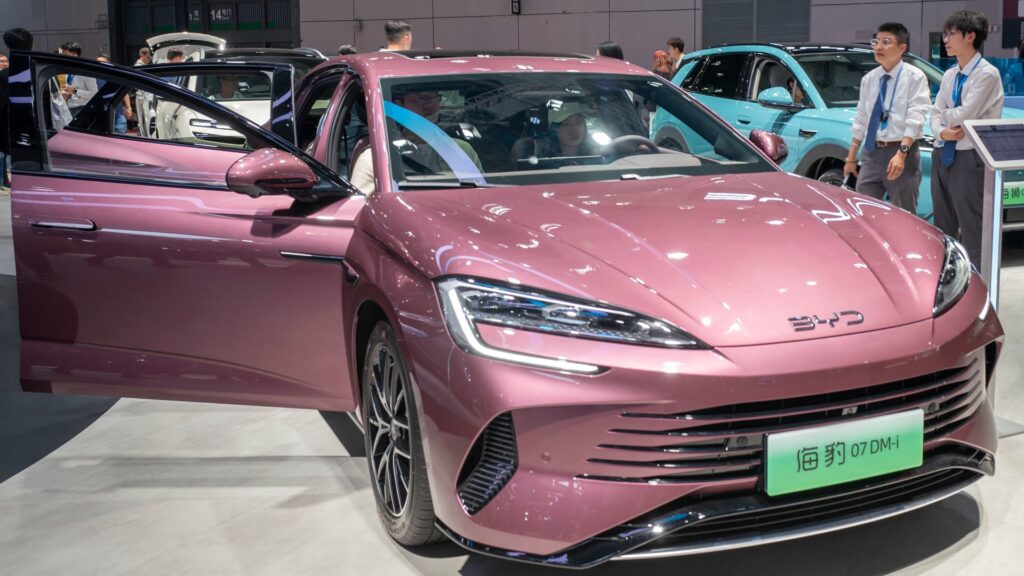
Electric vehicle production, particularly in China, could be at risk in the medium term due to a sulfur shortage caused by a blockade of the Strait of Hormuz resulting from the war in the Middle East. This was reported by Reuters, according to "Komersant Ukrainian".
“Electric vehicle production depends on the situation in the Strait of Hormuz, as sulfuric acid—a key component in the extraction of metals such as nickel and lithium—is required to manufacture their batteries,” the publication writes.
Sulfuric acid is vital for the high-pressure acid leaching method used to extract battery-grade nickel from ore at mines in Indonesia, the world’s largest producer of this metal. It is also used to extract lithium from hard rock in Australia, the largest producer of this metal, and is important for copper production, Reuters notes.
“As of February 28, approximately half of the world’s sulfur (from which sulfuric acid is produced) transported by sea passed through the Strait of Hormuz, primarily to Asian countries.”
Sulfur is a byproduct of oil and gas extraction, as well as their processing into fuel, making Middle Eastern countries such as the United Arab Emirates and Saudi Arabia the main suppliers of the raw material used to produce sulfuric acid.
“Before the war in the Middle East began, the average volume of sulfur transported through the Strait of Hormuz was 1.27 million tons per month, but in March it fell to 180,000 tons, and in April to 30,000 tons,” Reuters reports.
According to the publication, several executives from mining companies in Indonesia and Australia, who attended the Asian Battery Raw Materials Conference in Hanoi last month, expressed concern that securing sulfuric acid supplies is becoming increasingly difficult in the medium term. Chinese electric vehicle and battery manufacturers face the risk of losing supplies of nickel produced using HPAL technology, as well as lithium from Australia.
Watch us on YouTube: important topics – without censorship
According to the publication, there are some alternatives to using sulfuric acid in metal processing, but they are not suitable for producing battery-grade nickel, and for copper and lithium, they require higher energy costs to produce smaller volumes.
“Although metal processing has not yet reached a crisis point, the longer the Strait of Hormuz remains effectively closed, the closer that point becomes,” Reuters emphasizes.
This raises the question of what tactics China will adopt if the threat to its electric vehicle and battery industries ceases to be merely a remote possibility.
“A logical step would be to increase pressure on both its ally Iran and U.S. President Donald Trump to reach an agreement that, at a minimum, reopens the Strait of Hormuz to all shipping,” Reuters concludes.
As the agency’s journalists note, many consider electric vehicles to be one of the main gains in the current conflict between the U.S. and Iran, as they allow users to break free from dependence on fossil fuels.
As a reminder, the war in the Middle East began with U.S. and Israeli strikes on Iran on February 28, which killed Iran’s Supreme Leader Ayatollah Khomeini. In response, Iran launched ballistic missiles and drones against U.S. allies in the Middle East—Israel and the Arab countries of the Persian Gulf—and blocked the Strait of Hormuz, which serves as a passage from the Persian Gulf to the Gulf of Oman and on to the Arabian Sea. This led to a sharp rise in prices for petroleum products, liquefied natural gas, mineral fertilizers, and other goods.
The parties have now announced a ceasefire, but the blockade of the strait remains in place, and negotiations between the parties to resolve the conflict have not yet been successful.
Read us on Telegram: important topics – without censorship