Red Alert: A magnetic storm hit Earth on May 18
18 May 14:36
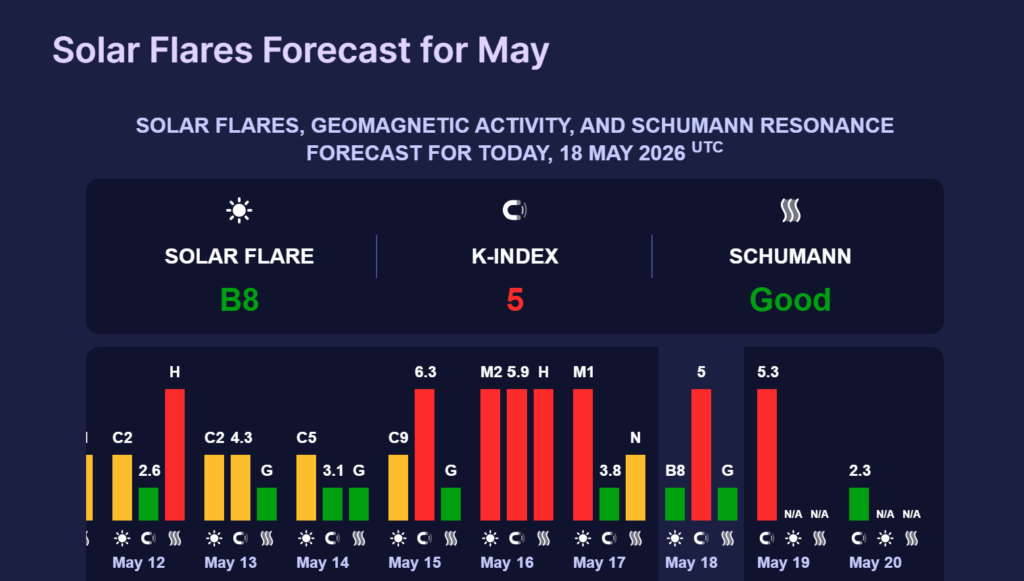
On Monday, May 18, increased geomagnetic activity is expected on Earth. According to forecasts by the Meteoagent service, the K-index has reached 5, which corresponds to the red level and is considered a strong magnetic storm, reports "Komersant Ukrainian"
The Earth’s geomagnetic field will be unstable, and in some places, activity may reach a minor storm level. According to Meteoagent, a K-index of 5 or higher indicates a significant geomagnetic storm.
What will magnetic activity be like on May 18?
On Monday, May 18, solar activity with a K-index of 5 is forecast. This is a red level, which indicates increased disturbance of the Earth’s magnetic field.
At the same time, experts note that solar activity will generally remain low, although there is a possibility of M-class flares.
According to Meteoagent, magnetic storm forecasts are updated as new information becomes available from satellites and laboratories.
What will magnetic activity be like on May 19
For Tuesday, May 19, solar activity with a K-index of 5.3 is forecast. This is a red level, which indicates increased disturbance of the Earth’s magnetic field.
Magnetic storm forecasts may change, as solar activity researchers update their data every three hours.
What does a K-index of 5 mean?
Geomagnetic activity is measured on a scale from 0 to 9. The planetary K-index is used for this: the higher the number, the stronger the disturbance in the magnetic field.
The scale can be explained as follows:
- 0–2 — calm magnetic activity;
- 3–4 — moderate disturbances;
- 5 and above — magnetic storm;
- 7–9 — strong and very strong storms.
A K-index of 5 corresponds to the initial level of a geomagnetic storm. This level can affect the operation of navigation systems and communications, as well as the well-being of weather-sensitive individuals.
What happened on the Sun yesterday
Over the past 24 hours, solar activity was at a moderate level. Several C-class flares were recorded on the Sun, which usually have no significant impact on Earth, as well as M-class flares.
M-class flares are more powerful than C-class flares and can cause short-term disturbances in the geomagnetic field if accompanied by plasma ejections toward Earth.
Watch us on YouTube: important topics – without censorship
Can the forecast change?
Yes, the forecast for magnetic storms can change throughout the day. Researchers studying solar activity regularly update their data, particularly after observing flares, solar wind, and the state of Earth’s magnetic field.
That is why the K-index can fluctuate: magnetic activity can either increase or decrease throughout the day.
How magnetic storms can affect people
Not everyone experiences magnetic storms the same way. Some people don’t notice any changes at all, while those sensitive to weather changes may complain of fatigue, headaches, drowsiness, or fluctuations in blood pressure.
Doctors usually advise not to overexert yourself on such days, to drink enough water, get plenty of sleep, and pay closer attention to how you feel. If you have cardiovascular disease or experience a sudden worsening of your condition, it is best to see a doctor.
What to Do on May 18
On a day of increased magnetic activity, it’s best to reduce unnecessary stress, especially if you’re sensitive to weather changes or geomagnetic fluctuations.
Helpful tips:
- get more rest;
- avoid overexertion;
- drink water;
- avoid planning overly strenuous physical activities;
- monitor your blood pressure if necessary;
- check for forecast updates throughout the day.
Read us on Telegram: important topics – without censorship