A magnetic storm is approaching Earth: when to expect a geomagnetic storm
29 April 12:33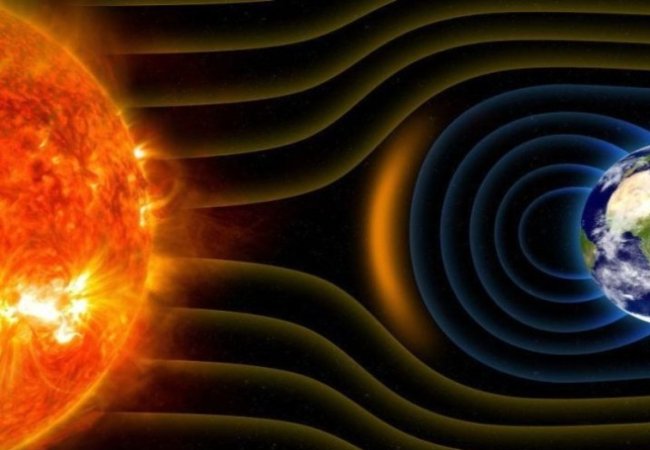
Geomagnetic activity may increase in the coming days following a relatively calm period. According to a forecast by the British Geological Survey, a high-speed solar wind stream from a coronal hole is expected to reach Earth, reports "Komersant Ukrainian"
This could trigger a G1-level magnetic storm, and in some scenarios, intensify to a G2 level.
In recent days, solar wind speeds have returned to background levels, and the geomagnetic field has remained calm. However, according to the British Geological Survey’s forecast, the situation may change during the second forecast period: a high-speed stream from a recurrent coronal hole is expected to arrive, increasing the solar wind speed and the likelihood of geomagnetic activity to G1 or even G2 levels.
When will the magnetic storm begin?
According to forecasts, an increase in geomagnetic activity is expected on April 30. That is when Earth may come under the influence of a fast solar wind stream from a coronal hole.
Expected scenario:
| Date | Forecast |
|---|---|
| April 29 | Mostly calm or unstable geomagnetic field |
| April 30 | Possible intensification to a G1-level geomagnetic storm |
| April 30 – May 1 | A brief intensification to G2 cannot be ruled out |
A G1 level indicates a weak magnetic storm, while a G2 level indicates a moderate one. Such storms usually pose no danger to most people but can affect high-frequency radio communications, satellite systems, navigation, and the operation of power grids at high latitudes.
What Meteoagent shows for April 29–30
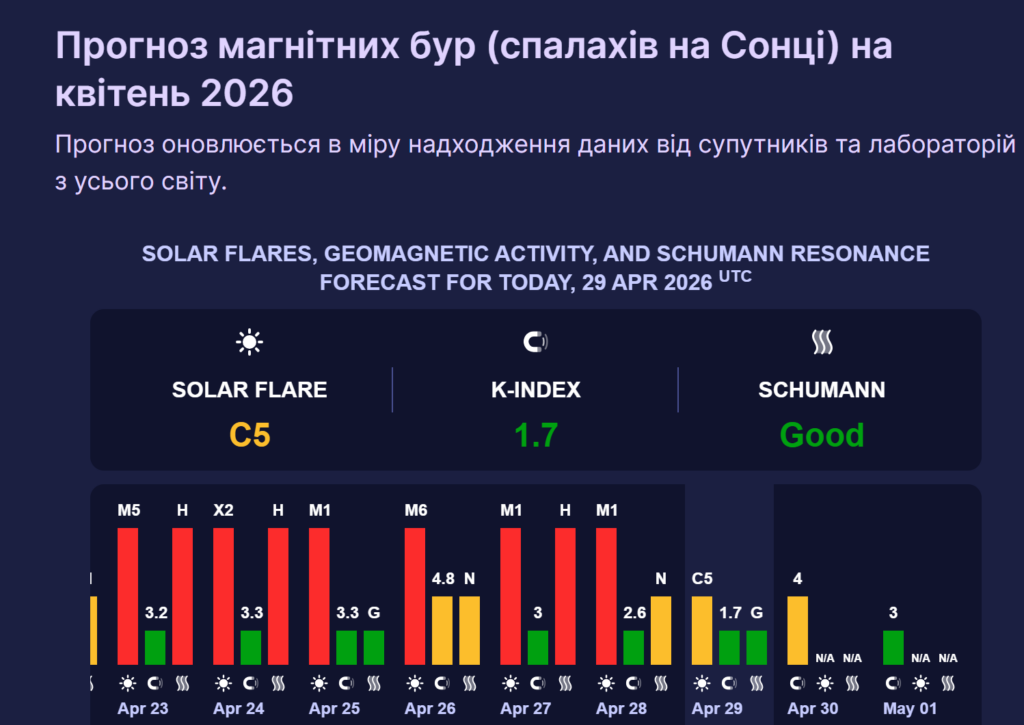
According to Meteoagent, a yellow-level magnetic storm is expected on Earth on Wednesday, April 29. Solar activity was moderate over the past 24 hours, but the geomagnetic field may become disturbed.
A yellow alert typically means the storm is not severe, but weather-sensitive individuals may experience fatigue, headaches, drowsiness, irritability, or fluctuations in blood pressure.
What will cause the magnetic storm
The main cause of the predicted disturbance is a coronal hole on the Sun. This is an area in the solar corona from which a faster stream of charged particles is emitted into space. When such a stream reaches Earth, it interacts with the planet’s magnetosphere and can cause a geomagnetic storm.
Additionally, on April 26, several solar flares with possible coronal mass ejections were recorded on the Sun.
According to forecasts, there is not yet complete certainty as to whether these ejections were directed directly toward Earth. If so, their arrival in late April or early May could further intensify geomagnetic activity.
Watch us on YouTube: important topics – without censorship
What does a G2 level mean?
Magnetic storms are classified on the NOAA scale from G1 to G5:
- G1 — minor storm;
- G2 — moderate storm;
- G3 — strong;
- G4 — very strong;
- G5 — extreme.
A G2 storm can cause minor disruptions in satellite operations, as well as short-term issues with radio communication and navigation. Additionally, during such storms, the likelihood of auroras increases in regions where they typically occur less frequently.
NOAA previously reported that G2-level geomagnetic storms were already recorded in April due to the influence of high-speed streams from coronal holes.
How a magnetic storm can affect people
Scientific data on the direct impact of magnetic storms on people’s well-being remains inconclusive. At the same time, many people complain of fatigue, headaches, drowsiness, irritability, or fluctuations in blood pressure during periods of geomagnetic disturbances.
Doctors usually advise on such days:
- not to overexert yourself physically;
- drink plenty of water;
- avoid excessive stress;
- for people with cardiovascular diseases — to monitor their well-being more closely and follow their doctor’s recommendations.
Read us on Telegram: important topics – without censorship