State budget revenues have increased by 10%, but there are significant risks: a report by the Accounting Chamber
10 June 17:45
The Accounting Chamber analyzed the execution of the state budget in the first quarter of 2026 and identified a number of risks that could affect budget sustainability and the implementation of state programs by the end of the year. This was reported by the agency’s press service, according to "Komersant Ukrainian".
“The start of the year was a serious test for public finances. The prolonged shortage of energy resources, caused by the consequences of massive attacks on energy infrastructure and high winter demand on the system, logistical constraints related to the security situation, as well as delays in the receipt of some international aid, affected both economic activity and budget execution,” wrote Olga Pishchanska, Chair of the Accounting Chamber.
However, she noted that despite this, the state managed to ensure stable funding for key expenditures, primarily in the security and defense sector, social payments, and other priority areas. State budget revenues increased by 10% compared to the same period last year; the general fund revenue target was exceeded, and non-repayable international aid significantly exceeded planned figures.
According to the report, an analysis of state budget execution revealed a number of risks, including higher-than-expected inflation in the future and a shortfall in the planned volume of international support.
STATE BUDGET REVENUES
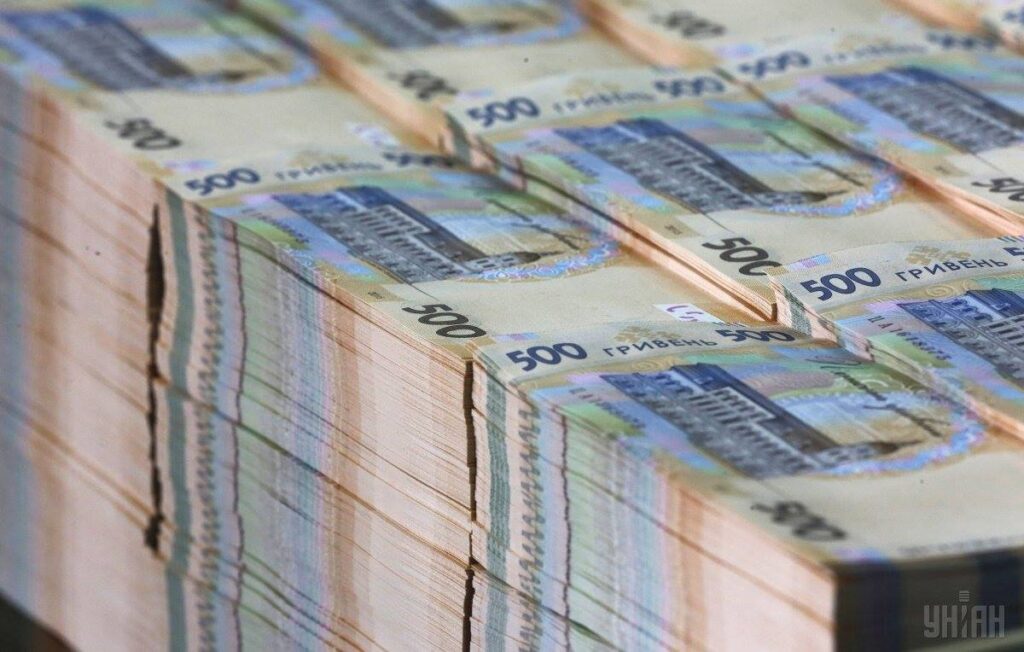
State budget revenues in the first quarter of 2026 amounted to UAH 1.02 trillion and increased by 10% compared to the same period last year.
“The general fund revenue plan was exceeded by UAH 24.9 billion due to the receipt of grants for budget support, overpaid corporate income tax, and excise tax on imported tobacco products and liquids,” the report states.
However, the auditors emphasize that overpayments in one period may lead to a shortfall in revenues in subsequent periods.
Since the beginning of the year, the tax debt of business entities has increased by 9.6 billion UAH, reaching 242.9 billion UAH.
For the first time since the growth that began in the second quarter of 2023, Ukraine’s real GDP declined by 0.5%.
Auditors also noted a decline in the volume of production (works and services) in sectors that form the backbone of the national economy:
– transportation -12.9%,
– construction – 4.7%,
– manufacturing -1.1%.
At the same time, the growth in industrial producer prices exceeded the forecast by a factor of two.
Read us on Telegram: important topics – without censorship
STATE BUDGET EXPENDITURES
State budget expenditures in the first quarter of 2026 amounted to UAH 1.15 trillion.
“UAH 788.7 billion was allocated for the needs of the main administrators of the security and defense sector—7.9% less than in the same period last year. Of this amount, approximately 314.2 billion UAH was allocated for military pay,” the report states.
At the same time, according to the Accounting Chamber’s assessment, the actual need for such expenditures in the security and defense sector by the end of the year will be UAH 365.6 billion higher than planned (a similar situation occurred in 2024–2025). Currently, a government bill to increase spending on military pay is being considered by parliament.
At the same time, auditors note that the main administrators of funds in the security and defense sector did not use UAH 201.5 billion of the planned expenditures in the general fund for the first quarter. Among the main reasons are changes in procurement priorities, a limited number of suppliers, the need for additional expert reviews of project documentation, as well as contractors’ failure to fulfill the terms of signed contracts.
“In addition, in the first quarter of 2026, the state spent 170.2 billion hryvnias on social payments and assistance to the population, and 120.6 billion hryvnias on subsidies and current transfers to enterprises, institutions, and organizations,” — the Accounting Chamber reported.
The Accounting Chamber identified instances of non-compliance with the requirements of the Budget Code by certain chief administrators of funds and the Government. As of the end of the first quarter, 68.7% of the necessary procedures for the use of budget funds had not been developed and approved within the established deadlines. In addition, a significant number of budget program specifications remained unsubmitted or unapproved.
As a result, planned expenditures totaling 8.7 billion hryvnias were not made, and loans amounting to 2 billion hryvnias were not provided.
“Due to the government’s failure to approve the allocation of certain subsidies in a timely manner in the first quarter of 2026, the volume of transfers to local budgets was 12.5% lower than planned,” the report states.
The largest shortfalls in spending were recorded in the following areas:
– education subvention from the special fund of the state budget – 4.4 billion UAH;
– subsidy for the implementation of private investment projects in the healthcare sector – 400 million UAH;
– subsidy for the implementation of private investment projects to provide housing for family-type children’s homes – 208 million UAH.
FUNDS AND INVESTMENT PROJECTS
The Accounting Chamber noted that the state budget’s reserve fund was nearly fully utilized as early as the first quarter of 2026. The government allocated 96.3% of its annual volume, with 38% of the allocated funds directed toward measures that do not align with the purpose of the reserve fund. This practice creates a risk of insufficient resources to finance truly unforeseen expenditures by the end of the year.
Meanwhile, funds from the fund for addressing the consequences of armed aggression were not utilized. Despite available resources totaling 3.2 billion UAH, the government did not approve a single decision to allocate these funds in the first quarter, primarily due to the untimely introduction of changes to the procedure for using the fund’s resources. At the same time, as of April 1, 2026, UAH 23.8 billion in compensation for destroyed housing in the form of housing certificates based on already approved applications remained unpaid.
“A significant lag has also been recorded in the implementation of public investment projects. Expenditures and the provision of loans under the relevant programs were executed at only 12% of the plan. For 20 budget programs totaling 5.3 billion UAH, spending and loan disbursements did not begin at all in the first quarter,” the report states.
GOVERNMENT AND GOVERNMENT-GUARANTEED DEBT
In the first quarter of 2026, government and government-guaranteed debt increased by 2.1% and reached UAH 9.23 trillion. The Accounting Chamber notes an increase in the share of debt denominated in foreign currency, from 76.4% to 79.1%. This increases the debt portfolio’s sensitivity to exchange rate fluctuations and the associated risks to the state’s debt sustainability.
Public debt service costs in the reporting period amounted to UAH 139.7 billion, which is 12.6% less than in the corresponding period of 2025 and below the planned figures.
According to the Accounting Chamber, actual expenditures on debt repayment and fulfillment of guarantee obligations were UAH 1.7 billion lower than planned. This is due to a lower hryvnia exchange rate against foreign currencies than anticipated during budget planning, the absence of short-term domestic government bond issuances maturing in the first quarter of 2026, as well as the independent fulfillment by certain economic entities of obligations secured by state guarantees.
“Revenues from government borrowing to cover the deficit and repay public debt in the first quarter were UAH 273 billion, or 55%, below plan. The reason is Ukraine’s incomplete fulfillment of the targets for implementing reforms under the Ukraine Facility program and, as a result, the European Union’s postponement of the allocation of the planned funds,” noted Olga Pishchanska of .
Recommendations to the government
Based on the results of the analysis, the Accounting Chamber provided the Cabinet of Ministers of Ukraine with a series of recommendations to address the identified deviations and violations. In particular, it recommended:
– instruct the chief administrators to ensure the timely development and approval, in coordination with the Ministry of Finance, of budget program specifications;
– take measures to prevent an increase in budgetary accounts payable and receivable, particularly overdue ones;
– ensure the use of funds from the State Fund for Decarbonization and Energy Efficiency Transformation, as well as the State Fund for Water Management Development, to implement planned measures and reduce the balances of these funds;
– instruct the Ministry of Finance to monitor the balances in the accounts of the special fund of the state budget and, together with the main administrators, prepare proposals for their further use;
– ensure the adoption of decisions on the allocation of funds from the State Budget Reserve Fund exclusively for expenditures that are not of a permanent nature and could not have been foreseen during the drafting of the State Budget;
– instruct the Ministry of Economy to develop and submit for the Government’s consideration a draft decision on the creation of an interagency working group to review projects for targeted environmental (“green”) investments funded by proceeds from the sale of greenhouse gas emission quotas.
The Accounting Chamber’s conclusion on the execution of the state budget in the first quarter of 2026 will be sent to the Verkhovna Rada of Ukraine, the Verkhovna Rada Committee on Budgetary Matters for consideration at its meeting, the Secretariat of the Verkhovna Rada of Ukraine, the Cabinet of Ministers of Ukraine, the Ministry of Finance of Ukraine, and published on the official website of the Accounting Chamber.
Watch us on YouTube: important topics – without censorship